Functional heterogeneity in non-suicidal self-injury across psychiatric disorders: neural and psychosocial correlates
Mingzhu Li, Yang Xiao, Yuqi Ge, Huiru Yan, Xueni Li, Weihua Yue, Hao Yan

TL;DR
This study explores how non-suicidal self-injury varies in function among adolescents with psychiatric disorders, revealing distinct neural and psychosocial patterns.
Contribution
The study introduces a dual-dimensional framework linking self-related and social-related mechanisms to distinct neural and psychosocial profiles in NSSI.
Findings
Two latent factors (self-related and social-related) were identified in NSSI using non-negative matrix factorization.
Three functional subtypes of NSSI were revealed, each with distinct neural and psychosocial correlates.
Self-related mechanisms involve emotional regulation circuits, while social-related mechanisms emphasize psychosocial risks and cognitive-emotional circuits.
Abstract
Non-suicidal self-injury (NSSI) is a common behavior among adolescents, particularly within psychiatric populations. While neurobiological and psychosocial risk factors have been extensively studied, the mechanisms underlying NSSI’s heterogeneity remain unclear. This study investigated 304 hospitalized adolescents/young adults (16–25 years) with NSSI and comorbid psychiatric diagnoses (major depressive disorder [MDD], bipolar disorder [BD], eating disorders [ED]) using psychological assessments and resting-state fMRI data from 163 participants. Orthogonal projection non-negative matrix factorization of Ottawa Self-Injury Inventory responses identified two latent factors: self-related factor and social-related factor. The self-related factor correlated with amygdala-centered cortico-limbic emotional regulation networks and predominated in affective disorders (MDD/BD), while the…
Genes, proteins, chemicals, diseases, species, mutations and cell lines named across the full text — each resolved to its canonical identifier and authoritative record.
Click any figure to enlarge with its caption.
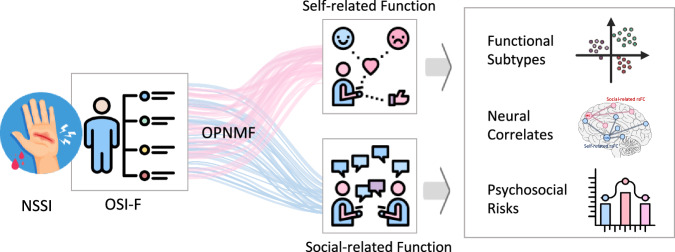 Figure 1
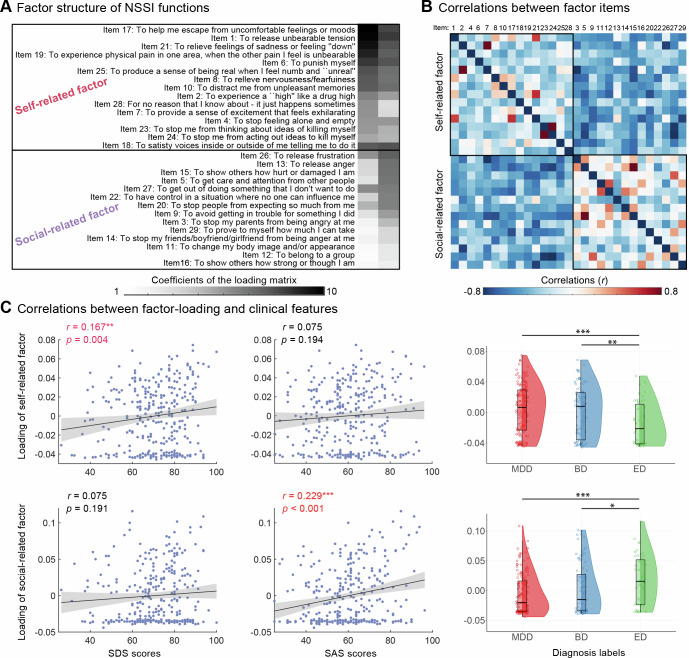 Figure 2
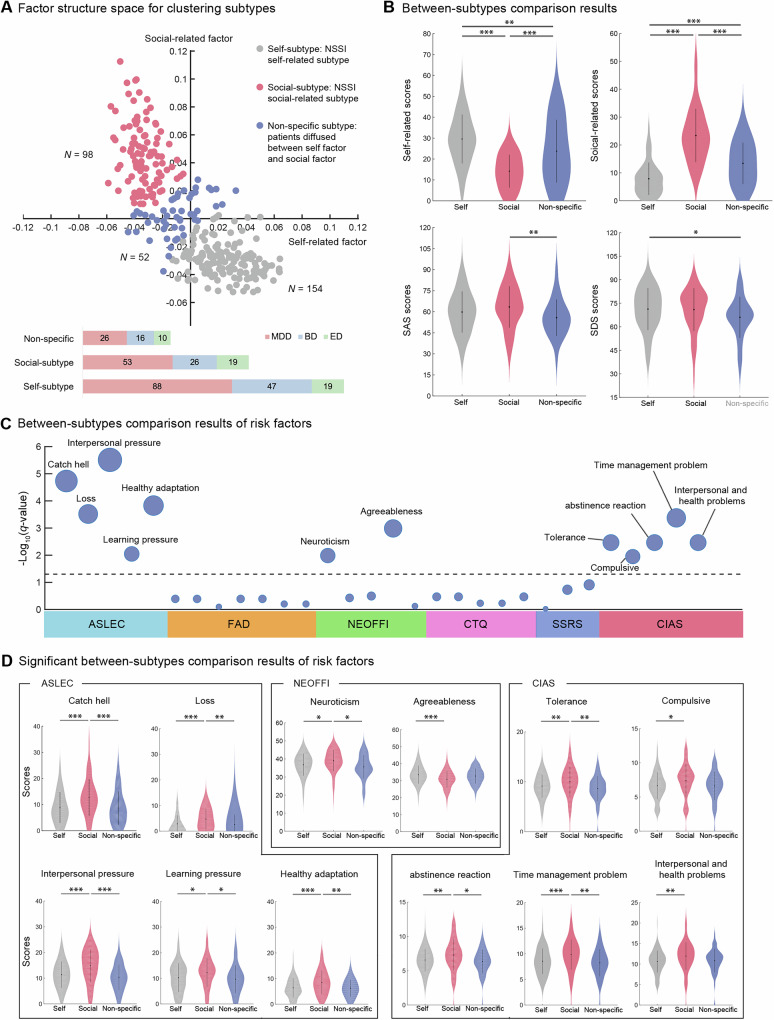 Figure 3
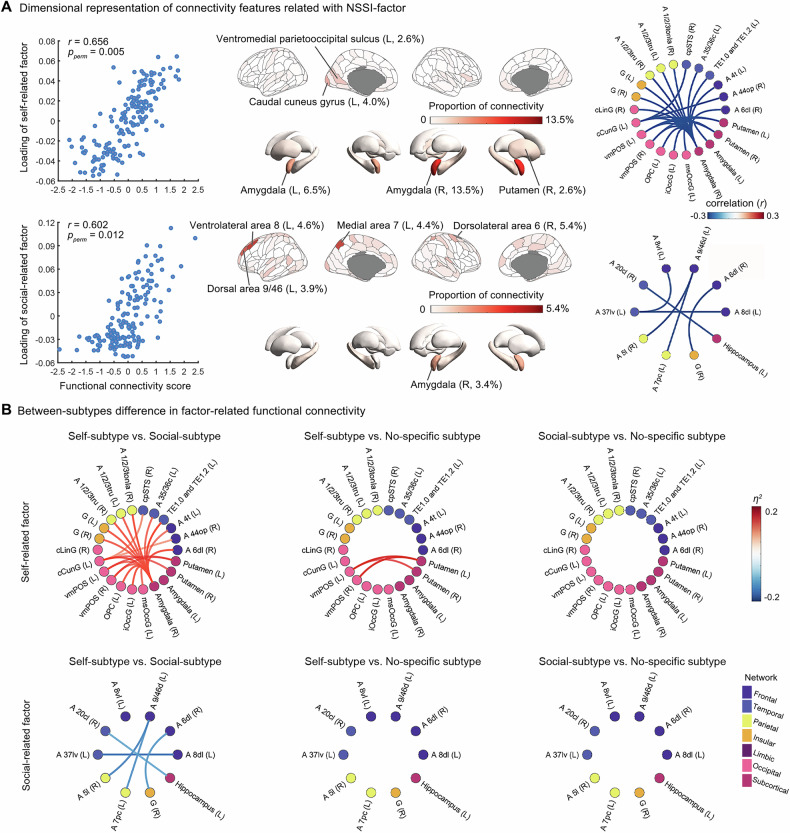 Figure 4
Peer Reviews
No public reviews on file for this paper yet. If you reviewed it on a platform where reviews are public (OpenReview, ICLR, NeurIPS, ICML), you can paste yours below so the community can read it here.
Videos
No videos yet. Explain this paper in a talk, walkthrough, or lecture? Add one.
Taxonomy
TopicsSuicide and Self-Harm Studies · Personality Disorders and Psychopathology · Attention Deficit Hyperactivity Disorder