pH-triggered clustering regulates β-sheet activation in silk assembly
Juanita Francis, Judith Houston, Andrew Jackson, Robert Dalgliesh, Anne Martel, Lionel Porcar, Felix Roosen-Runge, Cedric Dicko

TL;DR
The study reveals how pH changes control the step-by-step formation of silk's strong structure through clustering and sheet assembly.
Contribution
A new method combining neutron scattering and fluorescence tracks silk's hierarchical assembly in real time.
Findings
pH-driven gelation involves nanoscale clustering and domain growth before β-sheet formation.
Methanol-induced gelation skips intermediates and causes rapid aggregation.
NUrF provides a strategy to study hierarchical assembly in protein materials.
Abstract
Silk fibres derive their exceptional properties from hierarchical protein organisation, yet the molecular pathways that guide this structural transformation remain poorly resolved. During regenerated silk fibroin gelation under biomimetic gradual acidification, we identify a stepwise assembly pathway comprising nanoscale clustering, domain growth within clusters, and mesoscale network formation. Time-resolved small-angle neutron scattering performed simultaneously with turbidity and fluorescence emission (NUrF) identifies unique intermediates and a regulated onset of β-contacts and β-sheets assembly, indicating that fibril formation requires prior compaction and network connectivity. By contrast, methanol-induced gelation bypasses these intermediates, driving rapid aggregation. These findings define the sequence and timing of events that construct silk’s hierarchical architecture…
Genes, proteins, chemicals, diseases, species, mutations and cell lines named across the full text — each resolved to its canonical identifier and authoritative record.
Click any figure to enlarge with its caption.
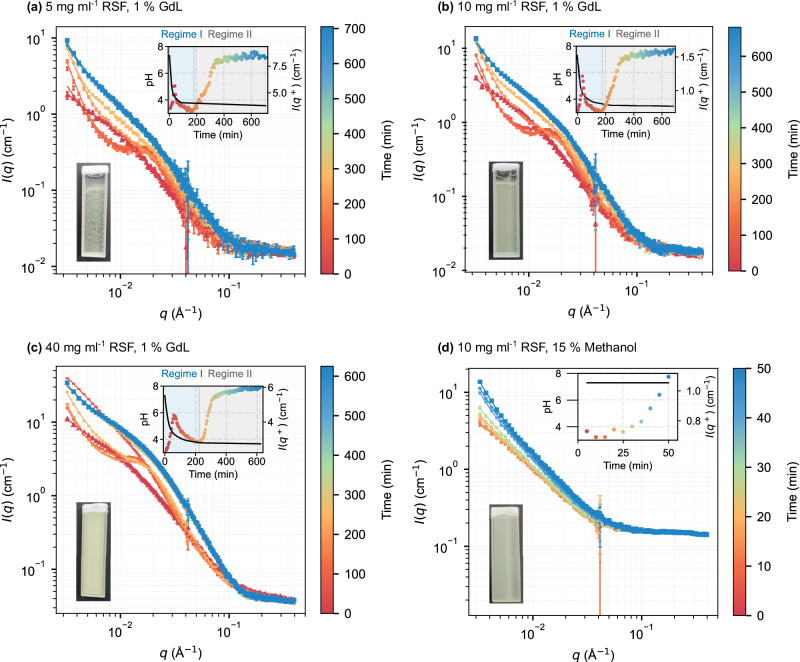 Figure 1
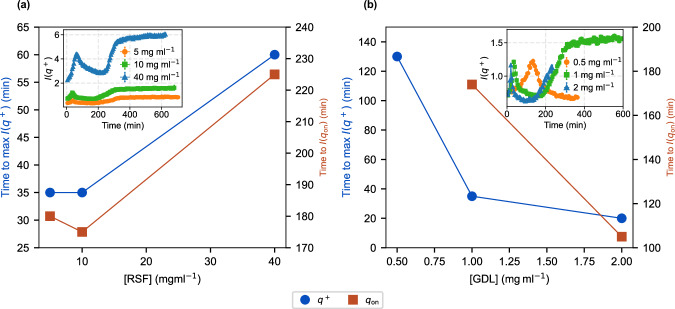 Figure 2
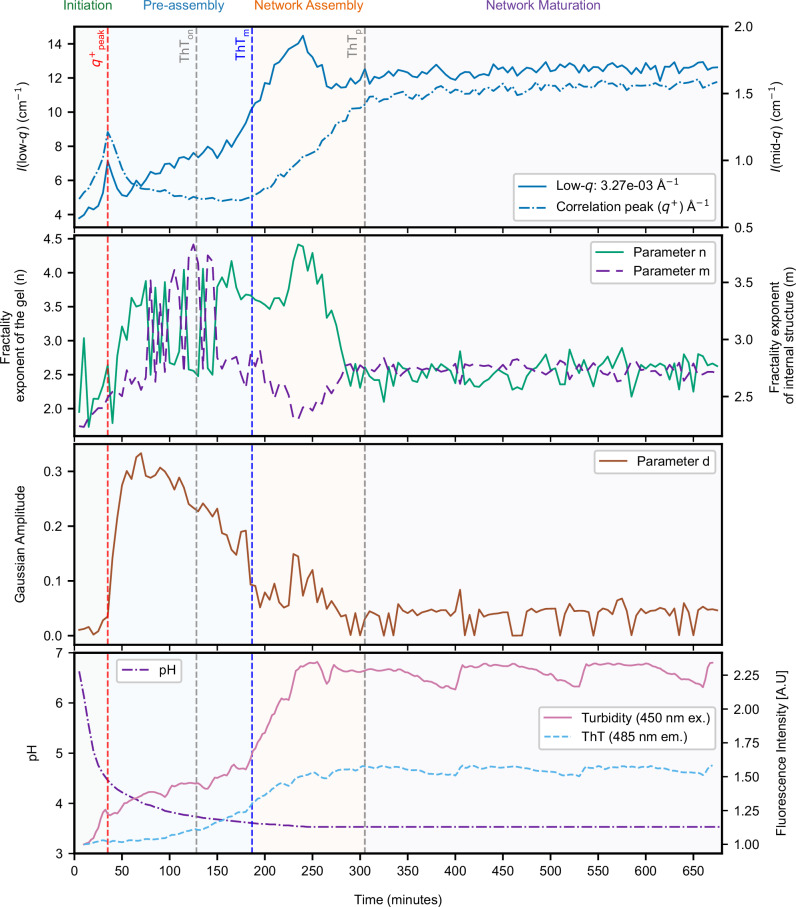 Figure 3
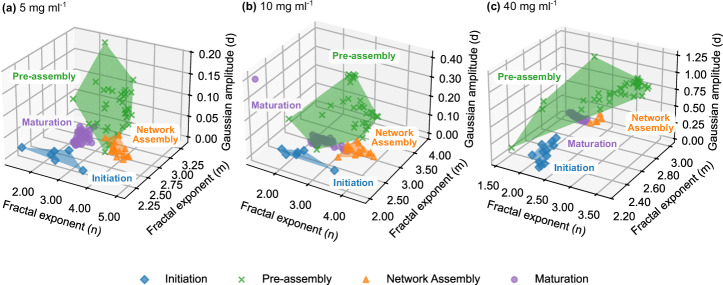 Figure 4
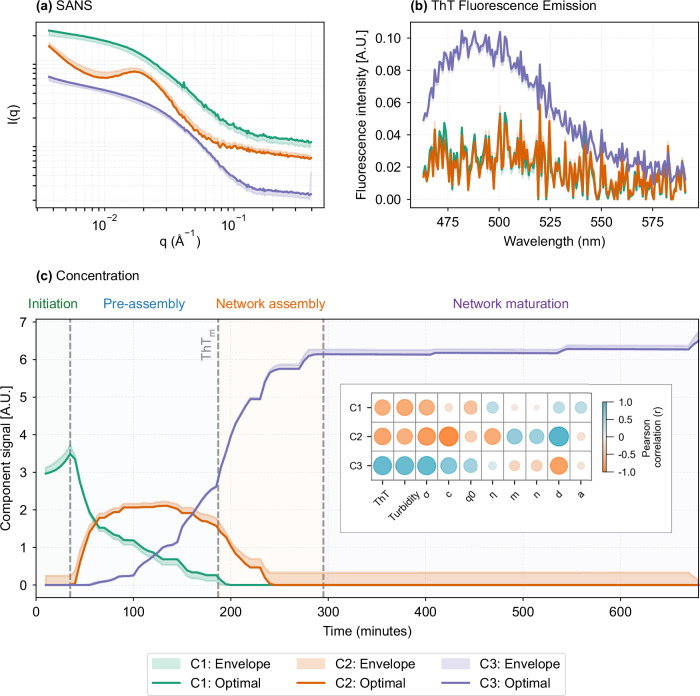 Figure 5
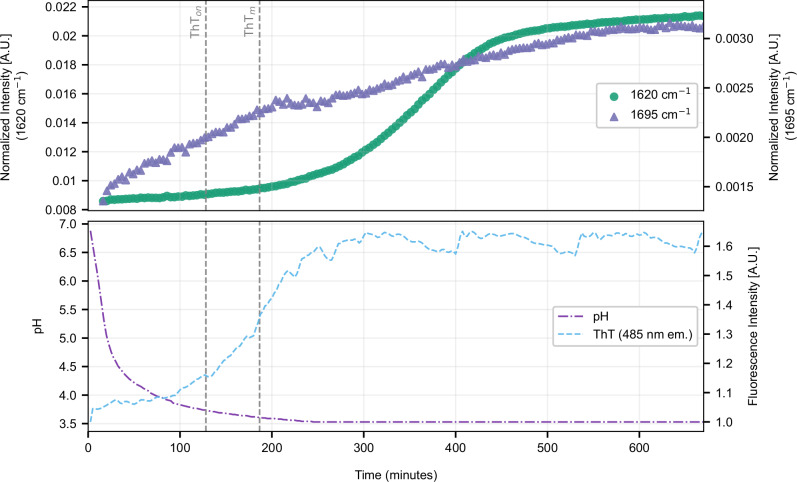 Figure 6
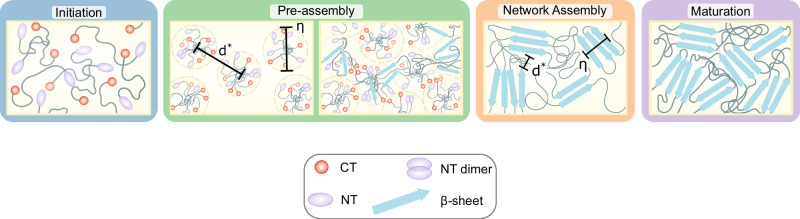 Figure 7
Peer Reviews
No public reviews on file for this paper yet. If you reviewed it on a platform where reviews are public (OpenReview, ICLR, NeurIPS, ICML), you can paste yours below so the community can read it here.
Videos
No videos yet. Explain this paper in a talk, walkthrough, or lecture? Add one.
Taxonomy
TopicsSilk-based biomaterials and applications · Surface Modification and Superhydrophobicity · Adhesion, Friction, and Surface Interactions