Phosphoproteomics of aged insulin-resistant bone identifies P70S6K phosphorylation of AFF4 as a gene-specific transcriptional regulator
Mriga Dutt, Luoping Liao, Hani Jieun Kim, Ronnie Blazev, Audrey Chan, Hitesh Kore, Ayenachew Bezawork-Geleta, Li Dong, Isela Sarahi Rivera, Natalie K. Y. Wee, Jeffrey Molendijk, Julian P. H. Wong, Vanessa R. Haynes, Veronica Uribe, Gordon S. Lynch, Kelly A. Smith

TL;DR
The study finds that insulin signaling in aged, insulin-resistant bone changes, with a key role for AFF4 phosphorylation in controlling gene activity.
Contribution
The paper identifies AFF4 phosphorylation at S831 as a novel gene-specific transcriptional regulator in insulin-resistant bone.
Findings
Phosphorylation of S831 on AFF4 is an insulin-dependent substrate of P70S6K and is reduced in aged, insulin-resistant bone.
Defective phosphorylation of S831 in IR osteoblasts correlates with reduced transcriptional elongation at specific genomic loci.
Phosphorylated S831 increases recruitment of chromatin remodelers to crotonylated histones, promoting gene-specific activation.
Abstract
Insulin action on the skeleton is essential for bone development and whole-body energy metabolism, however a global view of signaling in this tissue is lacking. Furthermore, whether there are signaling differences that drive the gene-specific activation under insulin-resistant (IR) or ageing conditions is unknown. Here, we perform a phosphoproteomic analysis of insulin signaling in the bones of young, lean, insulin-sensitive versus old, obese, IR mice revealing a rewiring of phosphorylation. We target dysregulated phosphoproteins in a zebrafish functional genomic screen of bone development and mineralization revealing candidates important for skeletal formation. One of these is ALF Transcription Elongation Factor 4 (AFF4), the core scaffold of the Super Elongation Complex and we show that phosphorylation of S831 on AFF4 is an insulin-dependent substrate of P70S6K and attenuated in aged,…
Genes, proteins, chemicals, diseases, species, mutations and cell lines named across the full text — each resolved to its canonical identifier and authoritative record.
Click any figure to enlarge with its caption.
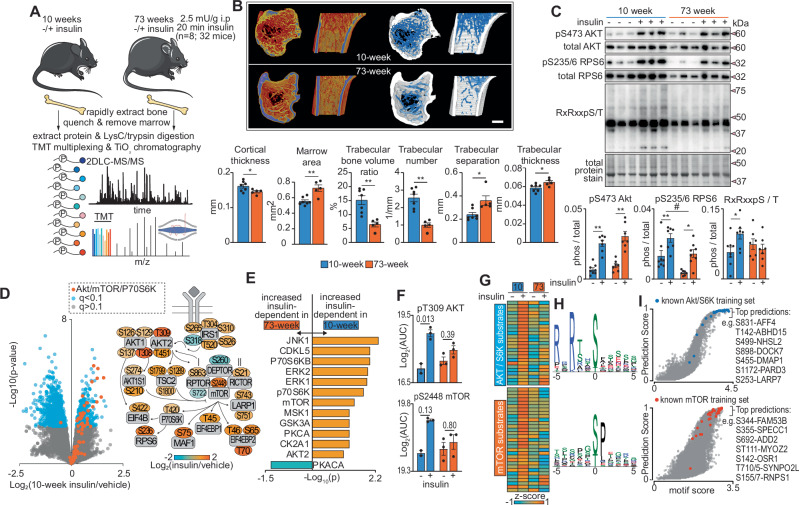 Figure 1
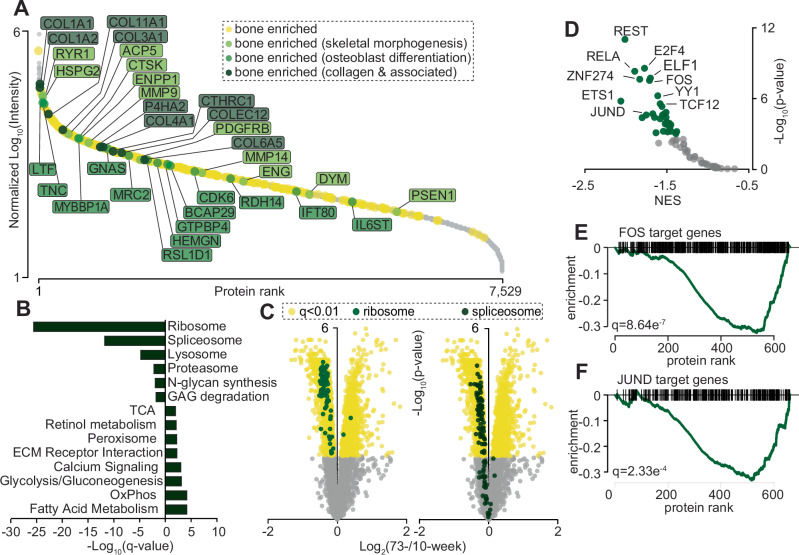 Figure 2
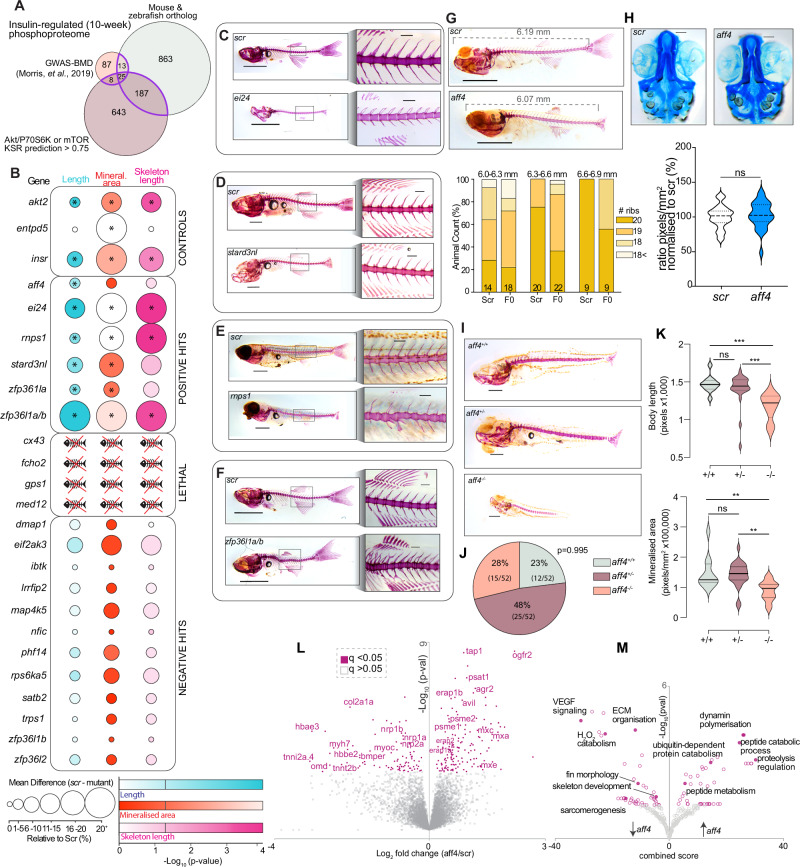 Figure 3
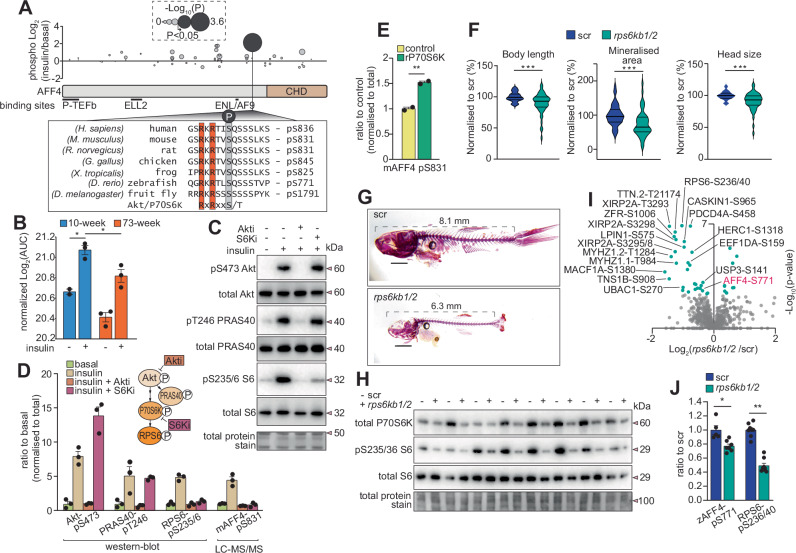 Figure 4
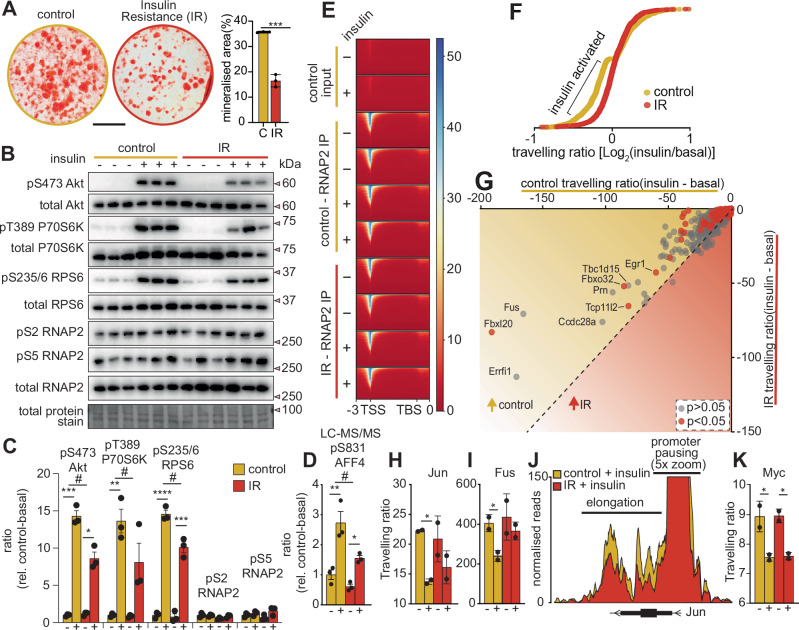 Figure 5
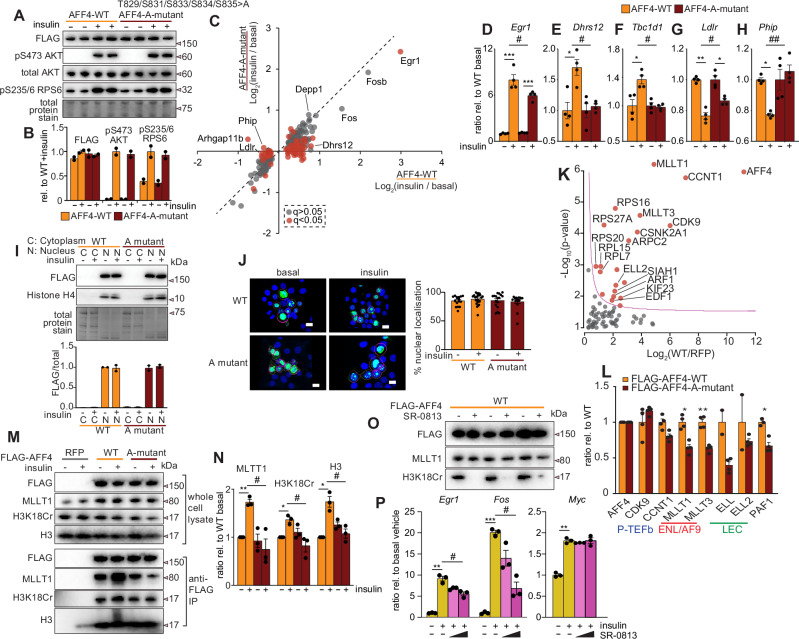 Figure 6
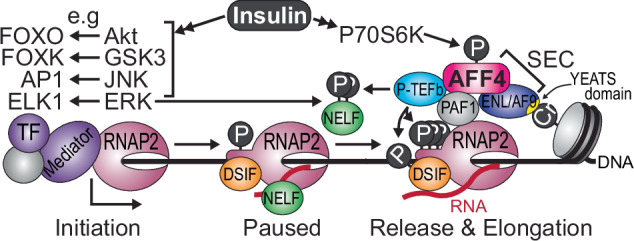 Figure 7
Peer Reviews
No public reviews on file for this paper yet. If you reviewed it on a platform where reviews are public (OpenReview, ICLR, NeurIPS, ICML), you can paste yours below so the community can read it here.
Videos
No videos yet. Explain this paper in a talk, walkthrough, or lecture? Add one.
Taxonomy
TopicsGenomics and Chromatin Dynamics · Bone Metabolism and Diseases · FOXO transcription factor regulation