Functional brain mapping of body size estimation using a 3D avatar
Hayden J. Peel, Joel P. Diaz-Fong, Sameena Karsan, Rajay Kumar, Gerhard Hellemann, Jamie D. Feusner

TL;DR
This study uses a 3D avatar task during fMRI to identify brain regions involved in body size estimation and finds that the superior parietal lobule is linked to individual differences in accuracy.
Contribution
The study introduces an fMRI-compatible 3D avatar task to investigate the neural basis of body size estimation and its individual variability.
Findings
Task engagement activated body-selective and multisensory regions like the extrastriate body area and superior parietal lobule.
Individual differences in body part girth estimation accuracy were significantly associated with neural responses in the superior parietal lobule.
No other brain regions showed significant associations with estimation accuracy.
Abstract
Body size estimation—the ability to judge the size and shape of one’s own body—is a key perceptual component of body image. However, its neural basis, and the basis for inter-individual differences in accuracy, remain poorly understood, partly due to limitations in existing assessment tools. We used an adapted, fMRI-compatible version of Somatomap 3D, an interactive task in which participants manipulate a rotatable 3D avatar by adjusting the size and shape of 26 individual body parts to match their perceived body. Twenty-eight healthy male and female adults completed the task during fMRI. Brain activity in a priori regions of interest from previous studies of body processing was modeled using a general linear model incorporating event-specific parameters and parametric modulators related to task performance. Inter-individual differences in body size estimation accuracy were calculated…
Genes, proteins, chemicals, diseases, species, mutations and cell lines named across the full text — each resolved to its canonical identifier and authoritative record.
Click any figure to enlarge with its caption.
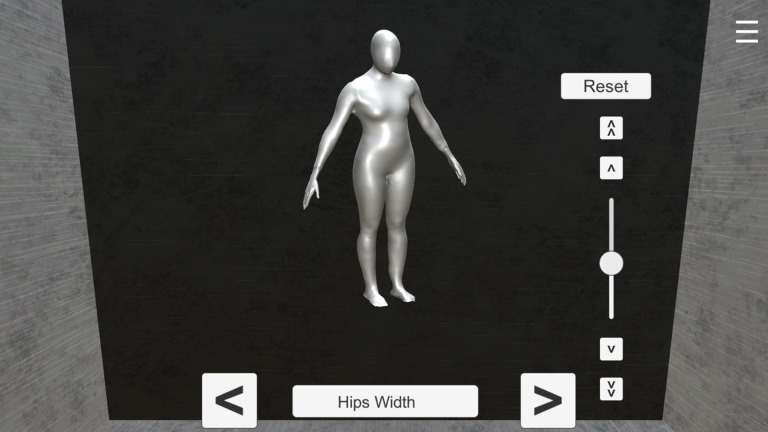 Figure 1
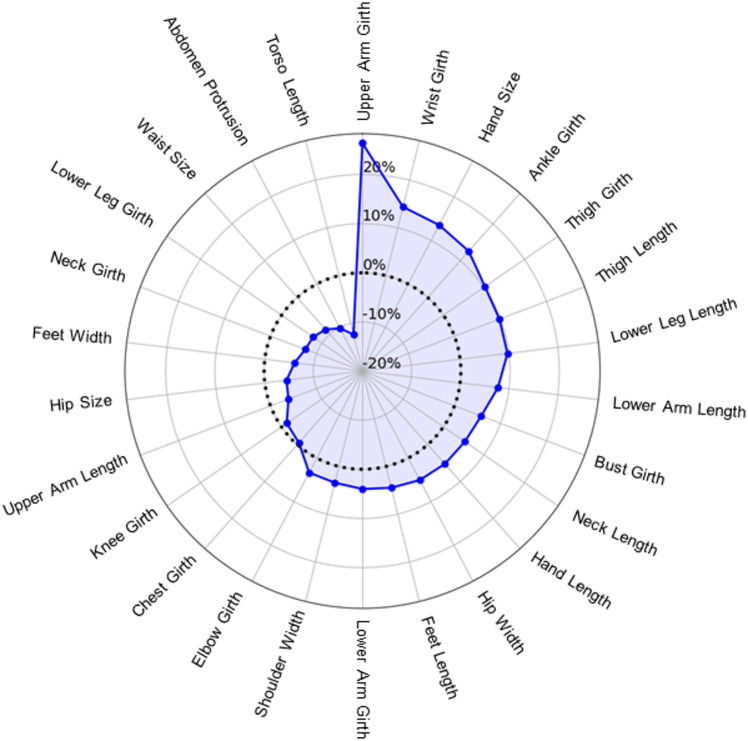 Figure 2
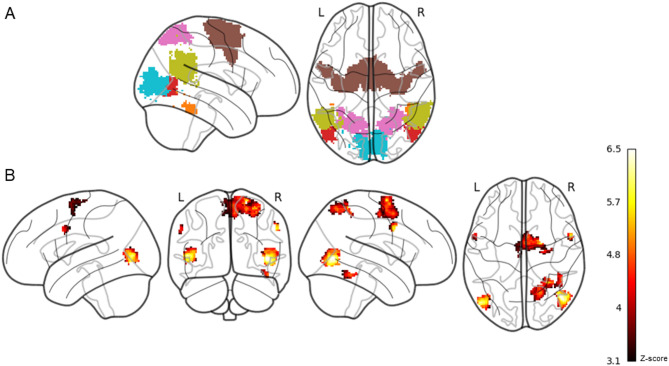 Figure 3
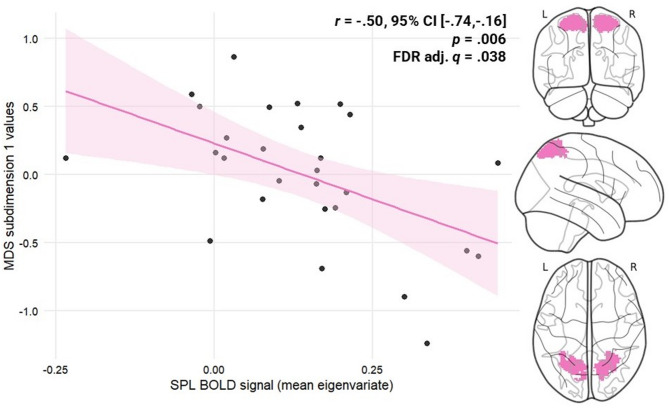 Figure 4
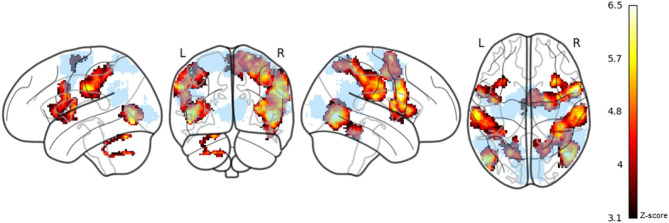 Figure 5
Peer Reviews
No public reviews on file for this paper yet. If you reviewed it on a platform where reviews are public (OpenReview, ICLR, NeurIPS, ICML), you can paste yours below so the community can read it here.
Videos
No videos yet. Explain this paper in a talk, walkthrough, or lecture? Add one.
Taxonomy
TopicsFace Recognition and Perception · Virtual Reality Applications and Impacts · Eating Disorders and Behaviors