High-power pulsed electrochemiluminescence for optogenetic manipulation of Drosophila larval behaviour
Chang-Ki Moon, Matthias König, Ranjini Sircar, Julian F. Butscher, Ronald Alle, Klaus Meerholz, Stefan R. Pulver, Malte C. Gather

TL;DR
A new high-power electrochemiluminescence method enables optogenetic control and imaging of fruit fly larvae behavior.
Contribution
A biphasic pulse strategy achieves high-brightness, stable electrochemiluminescence for optogenetic applications.
Findings
A biphasic voltage strategy produces over 100 μW mm−² optical power density for thousands of pulses.
Optimized pulse trains enable prolonged high-brightness light with minimal power loss.
ECL devices successfully triggered optogenetic responses in Drosophila larvae and allowed simultaneous imaging.
Abstract
Electrochemiluminescence (ECL) produces light through electrochemical reactions and has shown promise for various analytic applications in biomedicine. However, the use of ECL devices (ECLDs) as light sources has been limited due to insufficient light output and low operational stability. In this study, we present a high-power pulsed operation strategy for ECLDs to address these limitations and demonstrate their effectiveness in optogenetic manipulation. By applying a biphasic voltage sequence with short opposing phases, we achieve intense and efficient ECL through an exciplex-formation reaction pathway. This approach results in an exceptionally high optical power density, exceeding 100 μW mm−², for several thousand pulses. Balancing the ion concentration by optimizing the voltage waveform further improves device stability. By incorporating multiple optimized pulses into a pulse train…
Genes, proteins, chemicals, diseases, species, mutations and cell lines named across the full text — each resolved to its canonical identifier and authoritative record.
Click any figure to enlarge with its caption.
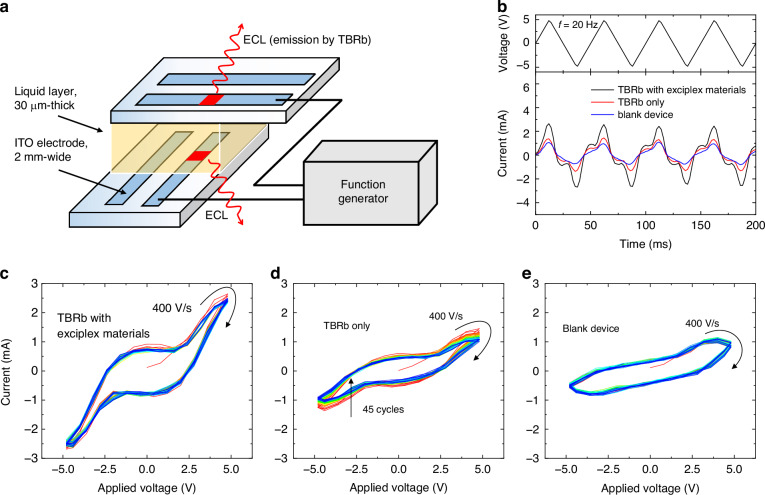 Figure 1
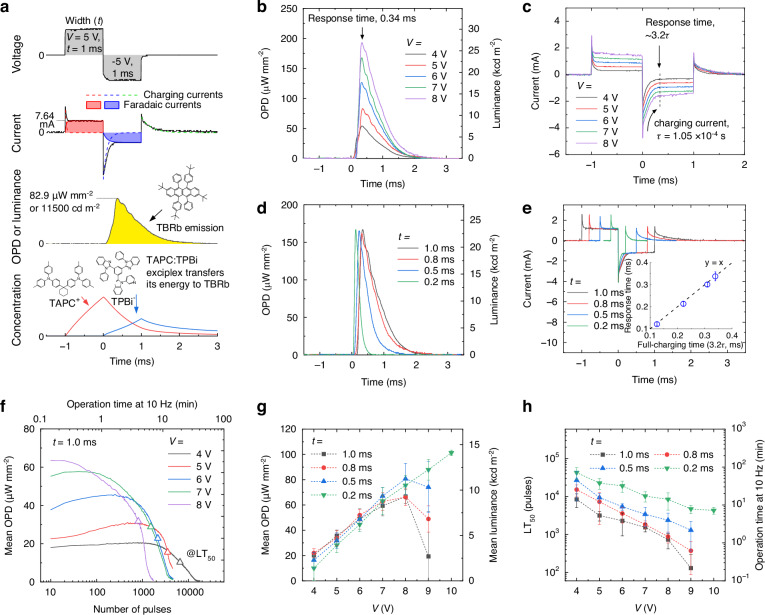 Figure 2
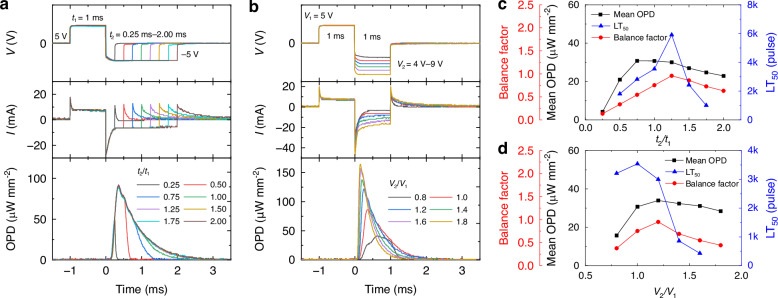 Figure 3
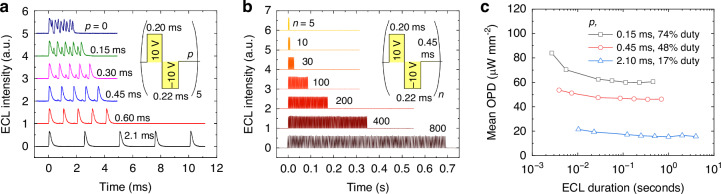 Figure 4
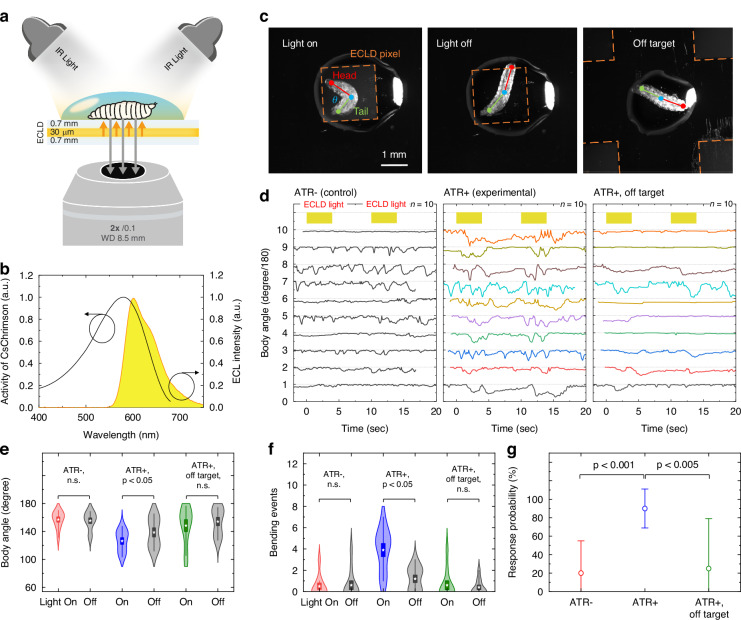 Figure 5
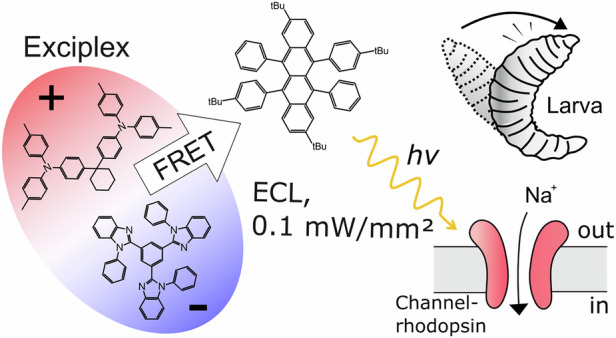 Figure 6
Peer Reviews
No public reviews on file for this paper yet. If you reviewed it on a platform where reviews are public (OpenReview, ICLR, NeurIPS, ICML), you can paste yours below so the community can read it here.
Videos
No videos yet. Explain this paper in a talk, walkthrough, or lecture? Add one.
Taxonomy
TopicsElectrochemical Analysis and Applications · bioluminescence and chemiluminescence research · CRISPR and Genetic Engineering