Oleoylethanolamide supplementation improves mood and reduces fatigue in veterans with GWI in a 15-week randomized, double-blind, placebo-controlled exploratory clinical trial
Laila Abdullah, Andrew P. Keegan, Michael Hoffmann, James Baraniuk, Wendy Mack, Kimberly Sullivan, Cheryl Luis, Cheryl Rindfleisch, Claire J.C. Huguenard, Adam Cseresznye, Gregory J. Aldrich, James E. Evans, Daniel Paris, Dakota Helgager, Fiona Crawford, Michael Mullan

TL;DR
A clinical trial found that oleoylethanolamide improved mood and reduced fatigue in veterans with Gulf War Illness, with no serious side effects.
Contribution
This is the first exploratory trial to demonstrate the safety and potential efficacy of OEA in treating Gulf War Illness symptoms.
Findings
OEA reduced fatigue and improved mood in veterans with Gulf War Illness.
OEA was well-tolerated with no serious adverse events reported.
No significant changes in cognitive performance or pain were observed.
Abstract
Gulf War Illness (GWI) affects 32% of Veterans from the 1990–1991 Gulf War. It is characterized by fatigue, mood disturbances, pain and cognitive decrements, with no FDA-approved treatment. This exploratory randomized, double-blind, placebo-controlled trial evaluated the safety and efficacy of oleoylethanolamide (OEA) supplementation in 52 Veterans with GWI (mean age 59 ± 5 SD, 94% males and 79% White). Participants received 200 mg of OEA twice daily or a matching placebo for 10 weeks, followed by a 5-week open-label OEA extension. Outcomes included the Multidimensional Fatigue Inventory (MFI-20), abbreviated Profile of Mood States (POMS), Short-Form McGill Pain Questionnaire, Veterans RAND 36-Item Health Survey (SF-36 V), Repeatable Battery for the Assessment of Neuropsychological Status (RBANS) and CNS Vital Signs Test, administered at baseline and 10- and 15-weeks. A main effect of…
Genes, proteins, chemicals, diseases, species, mutations and cell lines named across the full text — each resolved to its canonical identifier and authoritative record.
Click any figure to enlarge with its caption.
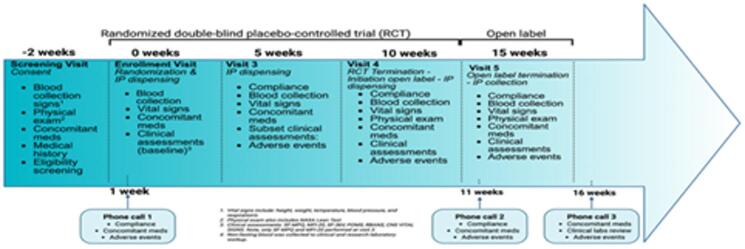 Figure 1
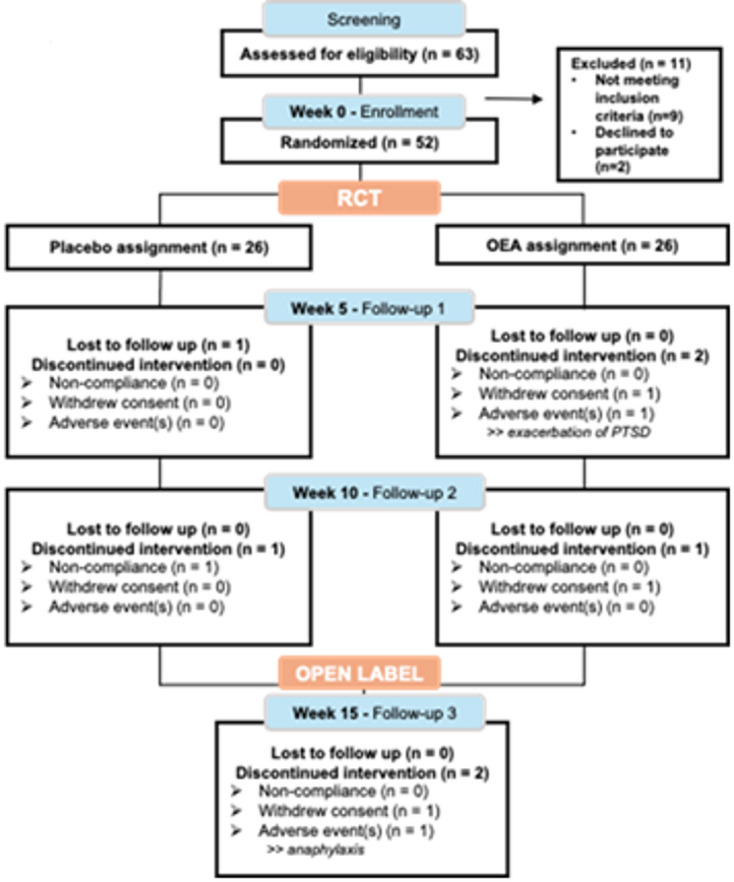 Figure 2
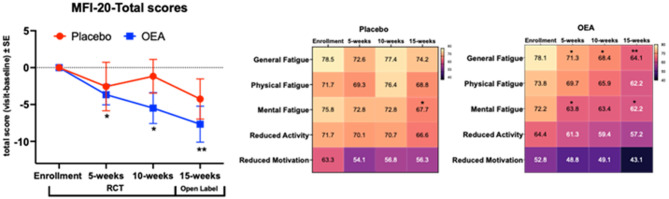 Figure 3
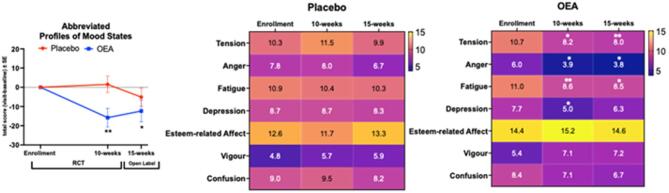 Figure 4
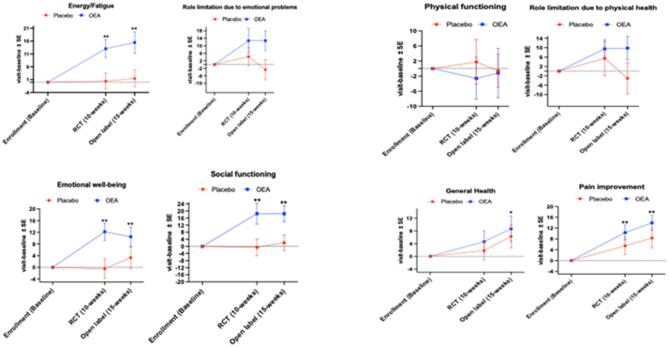 Figure 5
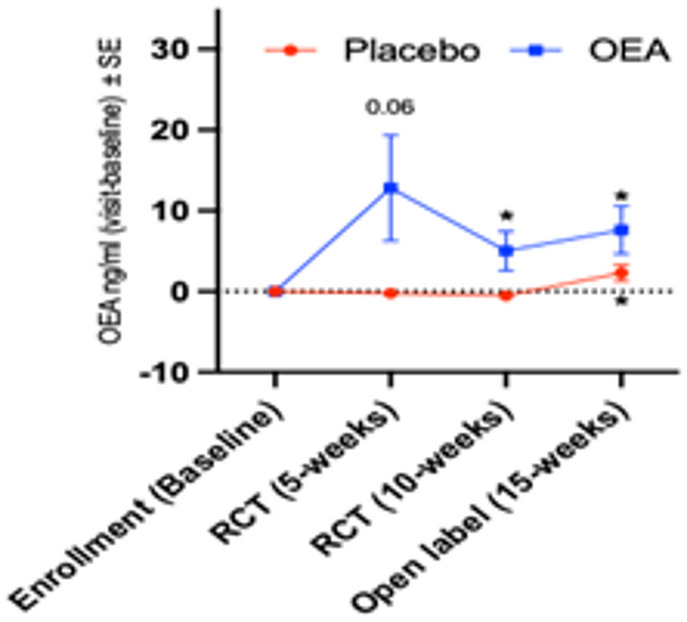 Figure 6
Peer Reviews
No public reviews on file for this paper yet. If you reviewed it on a platform where reviews are public (OpenReview, ICLR, NeurIPS, ICML), you can paste yours below so the community can read it here.
Videos
No videos yet. Explain this paper in a talk, walkthrough, or lecture? Add one.
Taxonomy
TopicsFibromyalgia and Chronic Fatigue Syndrome Research · Sleep and related disorders · Dietary Effects on Health