Validation of SocialBit as a smartwatch algorithm for social interaction detection in a clinical population
Amar Dhand, Samuel Tate, Cade Mack, Sofia Carozza, David Farynyk, Mehdi Bourahla, Oluwamayomikun Adeboye, Grace Cooke, Olivia Berglund, Riya Dahima, Melinda Luo, Vrushali Dhongade, George S. Usmanov, Kelly White, Amanda M. Bernal, Ross Zafonte, Shrikanth Narayanan, Minwoo Lee

TL;DR
SocialBit is a smartwatch algorithm that accurately detects social interactions in stroke patients, offering a new tool for monitoring brain health and recovery.
Contribution
SocialBit is the first validated, privacy-preserving algorithm for real-time social interaction detection in clinical populations, including those with neurological deficits.
Findings
SocialBit achieved high accuracy (AUC 0.94) in detecting social interactions in hospitalized stroke patients.
The algorithm maintained strong performance in patients with aphasia (AUC 0.93) and across diverse interaction types and environments.
Patients with more severe strokes engaged in fewer social interactions, as measured by SocialBit and confirmed by human coding.
Abstract
Social interaction supports brain health and recovery after neurological injury. Yet no validated tool exists for real-time measurement in individuals with and without neurological deficits. We developed SocialBit, a lightweight, privacy-preserving machine learning algorithm that detects social interactions using ambient audio features on a commercial smartwatch. In a prospective validation study, we evaluated SocialBit against livestream minute-by-minute human-coded ground truth in 153 hospitalized stroke patients who wore the device for up to 8 days, generating 88,918 min of observation. In these patients, the stroke severity and cognition spanned broad clinical ranges (NIH Stroke Scale 0–25; Montreal Cognitive Assessment 8–30), and 24 patients had aphasia across diverse subtypes, including severe presentations. SocialBit achieved high overall performance (sensitivity 0.87,…
Genes, proteins, chemicals, diseases, species, mutations and cell lines named across the full text — each resolved to its canonical identifier and authoritative record.
Click any figure to enlarge with its caption.
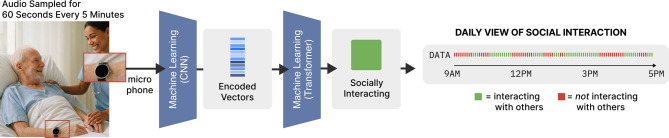 Figure 1
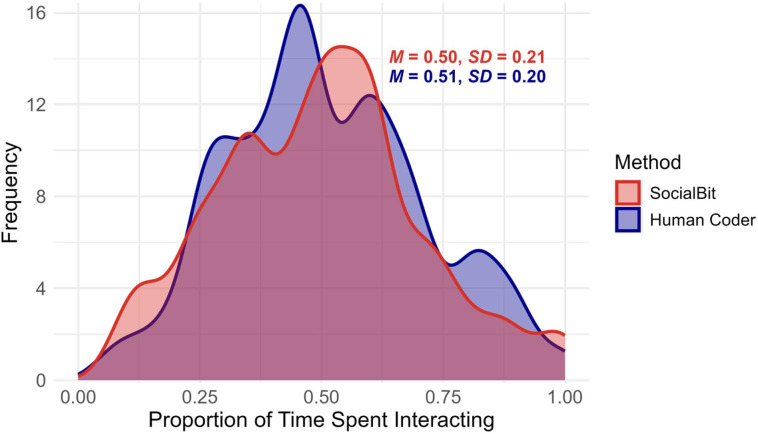 Figure 2
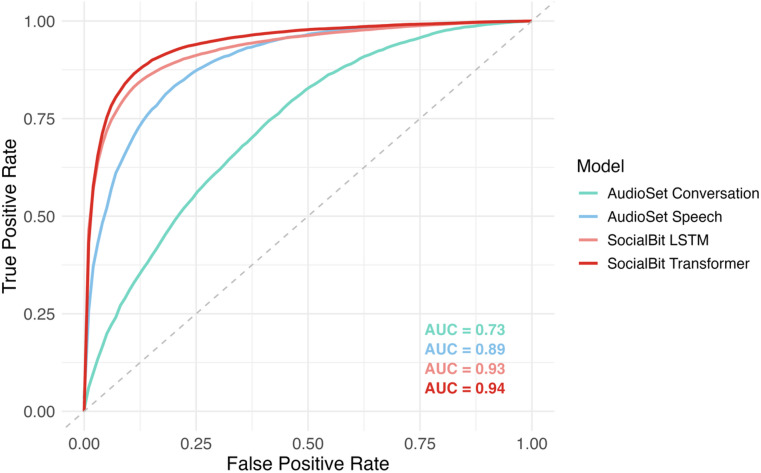 Figure 3
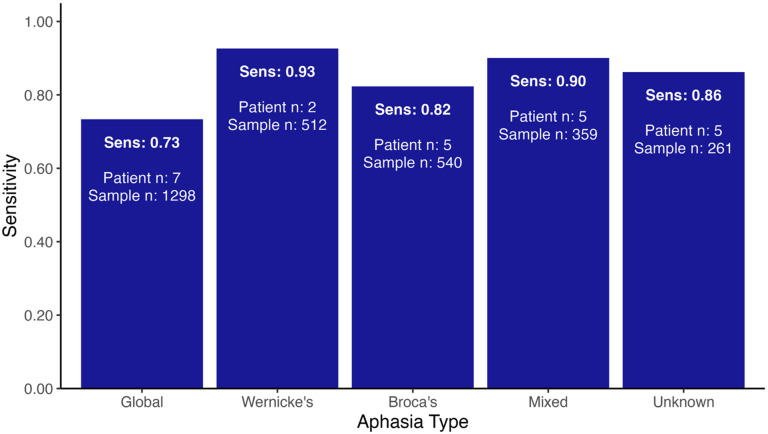 Figure 4
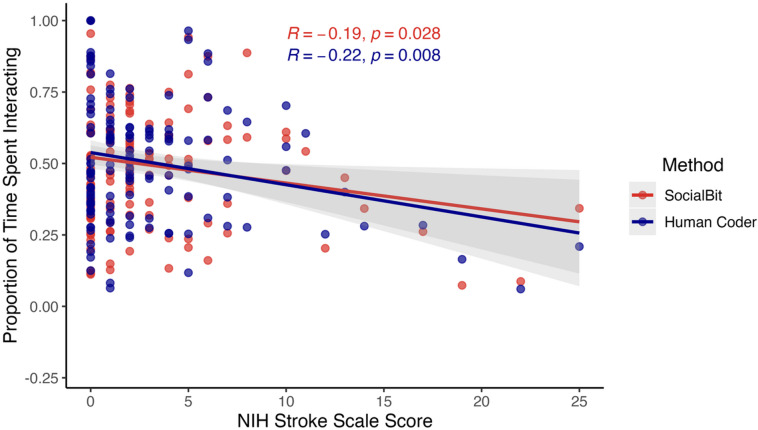 Figure 5
Peer Reviews
No public reviews on file for this paper yet. If you reviewed it on a platform where reviews are public (OpenReview, ICLR, NeurIPS, ICML), you can paste yours below so the community can read it here.
Videos
No videos yet. Explain this paper in a talk, walkthrough, or lecture? Add one.
Taxonomy
TopicsStroke Rehabilitation and Recovery · Traumatic Brain Injury Research · Neurobiology of Language and Bilingualism