Anticipation of periodic events influences cell motility in amoeba proteus
Stephanie Margarete Mueller, Sven Martin, Markus Morawski, Jens Stieler, Max Holzer, Martin Grunwald

TL;DR
Amoeba proteus can anticipate periodic environmental cues and adjust their movement in response, suggesting a form of adaptive behavior in single-cell organisms.
Contribution
Demonstrates that Amoeba proteus can anticipate periodic stimuli, adding to evidence of adaptive behavior in single-cell organisms.
Findings
Amoeba proteus reduced streaming speed in-phase with expected blue light stimulations.
The response occurred spontaneously at the time of the next anticipated stimulus.
This suggests single cells can anticipate and adapt to periodic environmental cues.
Abstract
All migrating cells (both single-cell organisms and as part of multicellular organisms) sense environmental conditions and respond to physical and molecular cues by changing the direction and speed of cellular movement. Adaptive behaviors enable motile cells to thrive in dynamic environments. A study with slime mold suggested an ability to anticipate dry and cold periods. However, experimental evidence for anticipation in other single-cell organisms is lacking. Here, we investigated whether Amoeba proteus can anticipate unfavourable periodic stimuli. Amoeba proteus react to blue light (405 nm) by reducing their streaming speed in response to each stimulation. As expected, after four periodic blue light stimulations A. proteus presented spontaneous in-phase reduction in streaming speed at the time point when the next stimulation would have occurred. Our results corroborate the claim that…
Genes, proteins, chemicals, diseases, species, mutations and cell lines named across the full text — each resolved to its canonical identifier and authoritative record.
Click any figure to enlarge with its caption.
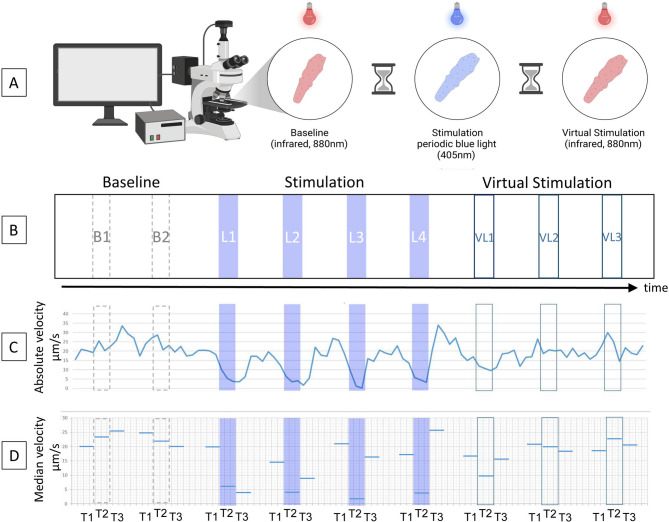 Figure 1
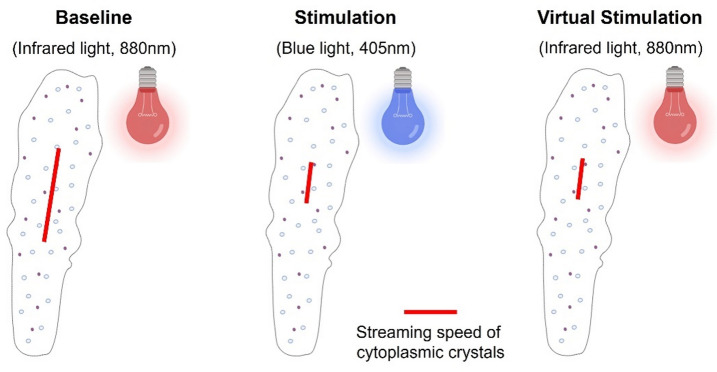 Figure 2
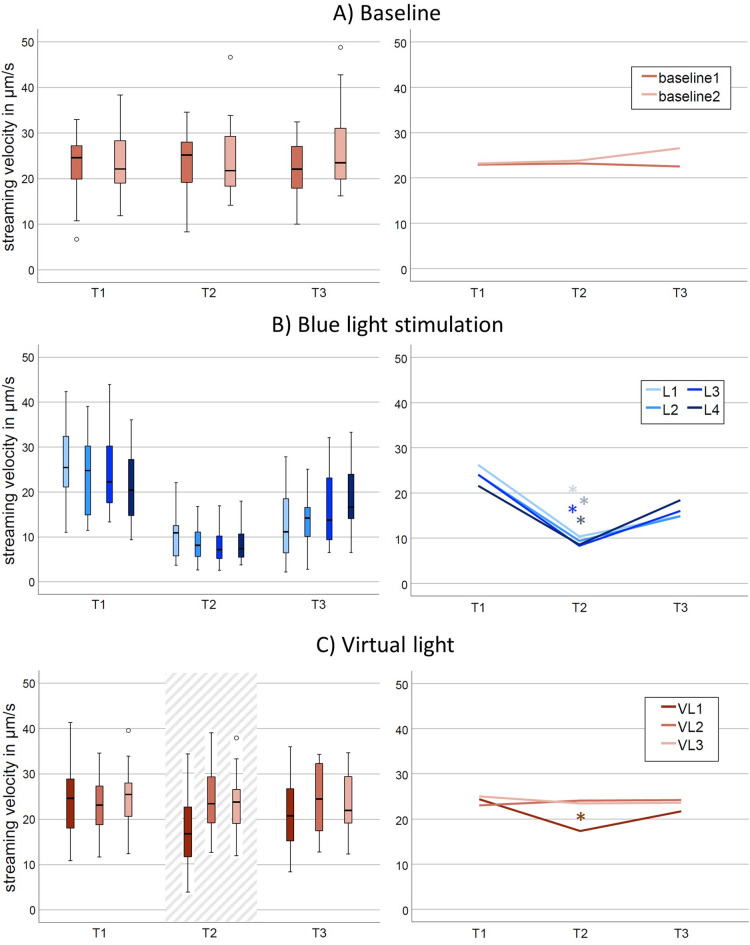 Figure 3
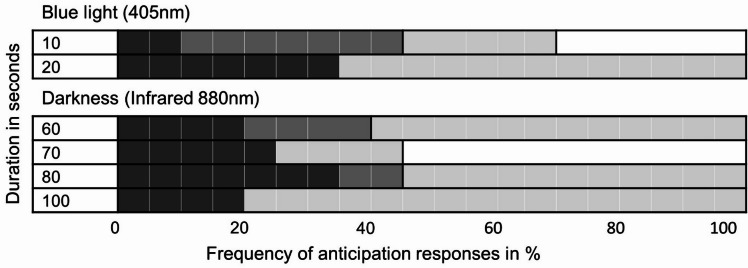 Figure 4
Peer Reviews
No public reviews on file for this paper yet. If you reviewed it on a platform where reviews are public (OpenReview, ICLR, NeurIPS, ICML), you can paste yours below so the community can read it here.
Videos
No videos yet. Explain this paper in a talk, walkthrough, or lecture? Add one.
Taxonomy
TopicsPlant and Biological Electrophysiology Studies · Slime Mold and Myxomycetes Research · Planarian Biology and Electrostimulation