Artificial Intelligence-Enabled 8-Channel ECG Diagnosing of Abnormalities with Wide QRS Complexes
Hongling Zhu, Qiushi Luo, Yao Wang, Mairihaba Maimaiti, Heng Zhang, Yulong Xiong, Chen Ruan, Jingyi Wang, Yedan Liu, Mengqiao Zhou, Yinan Sun, Wei Chen, E. Jin, Jin Li, Xia Chen, Tao Zhu, Xiaoyun Yang

TL;DR
This study shows that an AI model using 8-channel ECG data can accurately diagnose heart rhythm issues with wide QRS complexes, outperforming both 4- and 12-channel formats and human experts.
Contribution
The novel contribution is the development of an AI model using 8-channel ECG data to accurately classify abnormalities with wide QRS complexes, outperforming both fewer channels and human experts.
Findings
The AI model using 8-channel ECG data achieved 95.0% accuracy, outperforming both 4- and 12-channel formats.
The model's performance on the JX-Test set showed a mean F1 score of 0.917 and a mean AUROC score of 0.994.
The model outperformed cardiologists in accuracy, F1 score, and AUROC on the same datasets.
Abstract
Background: There is a substantial number of research exploring the application of artificial intelligence (AI) in identifying electrocardiogram (ECG) abnormalities related to heart rhythm or conduction with the 12-channel format. However, there is a scarcity of studies focusing on refined differentiation of serials of ECG abnormalities with wide QRS complexes in a simplified channel format. Methods: We constructed an ECG dataset (standard 10-s, 12-channel format) from adult patients from Tongji Hospital of Huazhong University of Science and Technology, Wuhan, China. This dataset was consisted of 5 kinds of ECG abnormalities with wide QRS complexes in the normal heartbeat (60 to 100 beats per minute) and the normal ECGs. Convolutional neural network was developed to classify these abnormalities. Four-channel (I, II, V1, and V5) and 8-channel (I, II, and V1 to V6) formats, compared to…
Genes, proteins, chemicals, diseases, species, mutations and cell lines named across the full text — each resolved to its canonical identifier and authoritative record.
Click any figure to enlarge with its caption.
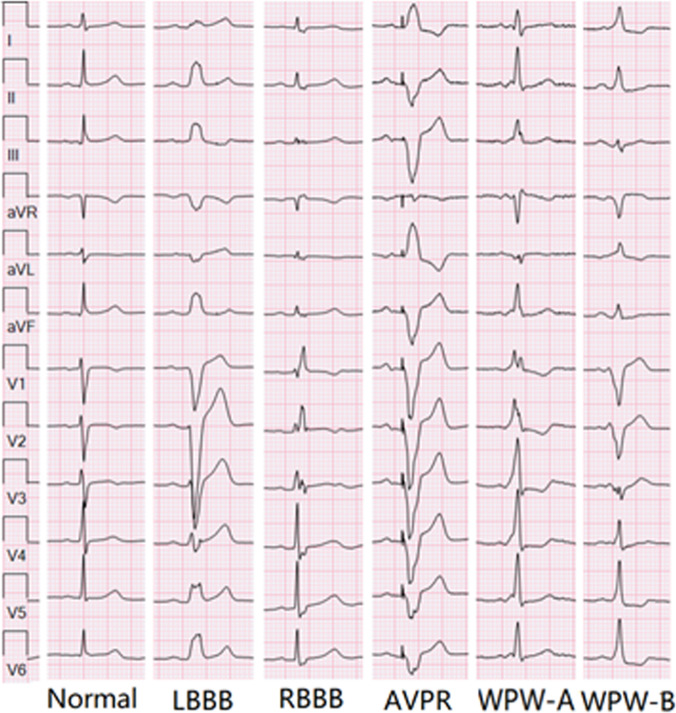 Figure 1
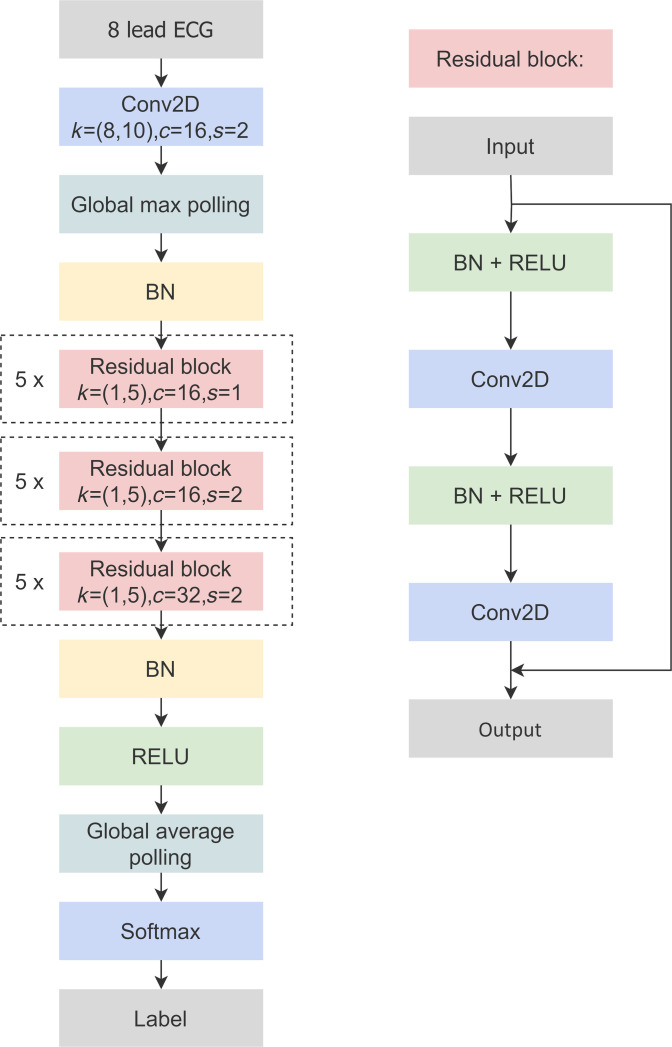 Figure 2
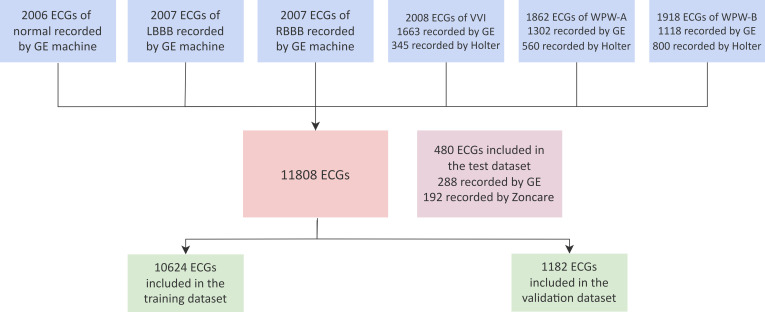 Figure 3
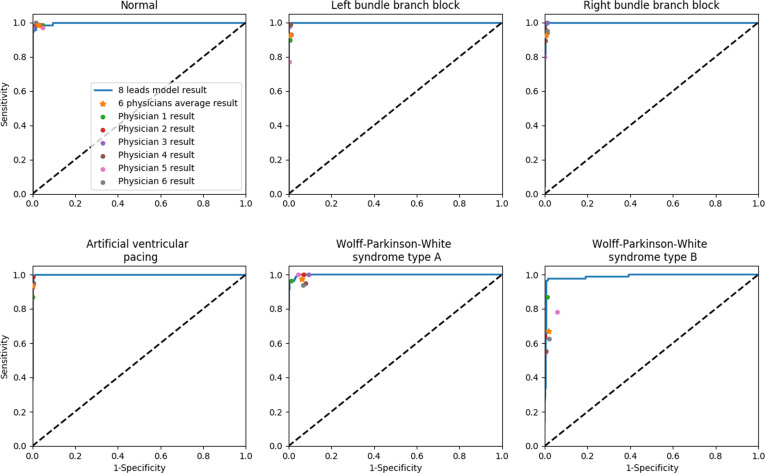 Figure 4
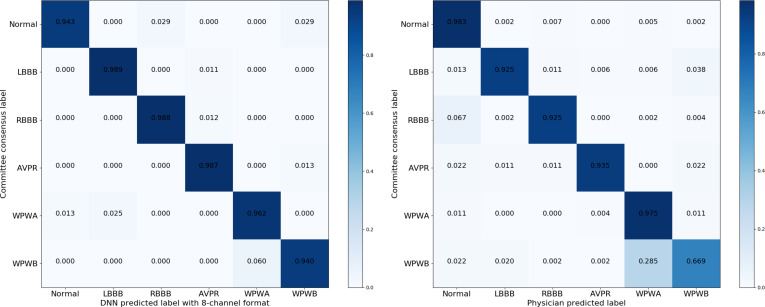 Figure 5
Peer Reviews
No public reviews on file for this paper yet. If you reviewed it on a platform where reviews are public (OpenReview, ICLR, NeurIPS, ICML), you can paste yours below so the community can read it here.
Videos
No videos yet. Explain this paper in a talk, walkthrough, or lecture? Add one.
Taxonomy
TopicsECG Monitoring and Analysis · Cardiac electrophysiology and arrhythmias · COVID-19 diagnosis using AI