Impact of ischemia duration on MRI-derived perfusion parameters in a mouse kidney transplant model
Felix L. Herr, Sandra Kloiber-Langhorst, Ming Ming Li, Olaf Dietrich, Robert Erdelkamp, Christoph Walz, Severin Jacobi, Ulrich Wirth, Jens Ricke, Clemens C. Cyran, Joachim Andrassy

TL;DR
This study shows that longer cold ischemia in mouse kidney transplants causes more severe microvascular injury, which can be detected using MRI perfusion measurements.
Contribution
The study demonstrates that DCE-MRI can noninvasively detect microvascular injury caused by prolonged cold ischemia in kidney transplants.
Findings
Prolonged cold ischemia (16 hours) significantly increases vascular permeability in transplanted kidneys.
DCE-MRI is a sensitive tool for detecting ischemia-induced microvascular dysfunction.
Longer ischemia leads to more severe endothelial and microcirculatory injury in transplanted kidneys.
Abstract
Cold ischemia during kidney transplantation induces ischemia-reperfusion injury with endothelial dysfunction, capillary leak, and impaired perfusion. Its duration critically determines graft outcome. Dynamic contrast-enhanced magnetic resonance imaging (DCE-MRI) enables noninvasive assessment of renal microcirculation and may indicate ischemic injury. We evaluated the impact of ischemia duration on DCE-MRI-derived perfusion parameters in renal transplants in mice. Procedures were approved by the local institutional animal care and use committee. A total of 15 C57BL/6 mice underwent kidney transplantation and were assigned to a short or prolonged cold ischemia group. DCE-MRI was performed to assess renal perfusion. Imaging was conducted at a mean of 268 ± 30 days (mean ± standard deviation) after transplantation. Perfusion parameters were calculated using the Patlak model, which…
Genes, proteins, chemicals, diseases, species, mutations and cell lines named across the full text — each resolved to its canonical identifier and authoritative record.
Click any figure to enlarge with its caption.
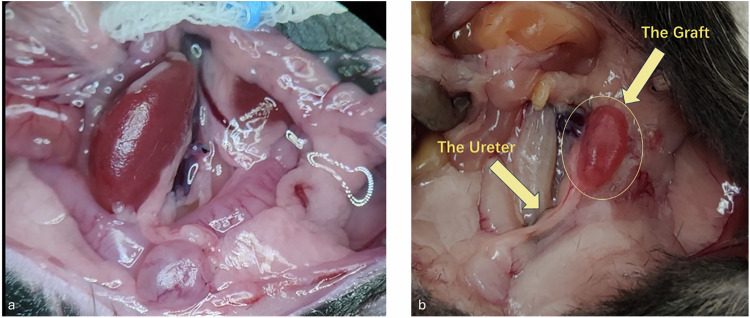 Figure 1
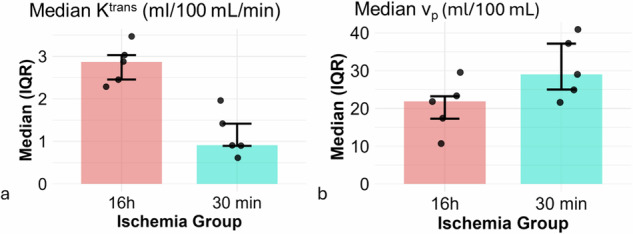 Figure 2
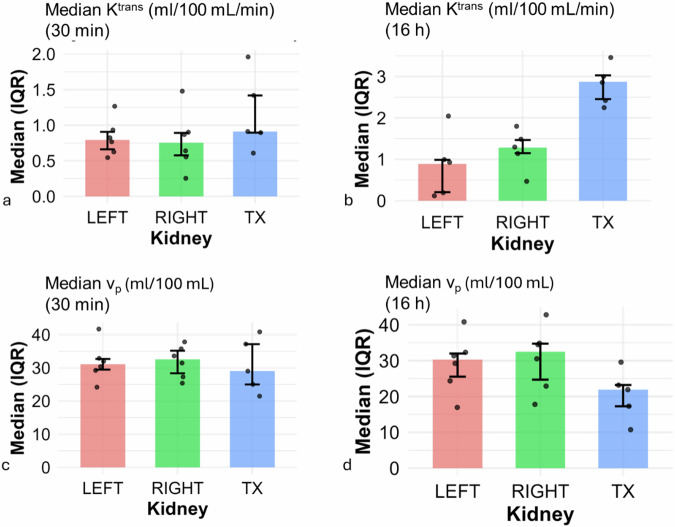 Figure 3
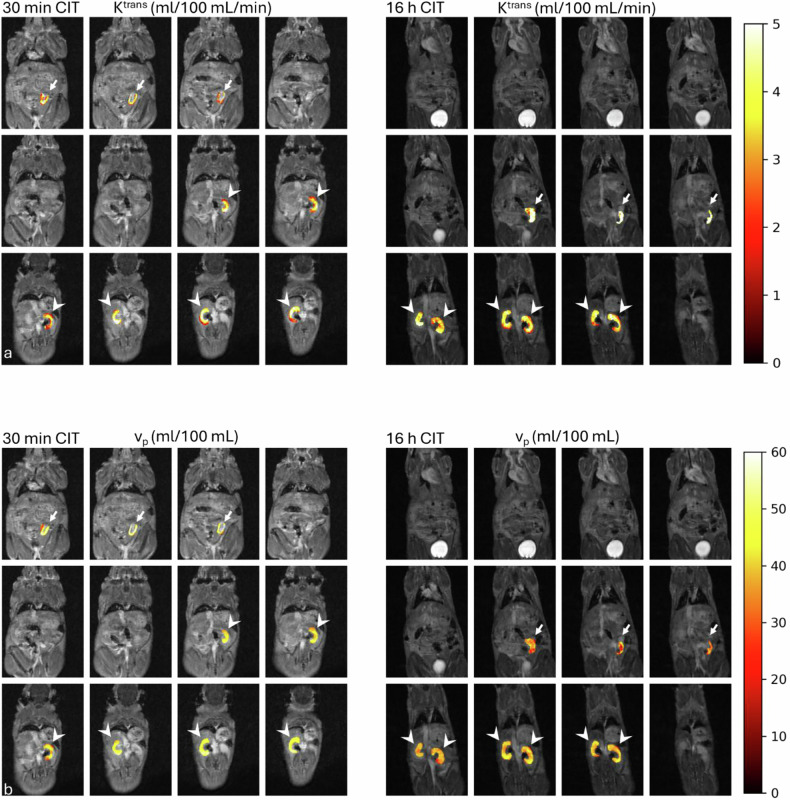 Figure 4
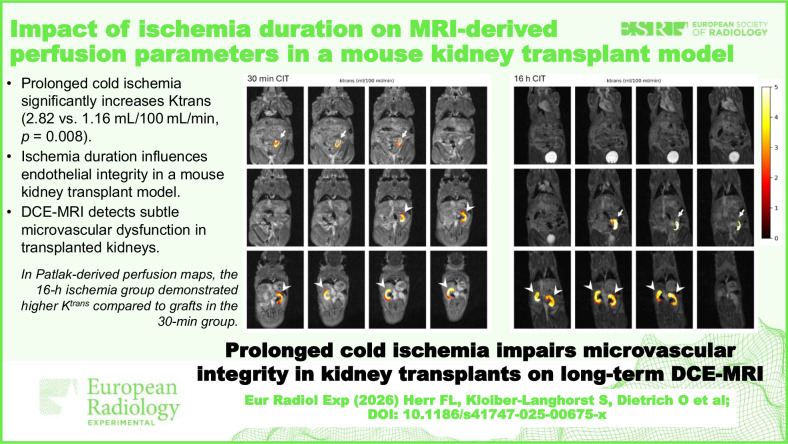 Figure 5
Peer Reviews
No public reviews on file for this paper yet. If you reviewed it on a platform where reviews are public (OpenReview, ICLR, NeurIPS, ICML), you can paste yours below so the community can read it here.
Videos
No videos yet. Explain this paper in a talk, walkthrough, or lecture? Add one.
Taxonomy
TopicsMRI in cancer diagnosis · Organ Transplantation Techniques and Outcomes · Renal and Vascular Pathologies