Visualization of gadolinium transport across the blood-brain barrier along perivascular clearance pathways
Svea Seehafer, Yvonne Mrosek, Lars-Patrick Schmill, Schekeb Aludin, Olav Jansen, Carl Alexander Gless, Johanna Rümenapp, Naomi Larsen

TL;DR
This study shows how a contrast agent moves through the brain's barrier after a medical procedure, suggesting a link to brain waste clearance systems.
Contribution
The study provides in vivo evidence of GBCA transport patterns following iatrogenic BBB disruption, potentially corresponding to glymphatic pathways.
Findings
BBB disruption was significantly more common after therapeutic DSA compared to diagnostic DSA.
GBCA enhancement followed a chronological and spatial pattern, indicating organized cerebrospinal-interstitial exchange.
Enhancement was predominantly located in downstream territories of probed vessels, suggesting glymphatic transport.
Abstract
We investigated the transport of gadolinium-based contrast agent (GBCA) across the blood-brain barrier (BBB) along the perivascular spaces as part of the glymphatic drainage in patients with iatrogenic BBB disruption following digital subtraction angiography (DSA). A retrospective analysis was conducted on patients who underwent DSA for diagnosis and/or treatment of intracranial aneurysms and received a 3-T magnetic resonance imaging (MRI) within the following day. Exclusion criteria included states with a suggested impairment of BBB integrity, such as neurodegenerative diseases or suspected glymphatic impairment. BBB disruption was assessed using a pre- and post-contrast three-dimensional T1-weighted volume-isotropic turbo spin-echo sequence. Patterns of GBCA distributions were described. The localization of GBCA-extravasation was correlated with perivascular spaces visualized on the…
Genes, proteins, chemicals, diseases, species, mutations and cell lines named across the full text — each resolved to its canonical identifier and authoritative record.
Click any figure to enlarge with its caption.
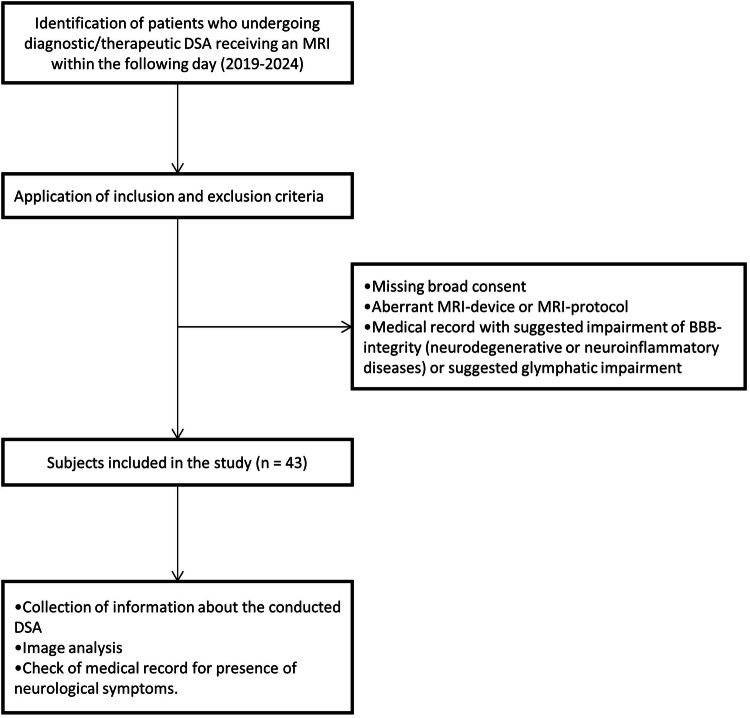 Figure 1
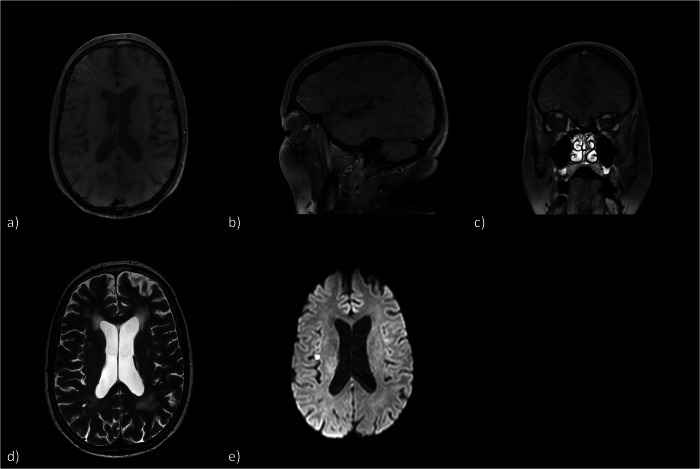 Figure 2
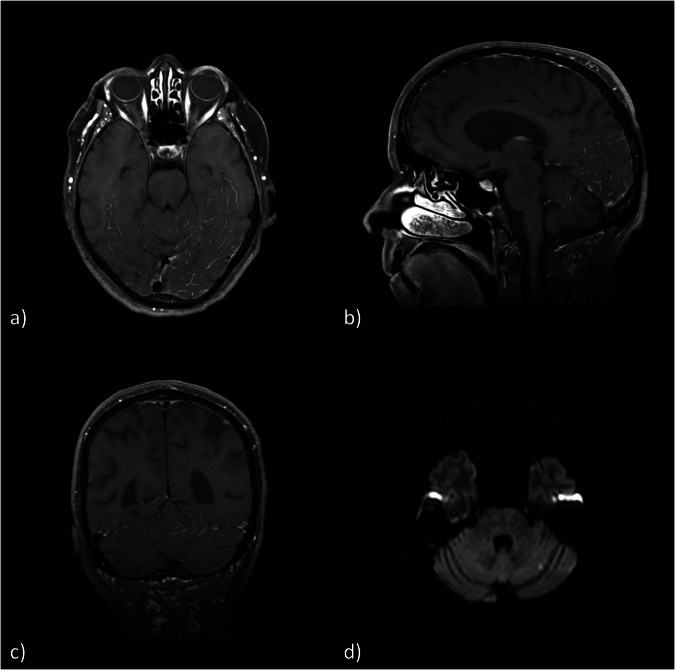 Figure 3
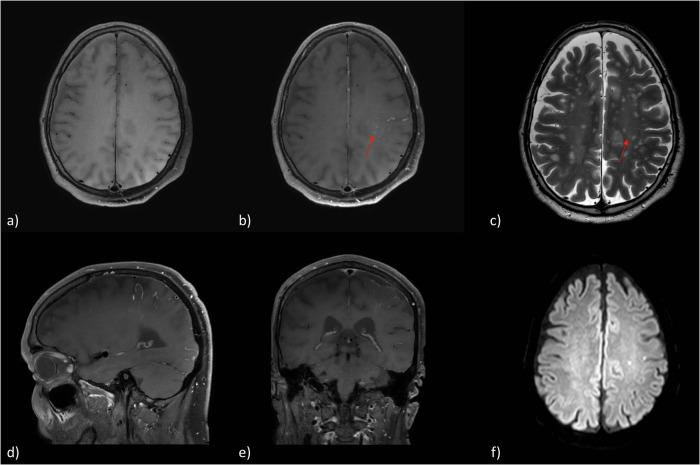 Figure 4
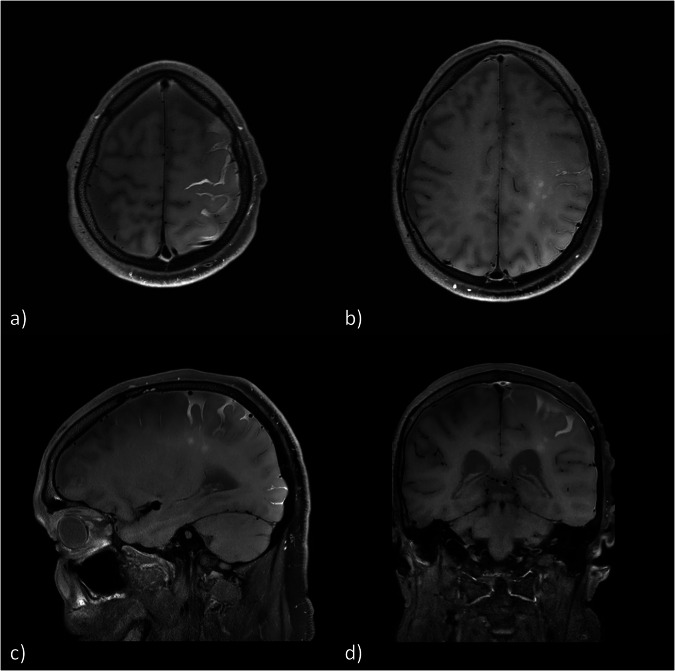 Figure 5
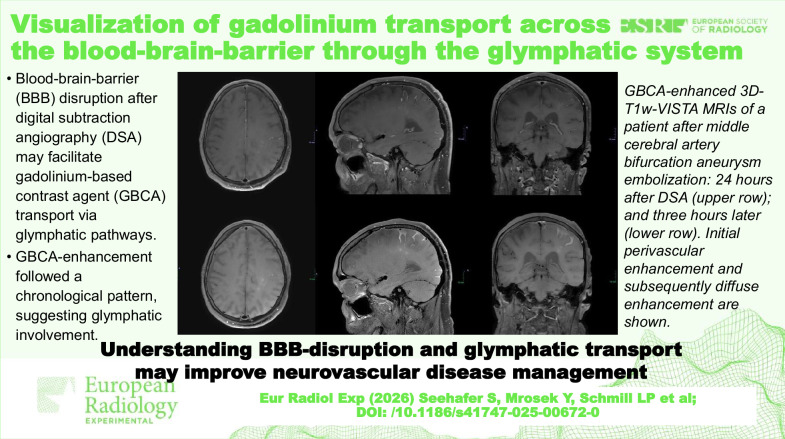 Figure 6
Peer Reviews
No public reviews on file for this paper yet. If you reviewed it on a platform where reviews are public (OpenReview, ICLR, NeurIPS, ICML), you can paste yours below so the community can read it here.
Videos
No videos yet. Explain this paper in a talk, walkthrough, or lecture? Add one.
Taxonomy
TopicsCerebrospinal fluid and hydrocephalus · Intracranial Aneurysms: Treatment and Complications · Intracerebral and Subarachnoid Hemorrhage Research