Single‐cell analysis reveals cytotoxic and memory CD8+ T cells associated with prolonged survival in relapsed/refractory leukaemia patients after haplo+cord haematopoietic stem cell transplantation
Hua Li, Zheyang Zhang, Ming Zhu, Xiaofan Li, Jinxian Dai, Ping Chen, Fei Chen, Xianling Chen, Yiding Yang, Xiaohong Yuan, Ronghan Tang, Zhijuan Zhu, Hongli Lin, Ting Lin, Mengsha Tong, Tao Chen, Yuanzhong Chen, Jialiang Huang, Nainong Li

TL;DR
This study shows that a specific type of CD8+ T cell, with both cytotoxic and memory properties, is linked to better survival in leukemia patients after a combined stem cell transplant.
Contribution
The study identifies a novel CD8+ T cell subtype associated with improved survival in leukemia patients following haplo+cord HSCT.
Findings
CD8+ T cells with cytotoxic and memory properties are enriched in patients receiving haplo+cord HSCT and correlate with prolonged survival.
Single-cell multi-omics analysis reveals that cytotoxic-related genes in CD8+ T cells are regulated by cooperative enhancer networks.
Haplo+cord HSCT leads to superior survival outcomes compared to single cord HSCT in relapsed/refractory leukemia patients.
Abstract
Allogeneic haematopoietic stem cell transplantation (allo‐HSCT) is a curative treatment for haematological malignancies. Sequential transplantation of haploidentical stem cell and umbilical cord blood (haplo+cord HSCT) among recipients with relapsed/refractory (R/R) leukaemia exhibited superior survival outcomes compared with single cord HSCT. However, the underlying mechanisms remain unclear. Here, we profiled and compared single‐cell gene expression and chromatin accessibility in bone marrow from 16 patients receiving haplo+cord or single cord HSCT. We observed distinct compositions and functions of global immune landscapes, with haplo+cord HSCT exhibiting effective anti‐tumour and anti‐viral immunity mediated by type I interferon signalling. Analysis of T cells revealed specific CD8+ T cell subtype (CD8‐c1), enriched in recipients with haplo+cord HSCT, which was also confirmed by…
Genes, proteins, chemicals, diseases, species, mutations and cell lines named across the full text — each resolved to its canonical identifier and authoritative record.
Click any figure to enlarge with its caption.
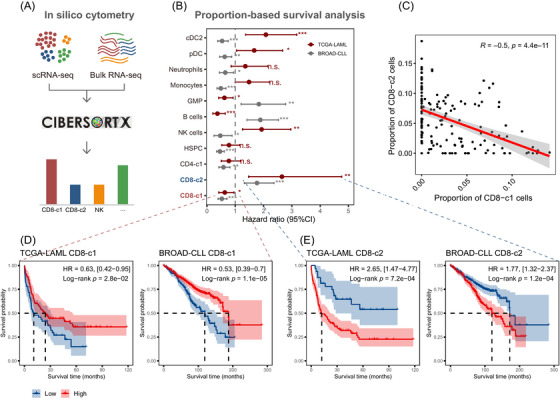 Figure 1
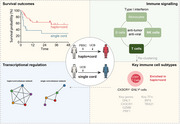 Figure 2
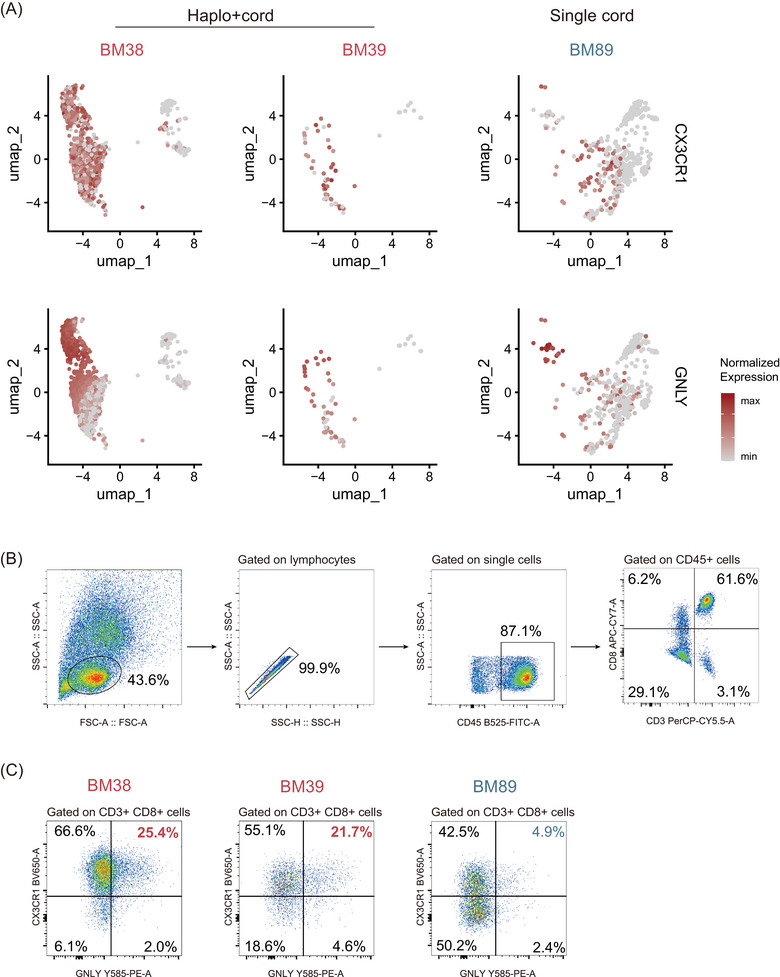 Figure 3
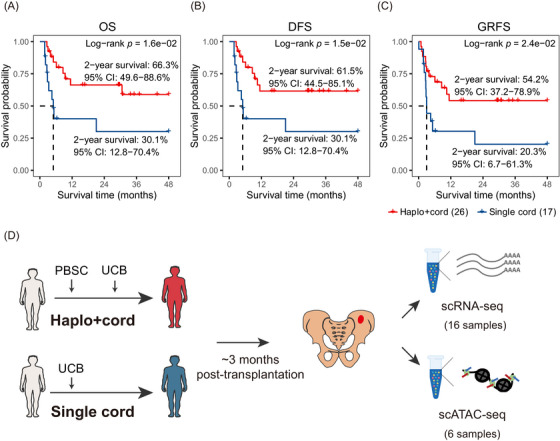 Figure 4
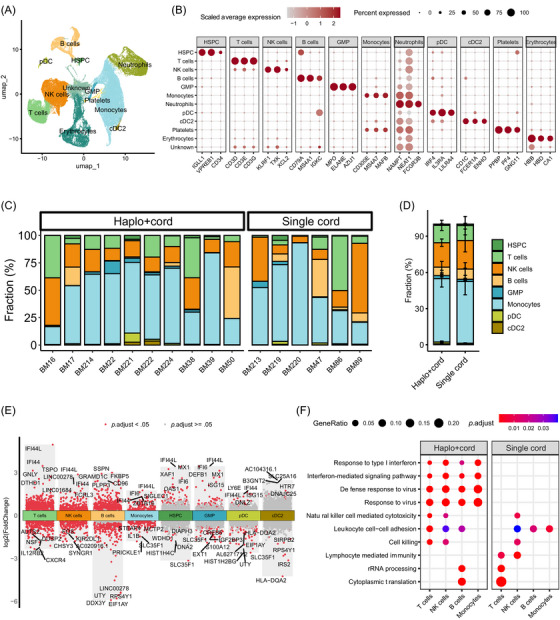 Figure 5
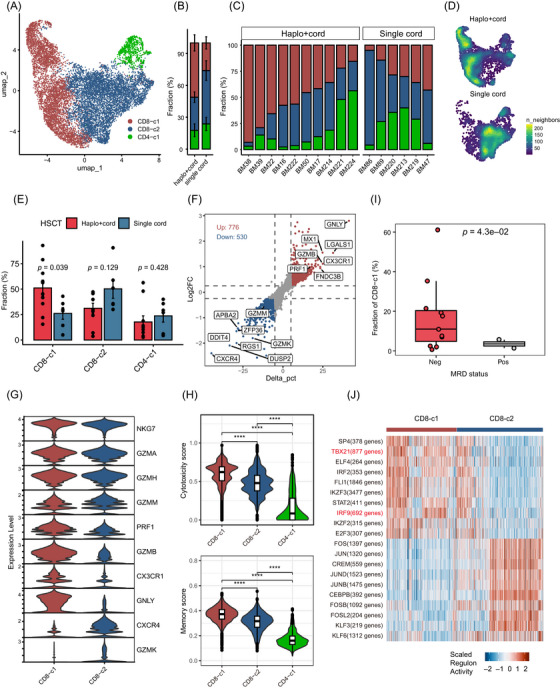 Figure 6
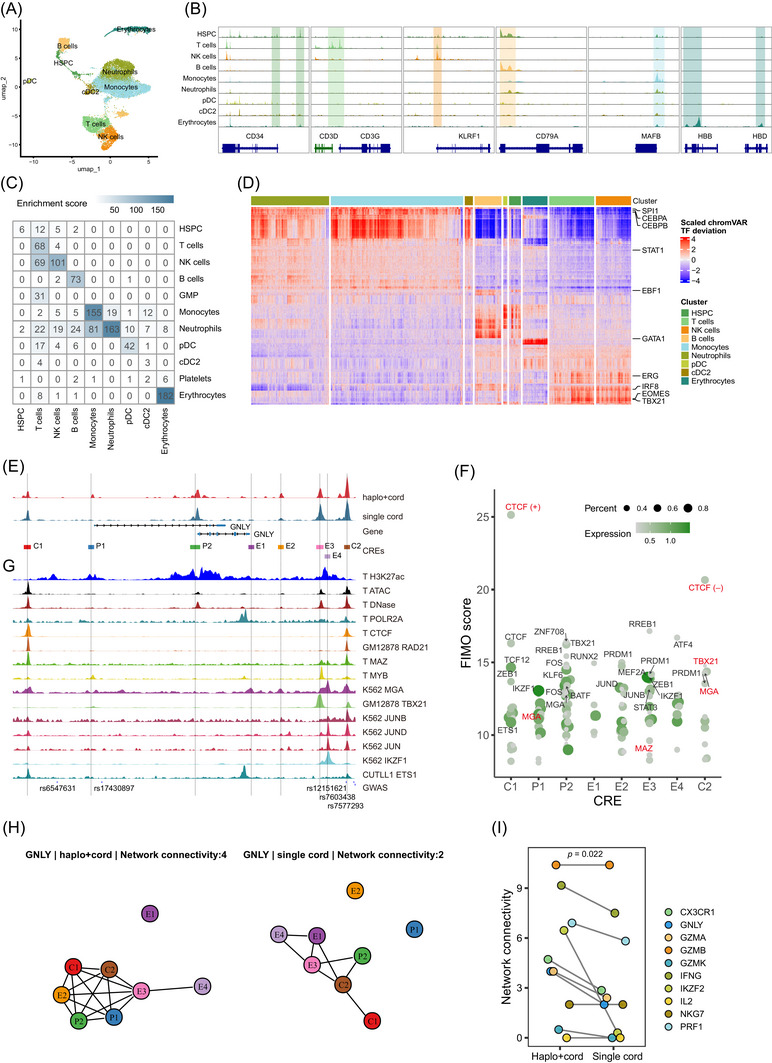 Figure 7
Peer Reviews
No public reviews on file for this paper yet. If you reviewed it on a platform where reviews are public (OpenReview, ICLR, NeurIPS, ICML), you can paste yours below so the community can read it here.
Videos
No videos yet. Explain this paper in a talk, walkthrough, or lecture? Add one.
Taxonomy
TopicsHematopoietic Stem Cell Transplantation · Single-cell and spatial transcriptomics · CAR-T cell therapy research