Bufalin Inhibits Cytokine Storm by Regulating TLR4/TLR3 Signaling Pathway
Xixi Liu, Chencheng Li, Jing Yang, Weiguang Zhang, Zhongxiao Hu, Xiaoli Zhang, Reaila Jianati, Fang Tian, Xingbin Dai, Zuqiong Xu, Biqing Chen, Xuejun Zhu

TL;DR
Bufalin, a compound from toad venom, reduces inflammation by inhibiting key immune signaling pathways, offering potential as a new anti-inflammatory drug.
Contribution
The study identifies bufalin's anti-inflammatory mechanism through TLR4/TLR3 signaling inhibition and suggests its potential as a drug candidate.
Findings
Bufalin reduces pro-inflammatory cytokines like IL-6 and TNF-α by inhibiting IKBα and IRF3 phosphorylation.
Molecular docking suggests bufalin targets MD-2 coupled with TLR4 activated by lipopolysaccharide.
The findings validate traditional Chinese medicine's use of toad venom for inflammatory diseases.
Abstract
Bufalin is one main component of the dried venom from Bufo gargarizans Cantor, which has anti‐tumor, cardiotonic, anti‐inflammatory and other physiological activities. However, in recent years, researchers have mainly paid attention to its anti‐tumor effect and neglected its anti‐inflammatory effect. We used lipopolysaccharide (TLR4 ligand) and poly inosinic acid (TLR3 ligand) to stimulate cultured macrophages to induce inflammatory condition. Transcriptome sequencing and molecular experiments were performed to investigate the underlying mechanism. Bufalin could significantly reduce the production of pro‐inflammatory factors (IL‐6, TNF‐α, IL‐1β, IL‐8, CXCL10, etc.), through inhibiting the phosphorylation of IKBα and IRF3, and thus down‐regulating Toll‐like receptor pathway. Molecular docking predicted that one of the molecular targets of bufalin is MD‐2 coupled with…
Genes, proteins, chemicals, diseases, species, mutations and cell lines named across the full text — each resolved to its canonical identifier and authoritative record.
Click any figure to enlarge with its caption.
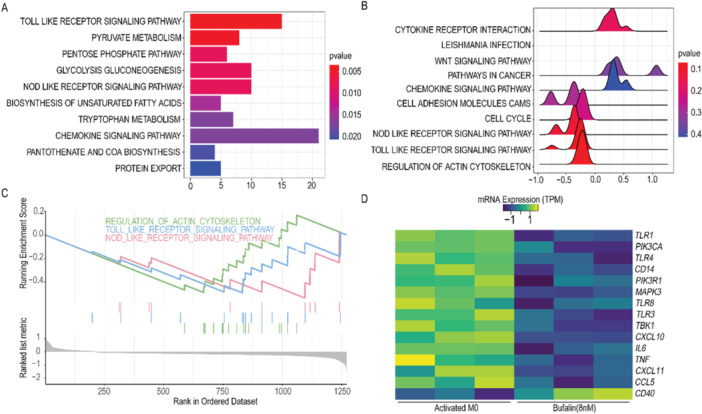 Figure 1
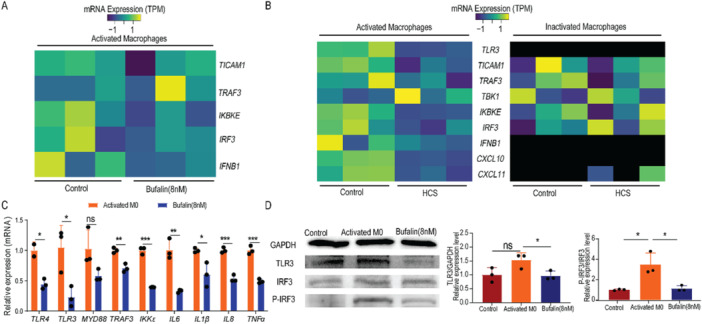 Figure 2
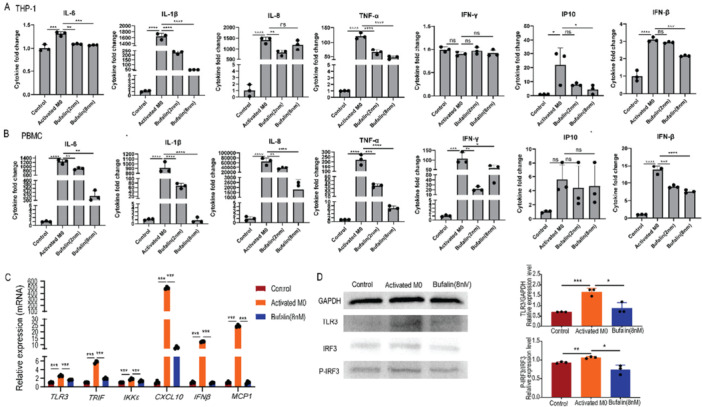 Figure 3
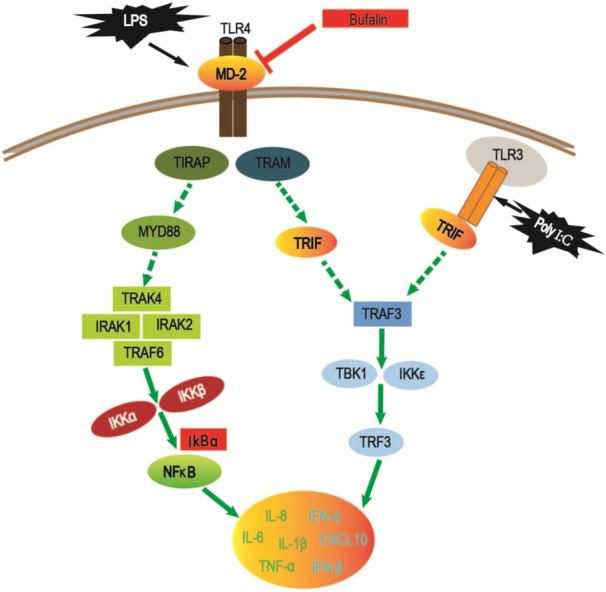 Figure 4
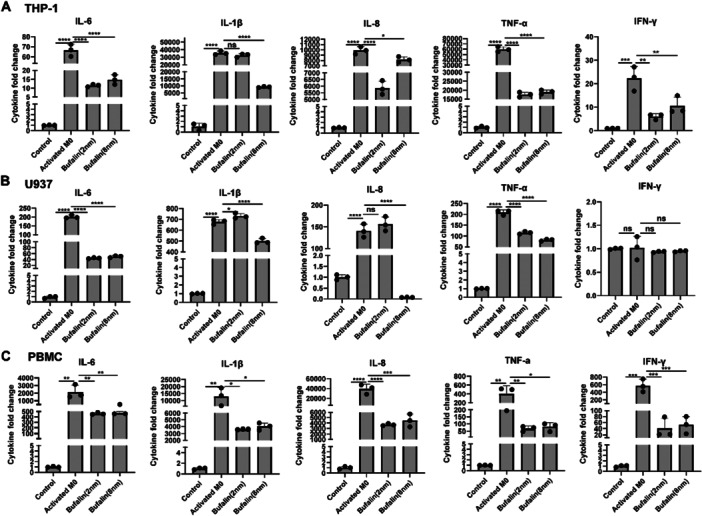 Figure 5
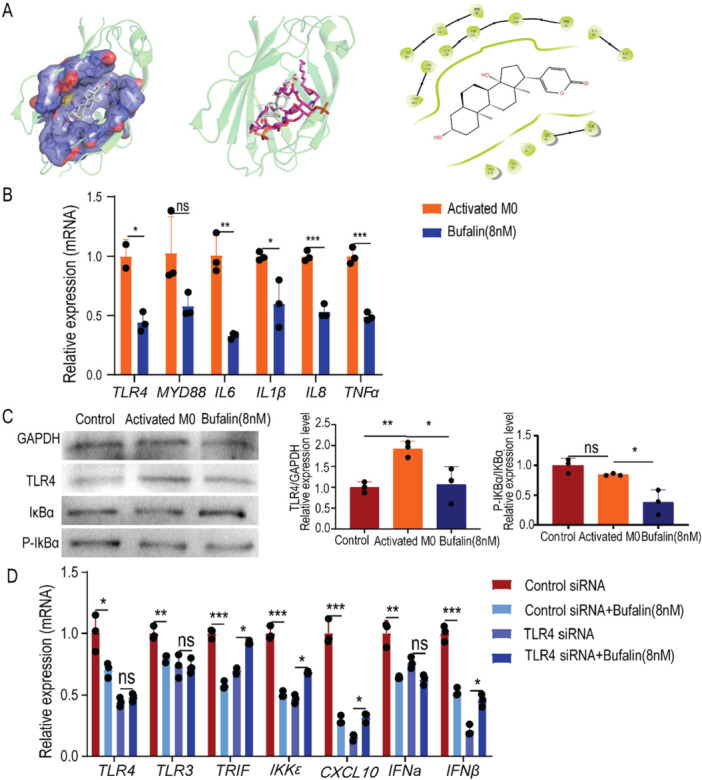 Figure 6
 Figure 7
Peer Reviews
No public reviews on file for this paper yet. If you reviewed it on a platform where reviews are public (OpenReview, ICLR, NeurIPS, ICML), you can paste yours below so the community can read it here.
Videos
No videos yet. Explain this paper in a talk, walkthrough, or lecture? Add one.
Taxonomy
TopicsVenomous Animal Envenomation and Studies · Ion channel regulation and function · Immune Response and Inflammation