Integrating computational fluid dynamics into organ-on-chip systems: a glioblastoma-centred design and validation framework
Hooman Taleban, Xinzhong Li, Zulfiqur Ali, Karunakaran Kalesh, Jai Prakash, Tugba Bagci-Onder, Barbara Breznik

TL;DR
This paper explores how computational fluid dynamics can improve organ-on-chip models of glioblastoma, making them more accurate and biologically relevant.
Contribution
The paper introduces a structured workflow for integrating computational fluid dynamics into GBM-on-chip design and validation.
Findings
Current organ-on-chip platforms lack predictive control over flow and mechanical cues.
CFD can enhance the biological fidelity and design of GBM-on-chip systems.
Integration of CFD with AI-based optimization can improve in vitro tumor models.
Abstract
Glioblastoma GBM: Glioblastoma multiforme (GBM) remains one of the most lethal and treatment-resistant brain cancers, driven in part by the complexity of its tumour microenvironment (TME). While organ-on-chip (OoC) platforms offer more physiologically relevant models than traditional 2D or static 3D systems, their design remains largely empirical, lacking predictive control over flow conditions, biochemical gradients, and mechanical cues. Computational Fluid Dynamics (CFD) has emerged as a powerful tool to enhance the design, precision, and biological fidelity of OoC platforms. This comprehensive review highlights current limitations in replicating GBM’s biological complexity and technical constraints in device fabrication and maintenance, mapping them to specific CFD strategies. It synthesises current strategies into a structured workflow for integrating CFD into the design,…
Genes, proteins, chemicals, diseases, species, mutations and cell lines named across the full text — each resolved to its canonical identifier and authoritative record.
Click any figure to enlarge with its caption.
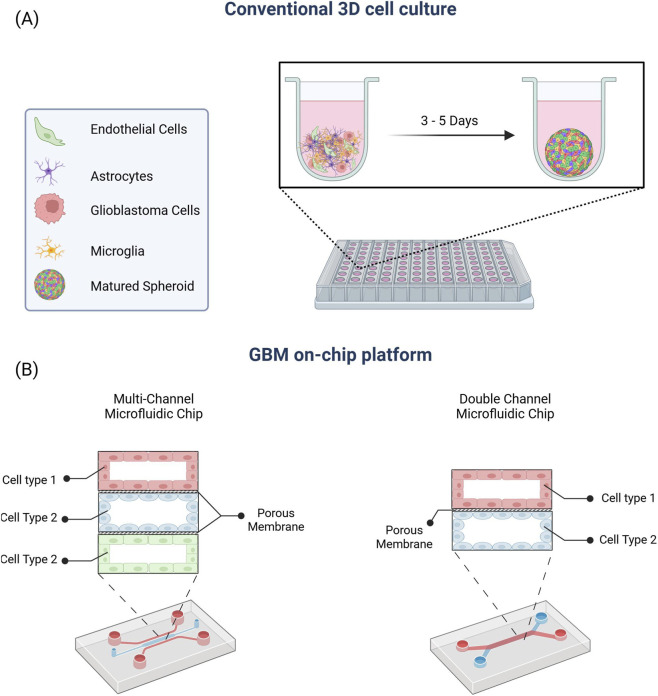 Figure 1
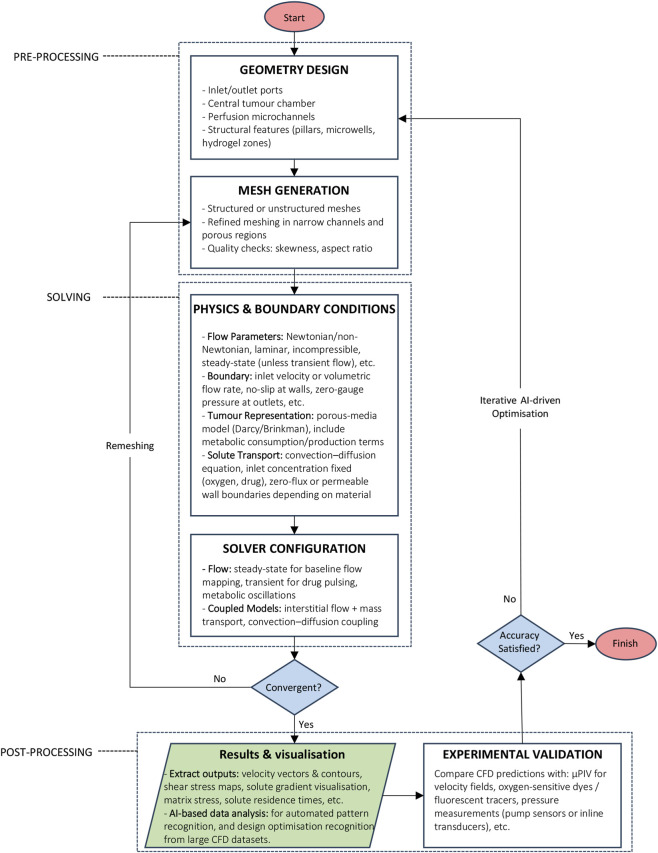 Figure 2
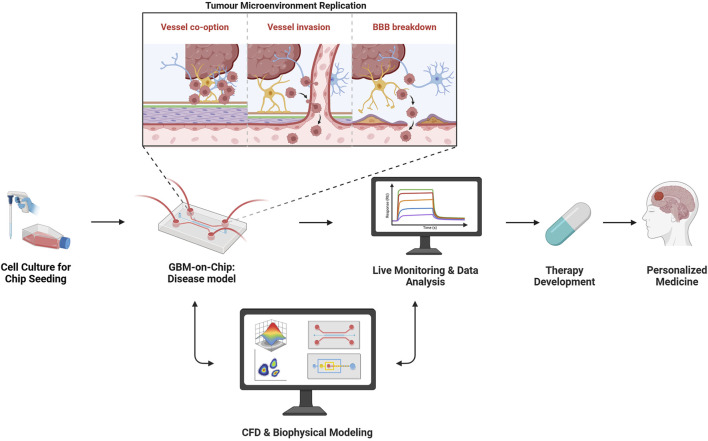 Figure 3
Peer Reviews
No public reviews on file for this paper yet. If you reviewed it on a platform where reviews are public (OpenReview, ICLR, NeurIPS, ICML), you can paste yours below so the community can read it here.
Videos
No videos yet. Explain this paper in a talk, walkthrough, or lecture? Add one.
Taxonomy
Topics3D Printing in Biomedical Research · Innovative Microfluidic and Catalytic Techniques Innovation · Microfluidic and Bio-sensing Technologies