Comparative effectiveness of telmisartan vs. other angiotensin receptor blockers in reducing hypertension-related cerebrovascular and cardiovascular events: a real-world retrospective study using the TriNetX network
Tse-Yu Chen, Yi-Chun Lin, Guang-Yaw Liu, Hui-Chih Hung

TL;DR
This study finds that telmisartan, a type of blood pressure medication, may be more effective than similar drugs in reducing stroke and heart failure risks in older hypertensive patients.
Contribution
The study provides real-world evidence comparing telmisartan to other ARBs, showing its superior effectiveness in reducing cardiovascular and cerebrovascular events.
Findings
Telmisartan was associated with a 19.5% lower risk of stroke compared to other ARBs.
It showed a 25% lower risk of heart failure and a 41% lower risk of all-cause mortality.
Benefits were consistent across subgroups including patients with diabetes and chronic kidney disease.
Abstract
Telmisartan is a long-acting angiotensin II receptor blocker (ARB) with unique pharmacologic properties, including partial PPAR-γ activation. Its comparative effectiveness against other ARBs in real-world populations remains unclear. We conducted a retrospective cohort study using the TriNetX Global Collaborative Network, including hypertensive patients aged 55–85 years without prior stroke, heart failure, or myocardial infarction. After 1:1 propensity score matching, 41,598 patients were included in each group. Telmisartan use was associated with a significantly lower risk of stroke (HR 0.805, 95% CI 0.751–0.863), heart failure (HR 0.75, 95% CI 0.672–0.836), and all-cause mortality (HR 0.59, 95% CI 0.542–0.642) compared to other ARBs. Subgroup analyses showed consistent benefits across sex, diabetes, chronic kidney disease, and hyperlipidemia. In this large real-world matched cohort…
Genes, proteins, chemicals, diseases, species, mutations and cell lines named across the full text — each resolved to its canonical identifier and authoritative record.
Click any figure to enlarge with its caption.
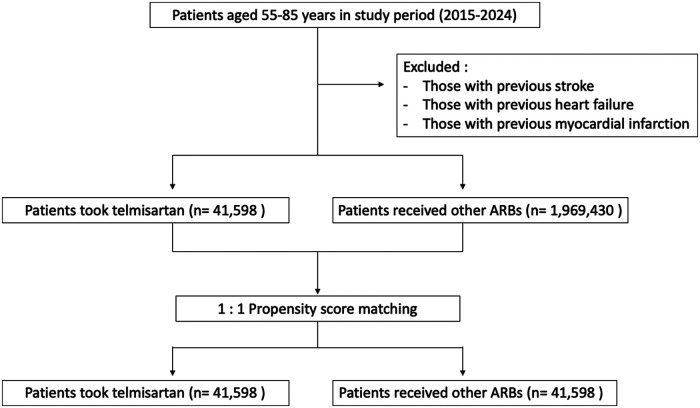 Figure 1
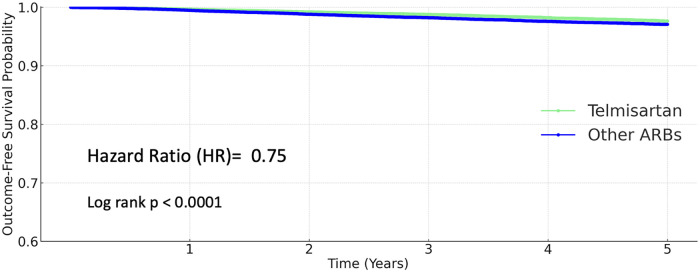 Figure 2
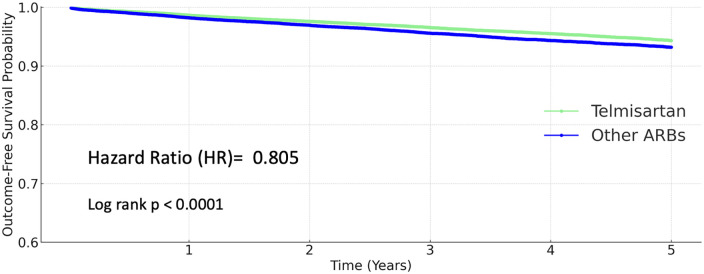 Figure 3
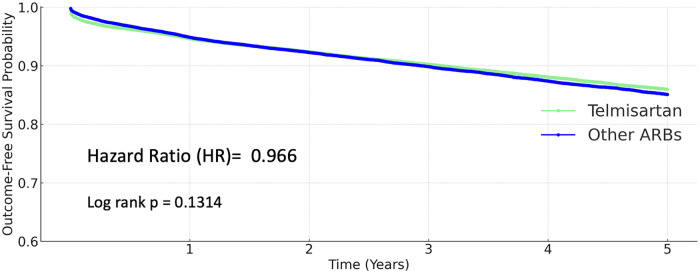 Figure 4
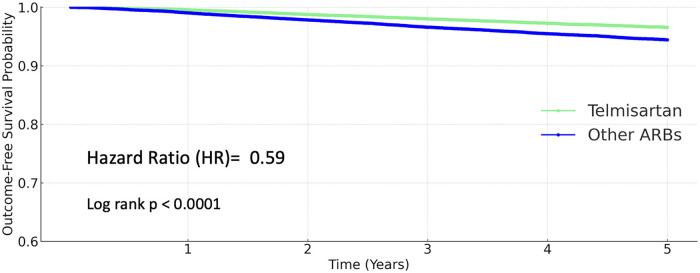 Figure 5
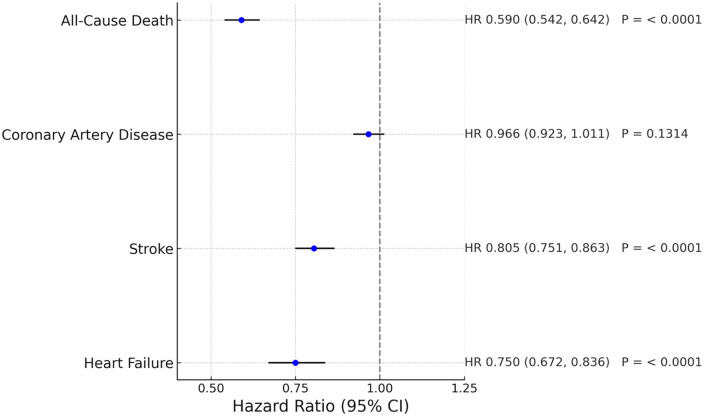 Figure 6
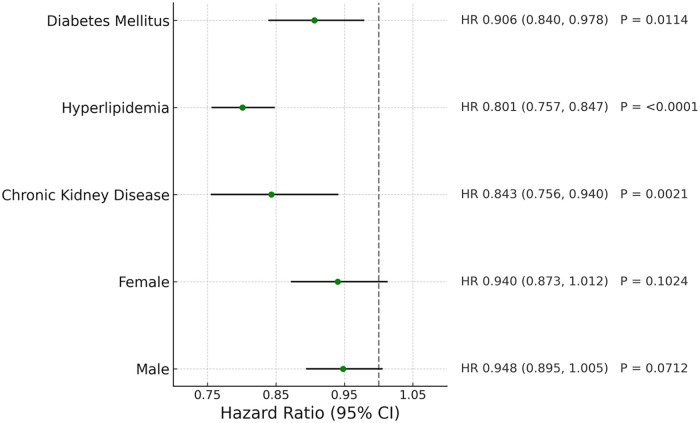 Figure 7
Peer Reviews
No public reviews on file for this paper yet. If you reviewed it on a platform where reviews are public (OpenReview, ICLR, NeurIPS, ICML), you can paste yours below so the community can read it here.
Videos
No videos yet. Explain this paper in a talk, walkthrough, or lecture? Add one.
Taxonomy
TopicsRenin-Angiotensin System Studies · Blood Pressure and Hypertension Studies · Diabetes Treatment and Management