Case Report: Effective management of a Meige syndrome patient with subthalamic stimulation-induced dyskinesia through timed stimulation programming of different contacts
Dawei Meng, Haihang Sun, Ning Wang, Zonghui Fu, Lin Wang

TL;DR
A new stimulation strategy helped manage severe side effects in a patient with Meige syndrome after brain stimulation treatment.
Contribution
A novel timed stimulation programming strategy using different contacts to manage refractory stimulation-induced dyskinesia in Meige syndrome.
Findings
Timed alternation between ventral and dorsal contacts reduced stimulation-induced dyskinesia without worsening symptoms.
Volume of tissue activated reconstruction suggested pallidothalamic fiber modulation suppressed dyskinesia.
The strategy offers a viable alternative when conventional DBS programming fails in Meige syndrome patients.
Abstract
Meige syndrome is a rare adult-onset segmental dystonia characterized by blepharospasms and oromandibular dystonia. Deep brain stimulation (DBS) of the subthalamic nucleus (STN) is an established treatment, but it can lead to stimulation-induced dyskinesia (SID) in some patients. Refractory SID in Meige syndrome after STN-DBS is clinically challenging. We report a case of a Meige syndrome patient who developed refractory SID following STN-DBS and was successfully managed using a novel timed-stimulation programming strategy employing different contacts. A 47-year-old female with a two-year history of Meige syndrome developed refractory SID after the treatment of STN-DBS. Various programming strategies were attempted, including monopolar stimulation, interleaved stimulation, bipolar stimulation et al., but none achieved a balance between symptom control and SID. A novel approach…
Genes, proteins, chemicals, diseases, species, mutations and cell lines named across the full text — each resolved to its canonical identifier and authoritative record.
Click any figure to enlarge with its caption.
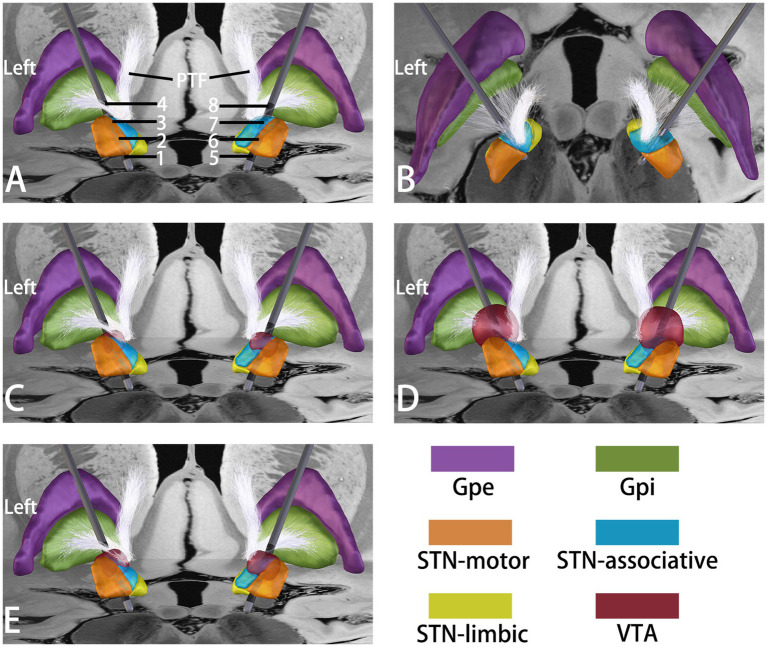 Figure 1
Peer Reviews
No public reviews on file for this paper yet. If you reviewed it on a platform where reviews are public (OpenReview, ICLR, NeurIPS, ICML), you can paste yours below so the community can read it here.
Videos
No videos yet. Explain this paper in a talk, walkthrough, or lecture? Add one.
Taxonomy
TopicsNeurological disorders and treatments · Botulinum Toxin and Related Neurological Disorders · Transcranial Magnetic Stimulation Studies