ASXL3 gene variants causing Bainbridge-Ropers syndrome: clinical and genetic analysis of four Chinese patients
Qi Yang, Qiang Zhang, Xunzhao Zhou, Shang Yi, Zailong Qin, Sheng Yi, Sheng He, Jingsi Luo

TL;DR
This study reports four Chinese patients with Bainbridge-Ropers syndrome caused by ASXL3 gene variants, highlighting new clinical features and expanding the known spectrum of the disease.
Contribution
The study identifies two novel ASXL3 gene variants and reports new clinical complications in BRPS patients.
Findings
Two novel ASXL3 gene variants (c.1276del and c.3750del) were identified in unrelated Chinese patients.
New clinical features such as long eyelashes, laryngeal cartilage hypoplasia, and dextrocardia were observed in BRPS patients.
The findings expand the mutational and clinical spectrum of Bainbridge-Ropers syndrome.
Abstract
Bainbridge-Ropers syndrome (BRPS, OMIM #615485) is a rare, heterogeneous autosomal dominant genetic disease that is mainly characterized by intellectual disability (ID) of varying degrees, developmental delay (DD), language impairments, failure to thrive, behavioral issues, hypotonia, feeding difficulties, and distinctive craniofacial features. It is caused by heterozygous pathogenic variants in the additional sex combs-like 3 (ASXL3, OMIM #615115) gene. In this study, four Chinese patients were diagnosed with BRPS caused by ASXL3 variants through whole exome sequencing. We detected two novel and two previously reported variants of the ASXL3 gene (NM_030632.3) in these 4 unrelated Chinese patients: two novel variants, namely, c.1276del (p.Val426*) and c.3750del (p.Glu1251Asnfs*5), and two recurrent variants, namely, c.4330C>T (p.Arg1444*) and c.4336_4337delAG (p.Arg1446fs*2). All four…
Genes, proteins, chemicals, diseases, species, mutations and cell lines named across the full text — each resolved to its canonical identifier and authoritative record.
Click any figure to enlarge with its caption.
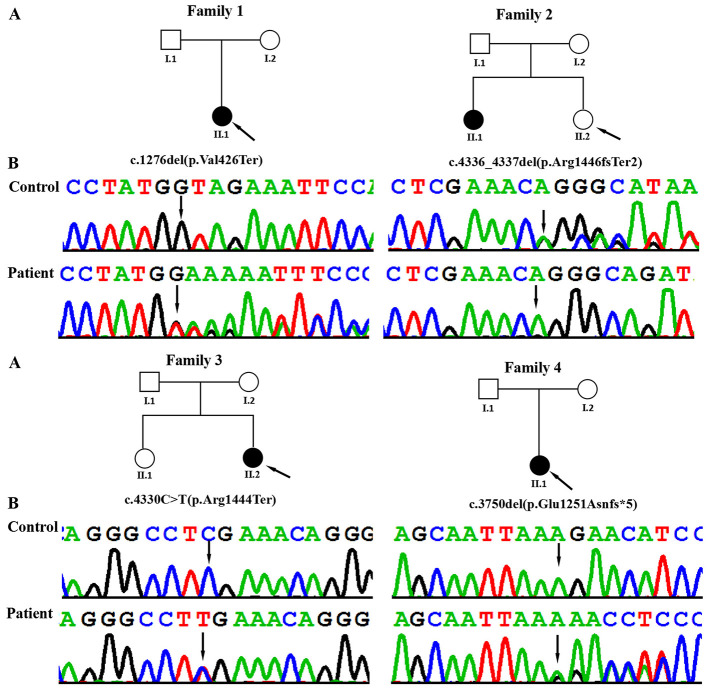 Figure 1
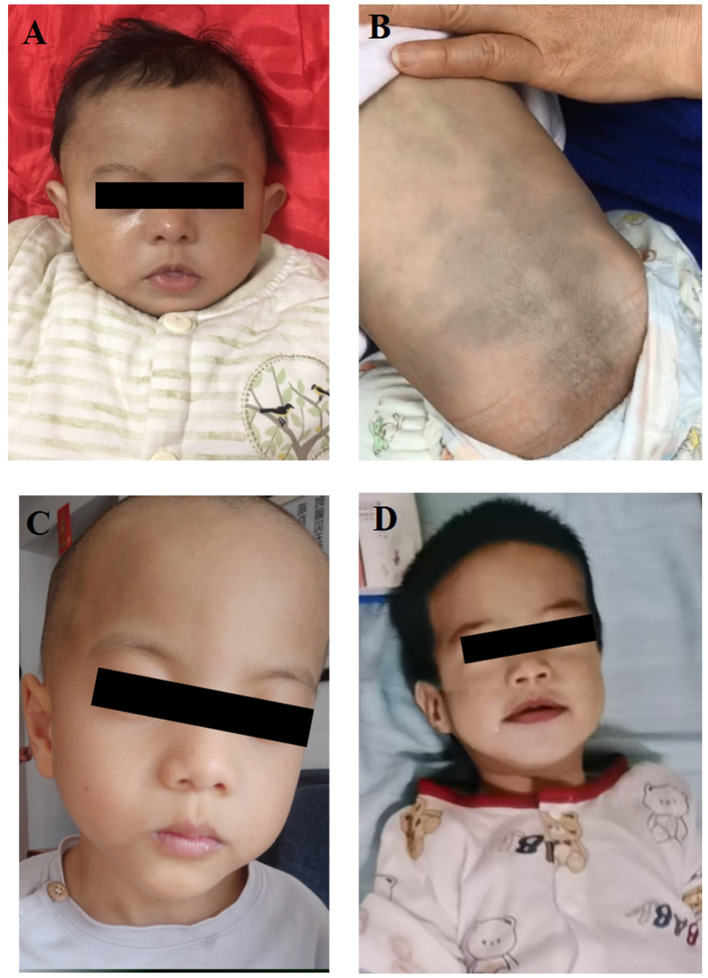 Figure 2
Peer Reviews
No public reviews on file for this paper yet. If you reviewed it on a platform where reviews are public (OpenReview, ICLR, NeurIPS, ICML), you can paste yours below so the community can read it here.
Videos
No videos yet. Explain this paper in a talk, walkthrough, or lecture? Add one.
Taxonomy
TopicsGenomics and Rare Diseases · Genomic variations and chromosomal abnormalities · Genetic Associations and Epidemiology