Oxytocin reduces anger bias, harm-intention recognition, and self-focus in behavioral variant frontotemporal dementia: a randomized double-blind placebo-controlled crossover trial
Valentina Colonnello, Sabina Capellari, Maria Guarino, Piero Parchi, Luisa Sambati, Maddalena De Matteis, Michelangelo Stanzani-Maserati, Paolo Maria Russo, Katia Mattarozzi

TL;DR
Oxytocin improves social engagement and reduces anger bias in patients with behavioral variant frontotemporal dementia, but does not enhance emotion recognition.
Contribution
This study is the first to show oxytocin's effects on social engagement and language in behavioral variant frontotemporal dementia using naturalistic assessments.
Findings
Oxytocin improved social engagement and reduced anger-bias in emotion misclassification.
Oxytocin decreased the use of first-person pronouns in spontaneous speech.
No improvements were observed in emotion recognition or harmful intention detection.
Abstract
To explore the effects of oxytocin administration on social cognition and social engagement in patients with behavioral variant frontotemporal dementia. In a within-subject, double-blind, placebo-controlled, randomized crossover trial, patients with behavioral variant frontotemporal dementia completed the primary outcome measures, facial emotion and intention recognition tasks. Secondary outcomes included evaluation of drug safety and tolerability and changes in social engagement, assessed through caregiver ratings of social behavior. Exploratory outcomes included anger-bias in emotion misclassification and a LIWC-based analysis of speech during a semi-structured interview. Oxytocin was safe, well-tolerated, and improved social engagement in naturalistic contexts: caregivers reported positive changes, including increases in awareness, spontaneous initiative, socio-affective…
Genes, proteins, chemicals, diseases, species, mutations and cell lines named across the full text — each resolved to its canonical identifier and authoritative record.
Click any figure to enlarge with its caption.
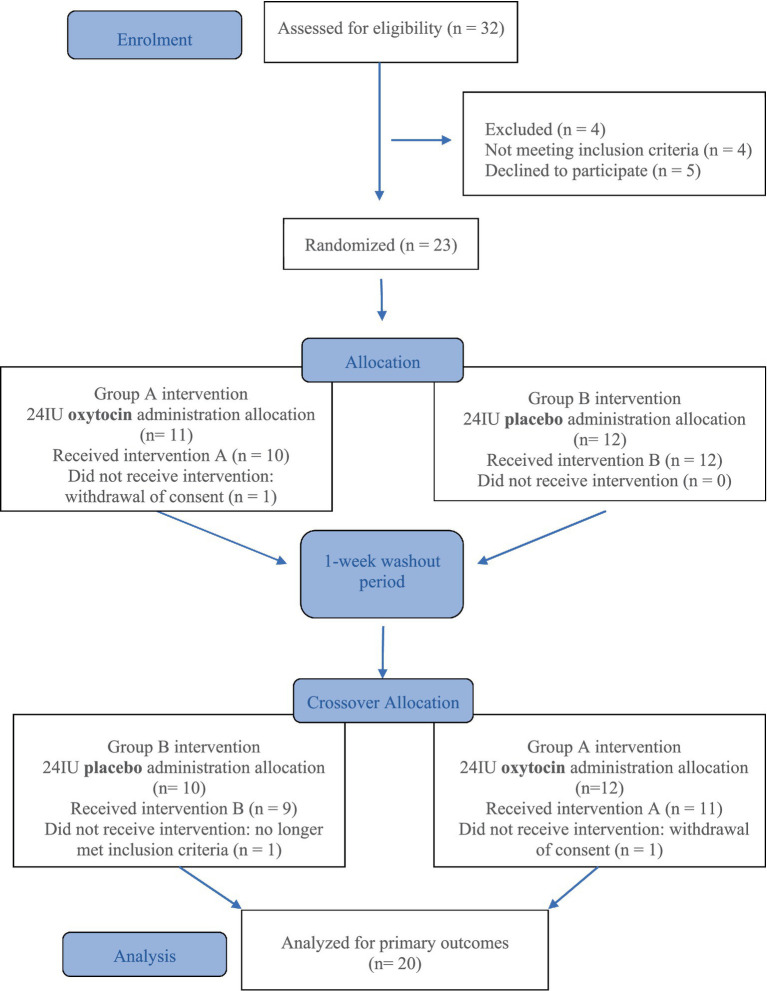 Figure 1
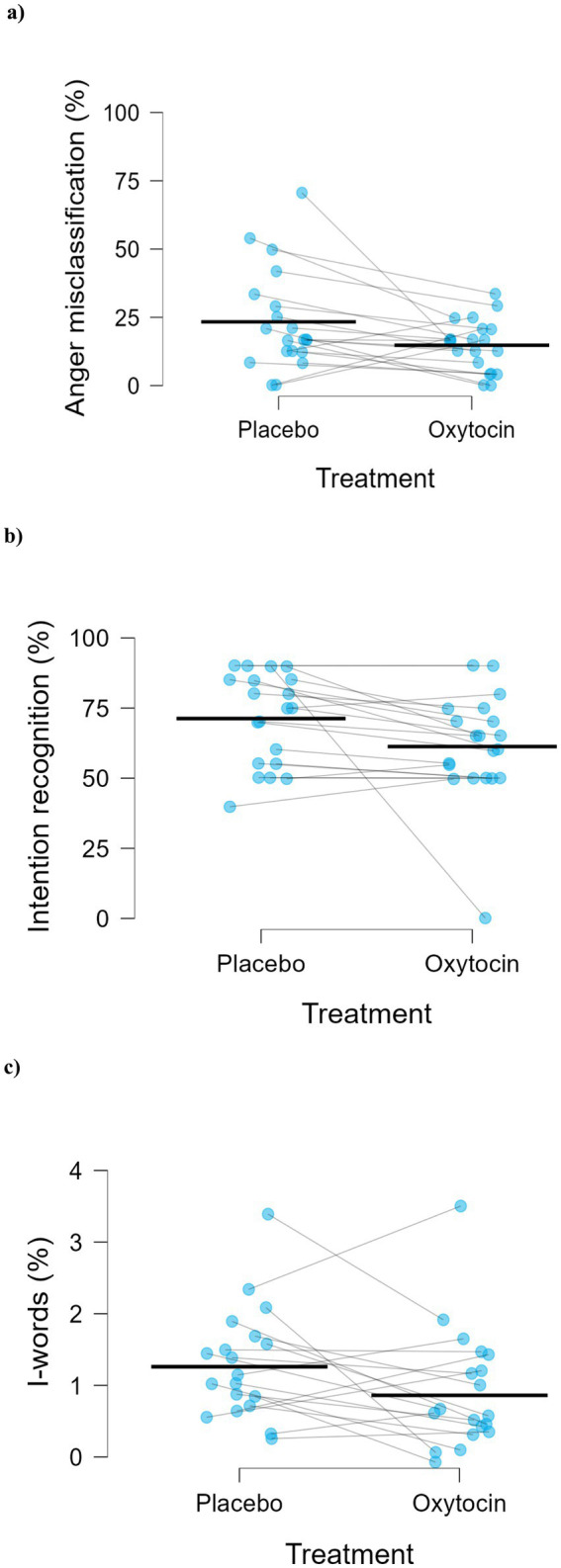 Figure 2
Peer Reviews
No public reviews on file for this paper yet. If you reviewed it on a platform where reviews are public (OpenReview, ICLR, NeurIPS, ICML), you can paste yours below so the community can read it here.
Videos
No videos yet. Explain this paper in a talk, walkthrough, or lecture? Add one.
Taxonomy
TopicsNeuroendocrine regulation and behavior · Dementia and Cognitive Impairment Research · Neuroscience of respiration and sleep