Beyond cardiac risk factors: non-cardiovascular comorbidities in sudden cardiac death prediction
Thien Tan Tri Tai Truyen, Vu Ngoc Anh Pham, Huong-Dung Thi Nguyen

TL;DR
This paper reviews how non-cardiovascular conditions like epilepsy and COPD significantly increase the risk of sudden cardiac death and should be included in prediction models.
Contribution
The paper highlights the underutilization of non-cardiovascular comorbidities in SCD prediction and proposes solutions for integrating them into models.
Findings
Neurologic and respiratory conditions increase SCD risk through autonomic and inflammatory mechanisms.
Non-cardiac comorbidities predict SCD and initial cardiac rhythm, affecting treatment decisions.
Current models lack non-cardiac conditions due to data and methodological challenges.
Abstract
Sudden cardiac death (SCD) causes 180,000–360,000 annual deaths in the United States, with mortality rates exceeding 90%. Despite advances in resuscitation science, predicting SCD remains challenging due to inconsistent definitions, subtle warning signs, and temporal variability in risk factors. While traditional cardiovascular conditions are well-integrated into risk prediction models, non-cardiovascular comorbidities remain significantly underutilized despite contributing to nearly 40% of SCD cases. This review examines evidence linking various systemic conditions to SCD risk. Neurologic disorders including epilepsy (1.6–5.89-fold increased risk), depression (1.6–2.7-fold), and anxiety (1.6-fold) elevate SCD vulnerability through autonomic dysregulation and medication effects. Respiratory conditions like COPD (1.3–3.6-fold) and obstructive sleep apnea (1.6–2.6-fold) contribute through…
Genes, proteins, chemicals, diseases, species, mutations and cell lines named across the full text — each resolved to its canonical identifier and authoritative record.
Click any figure to enlarge with its caption.
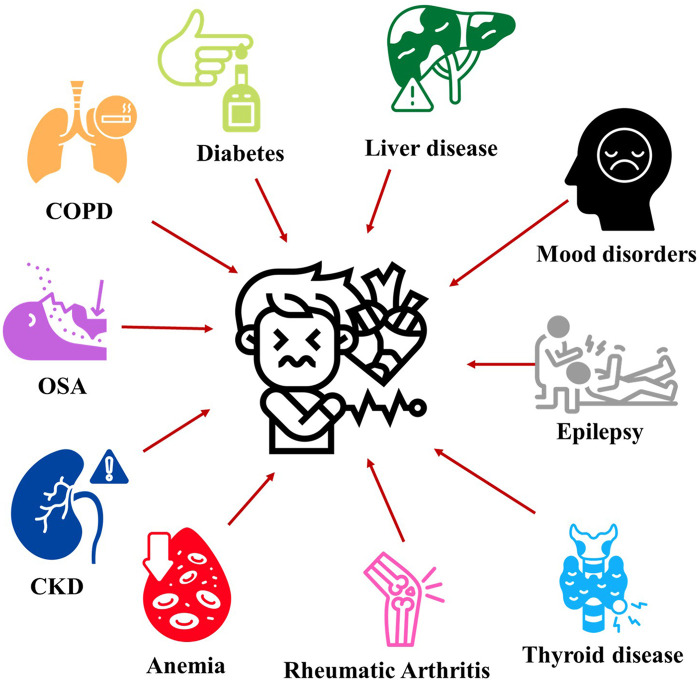 Figure 1
Peer Reviews
No public reviews on file for this paper yet. If you reviewed it on a platform where reviews are public (OpenReview, ICLR, NeurIPS, ICML), you can paste yours below so the community can read it here.
Videos
No videos yet. Explain this paper in a talk, walkthrough, or lecture? Add one.
Taxonomy
TopicsMachine Learning in Healthcare · Cardiac electrophysiology and arrhythmias · ECG Monitoring and Analysis