Menstrual blood-derived mesenchymal stromal cell secretome modulates macrophage polarization in a preconditioning-dependent manner
María Ángeles de Pedro, María Pulido, Ana María Marchena, Verónica Álvarez, Francisco Manuel González-Nuño, Witold Szymański, Johanna Pörschke, Silke Reinartz, Johannes Graumann, Elke Pogge von Strandmann, Francisco Miguel Sánchez-Margallo, María Gómez-Serrano, Esther López

TL;DR
This study explores how menstrual blood-derived cells influence macrophage behavior, showing that preconditioning these cells enhances their ability to modulate immune responses.
Contribution
The novel finding is that preconditioned menstrual blood-derived cell secretomes can significantly influence macrophage polarization and inflammatory responses.
Findings
Both secretomes partially promoted monocyte differentiation into an M1-like phenotype.
Preconditioned secretomes enhanced M1 macrophage polarization and promoted partial phenotype switching in pre-polarized macrophages.
Proteomic analysis revealed key differences in secretome composition linked to macrophage polarization.
Abstract
The effects of menstrual blood-derived mesenchymal stromal cell secretome (S-MenSC) on macrophage polarization remain unclear. This study studied the impact of secretomes from basal MenSCs (S-bMenSCs) and those preconditioned with IFNγ and TNFα (S-pMenSCs) on human monocytes and macrophages in vitro. S-MenSCs were used to assess their effects on three stages of monocyte-derived cell maturation: i. monocyte differentiation; ii. polarization of monocyte-derived macrophages (MDMs) toward M1-like or M2-like phenotypes; and iii. reprogramming of pre-polarized M1 or M2 macrophages. Surface markers were analyzed by flow cytometry and cytokine gene expression by RT-qPCR. In addition, a proteomic profiling was performed to identify proteins involved in the observed effects. Our results confirmed the capacity of S-MenSCs of modulating innate immune response and in particular macrophage…
Genes, proteins, chemicals, diseases, species, mutations and cell lines named across the full text — each resolved to its canonical identifier and authoritative record.
Click any figure to enlarge with its caption.
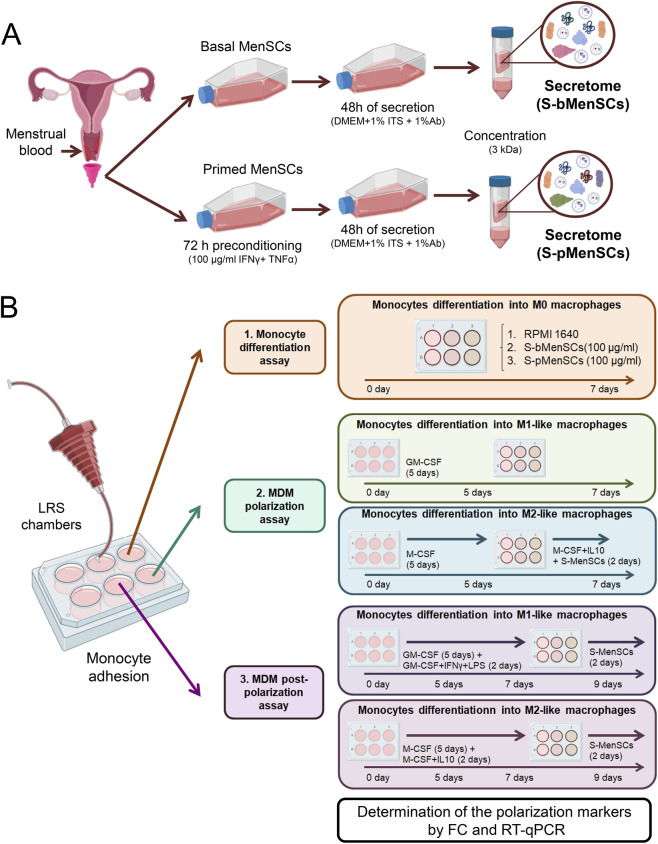 Figure 1
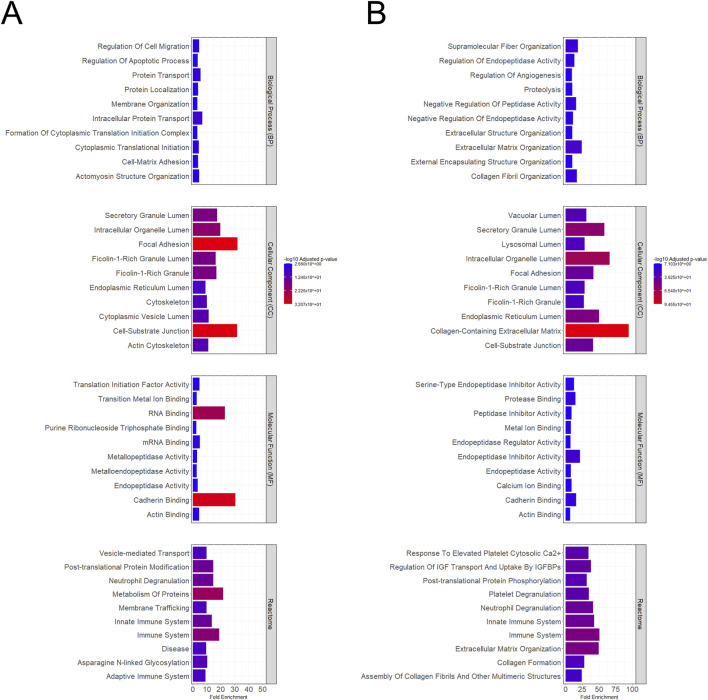 Figure 2
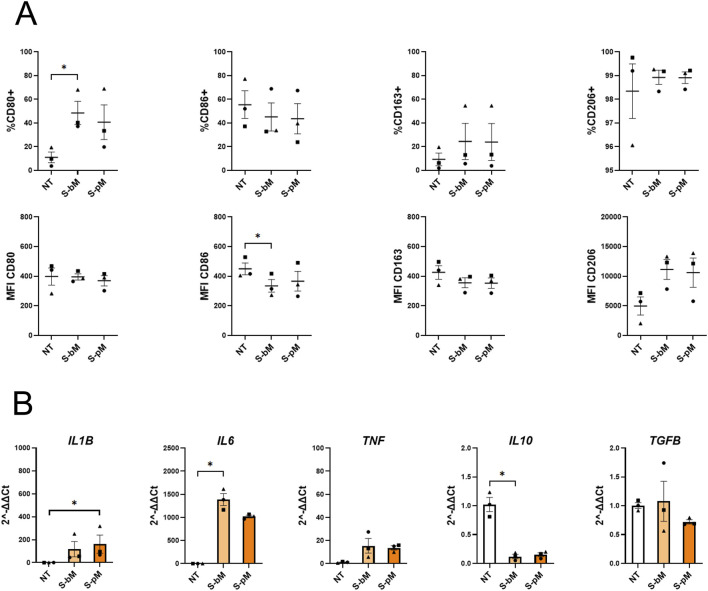 Figure 3
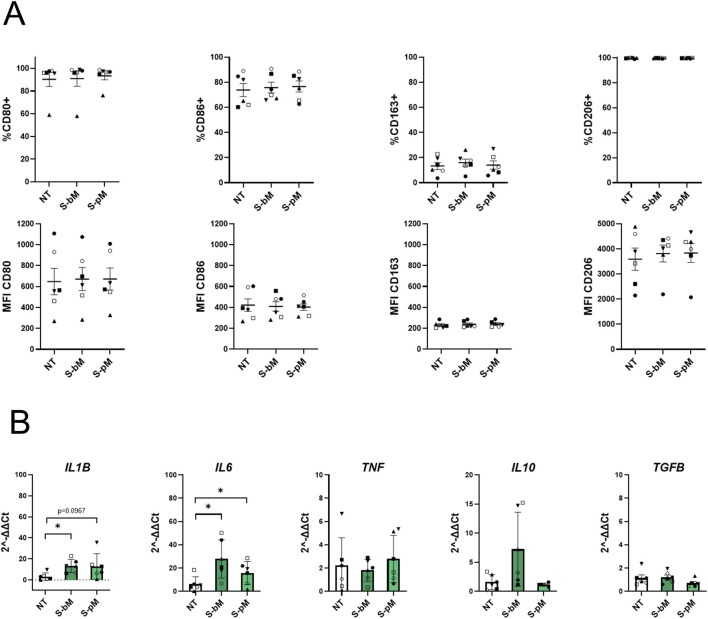 Figure 4
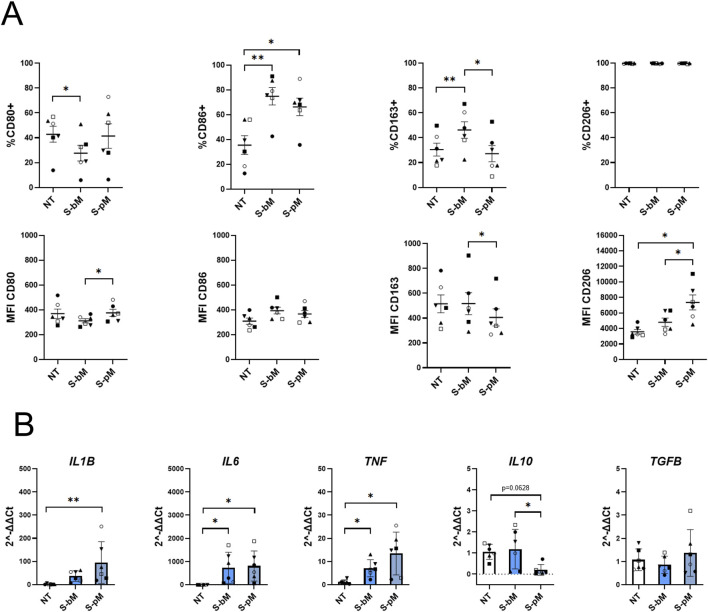 Figure 5
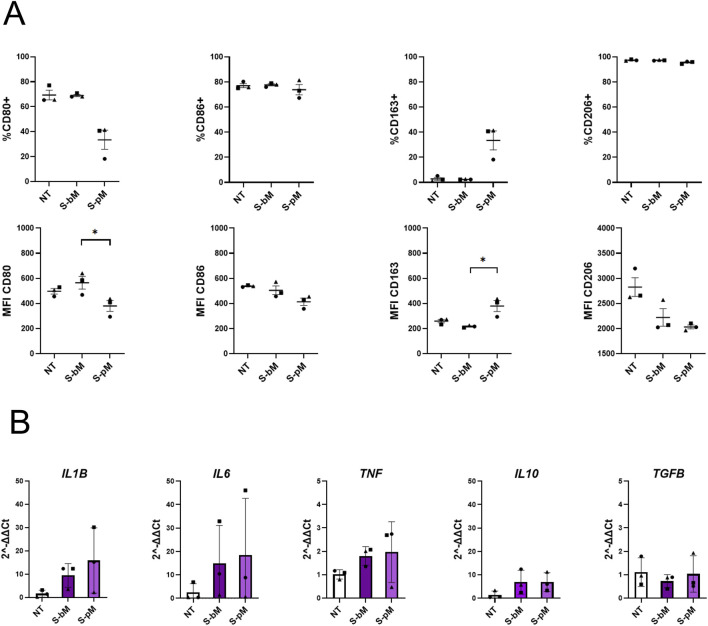 Figure 6
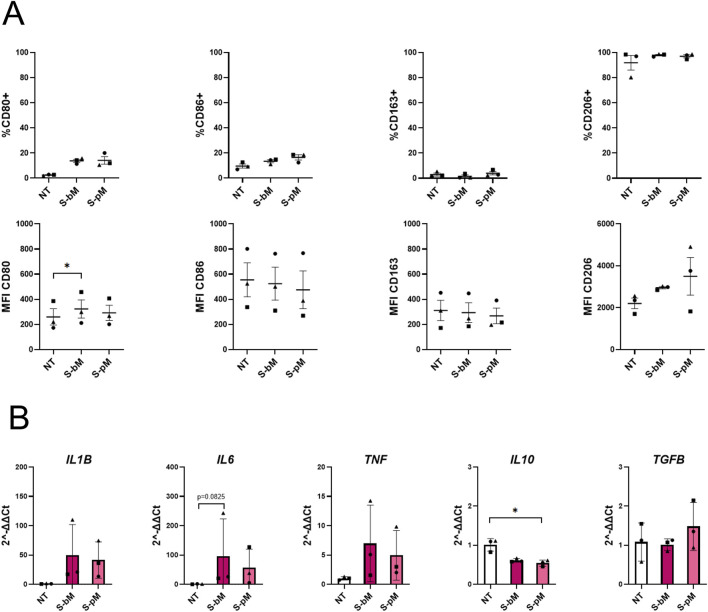 Figure 7
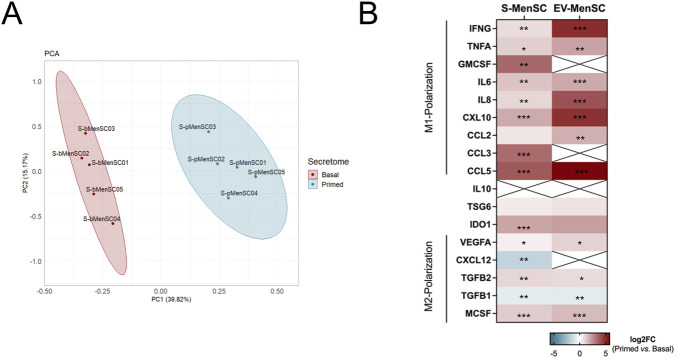 Figure 8
Peer Reviews
No public reviews on file for this paper yet. If you reviewed it on a platform where reviews are public (OpenReview, ICLR, NeurIPS, ICML), you can paste yours below so the community can read it here.
Videos
No videos yet. Explain this paper in a talk, walkthrough, or lecture? Add one.
Taxonomy
TopicsImmune cells in cancer · Mesenchymal stem cell research · Cancer Cells and Metastasis