Preoperative hydrocephalus and the risk of postoperative speech impairment following posterior fossa tumour surgery in children: results from a prospective, multinational cohort study
Aske Foldbjerg Laustsen, Radek Frič, Jonathan Kjær Grønbæk, Vladimír Beneš, Vicente Santa-Maria Lopez, Ulf Nestler, Andrea Carai, Guirish Solanki, Shivaram Avula, Conor Malluci, Pelle Nilsson, Per Nyman, Magnus Aasved Hjort, Rick Brandsma, Eelco Hoving, Antonella Bua

TL;DR
This study found that preoperative hydrocephalus does not independently increase the risk of speech problems after surgery for childhood brain tumors.
Contribution
The study clarifies the relationship between preoperative hydrocephalus and postoperative speech impairment in children with posterior fossa tumors.
Findings
Preoperative hydrocephalus was not independently linked to postoperative speech impairment.
Treating hydrocephalus before surgery did not significantly reduce the risk of speech issues.
Individualized management of hydrocephalus is recommended based on clinical context.
Abstract
Cerebellar mutism syndrome (CMS) is a common complication of paediatric posterior fossa (PF) tumour surgery, with postoperative speech impairment (POSI) as the cardinal symptom. Preoperative hydrocephalus (pHC) is present in up to 70% of cases of paediatric PF tumours, but its association with POSI remains unclear. This study investigated whether pHC is an independent risk factor for POSI and assessed the impact of alleviating pHC prior to tumour resection on POSI risk. We included 800 children who underwent PF tumour surgery between 2014 and 2024 at 35 centres across 13 countries in the European CMS study. Speech and neurological assessments were conducted pre- and postoperatively. Neurosurgeons assessed pHC status, pHC treatment and tumour location; histology was recorded at a 2-month follow-up. pHC treatment was categorised as “yes” (pHC alleviated prior to tumour surgery) and “no”…
Genes, proteins, chemicals, diseases, species, mutations and cell lines named across the full text — each resolved to its canonical identifier and authoritative record.
Click any figure to enlarge with its caption.
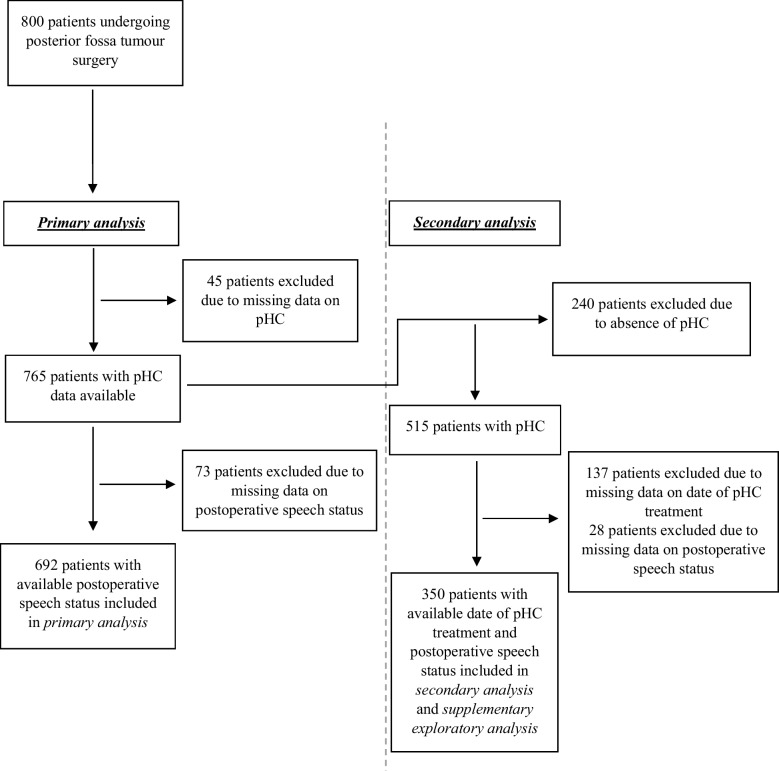 Figure 1
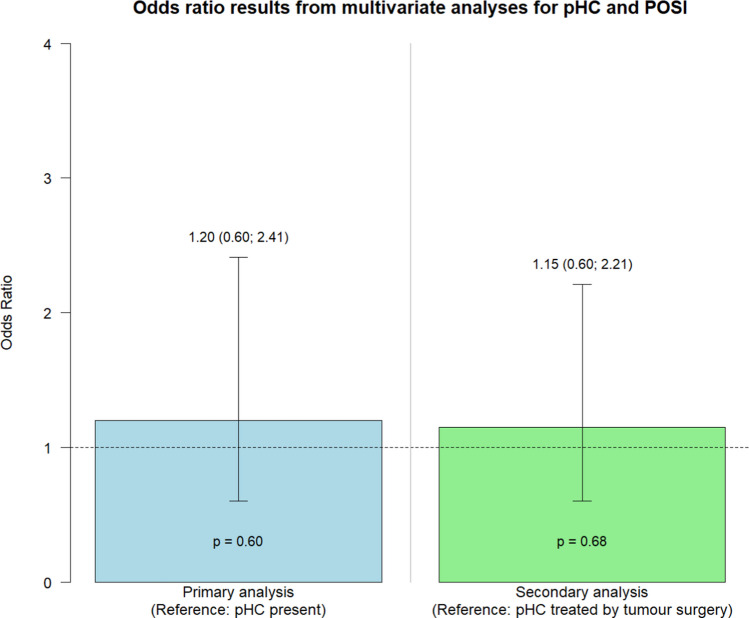 Figure 2
Peer Reviews
No public reviews on file for this paper yet. If you reviewed it on a platform where reviews are public (OpenReview, ICLR, NeurIPS, ICML), you can paste yours below so the community can read it here.
Videos
No videos yet. Explain this paper in a talk, walkthrough, or lecture? Add one.
Taxonomy
TopicsMeningioma and schwannoma management · Facial Nerve Paralysis Treatment and Research · Voice and Speech Disorders