The cerebellum engages multiple pre-motor pathways through a divergent-convergent architecture to shape whisker dynamics
Staf Bauer, Peipei Zhai, Nathalie van Wingerden, Hehe Zhao, Vincenzo Romano

TL;DR
The cerebellum uses different brainstem pathways to control whisker movements in mice, shaping the speed and symmetry of whisking.
Contribution
The study reveals a divergent-convergent cerebellar architecture that modulates whisker dynamics through distinct pre-motor nuclei.
Findings
Optogenetic stimulation of RN, SC, and SV causes midpoint changes in whisker movement.
PCs, CN, and RF stimulation leads to faster whisker movements and rhythmic patterns.
PC excitation produces symmetric bilateral whisking not replicable by CN stimulation.
Abstract
The cerebellar output can trigger whisker movement through indirect projections that pass via several brainstem pre-motor nuclei before reaching the facial nucleus, which directly controls whisker movements in rodents. Although the central pattern generator function of the intermediate reticular formation has been recently clarified, the roles of the other whisker pre-motor nuclei remain unclear. Here, we set out to compare the whisker movement kinematics of the main pre-motor whisker nuclei connecting the cerebellum and the facial nucleus. We optogenetically stimulated neurons located in the cerebellar cortex: Purkinje cells (PCs), the cerebellar nuclei (CN), the red nucleus (RN), the superior colliculus (SC), the spinal trigeminal nucleus (SV), and the reticular formation (RF); in head-fixed awake mice while monitoring the bilateral whisker movement. We show that optogenetic…
Genes, proteins, chemicals, diseases, species, mutations and cell lines named across the full text — each resolved to its canonical identifier and authoritative record.
Click any figure to enlarge with its caption.
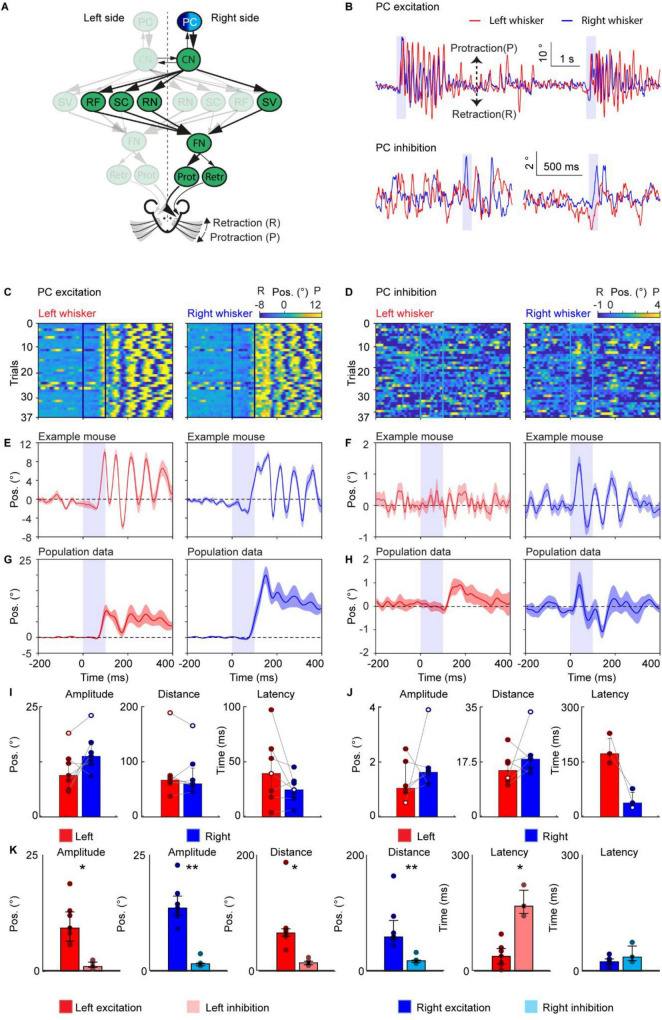 Figure 1
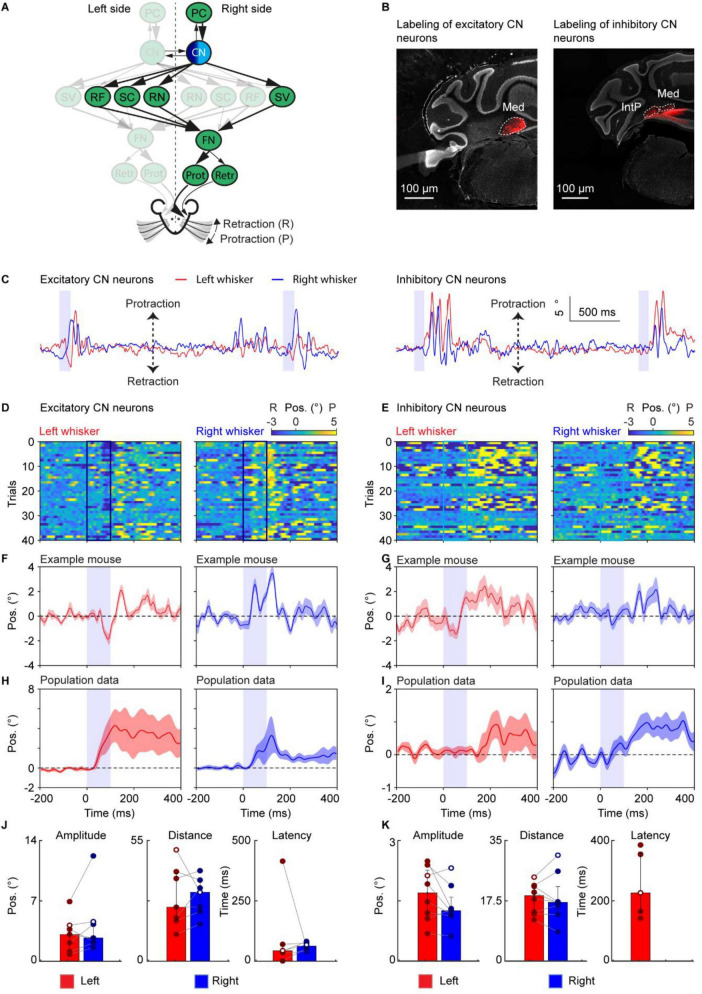 Figure 2
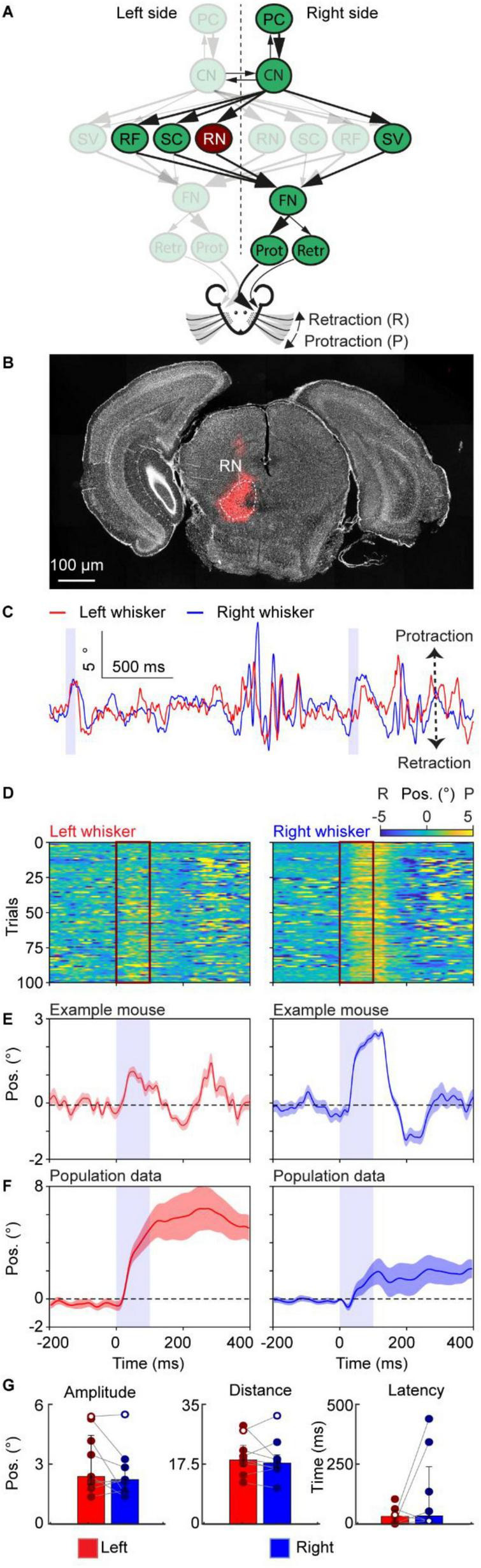 Figure 3
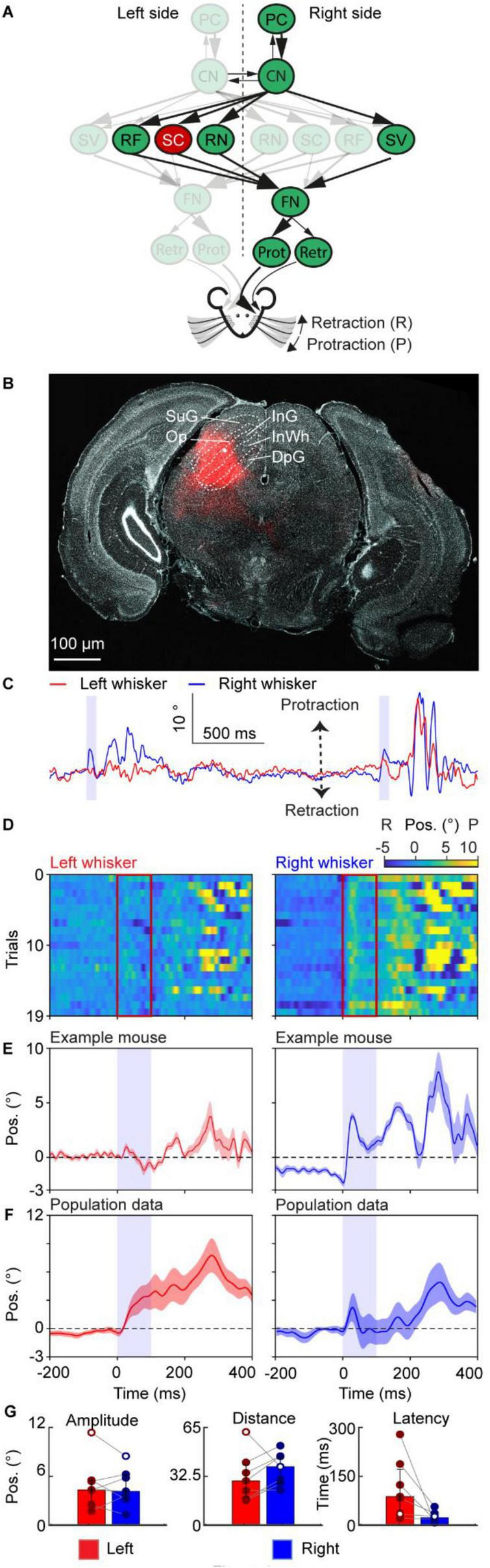 Figure 4
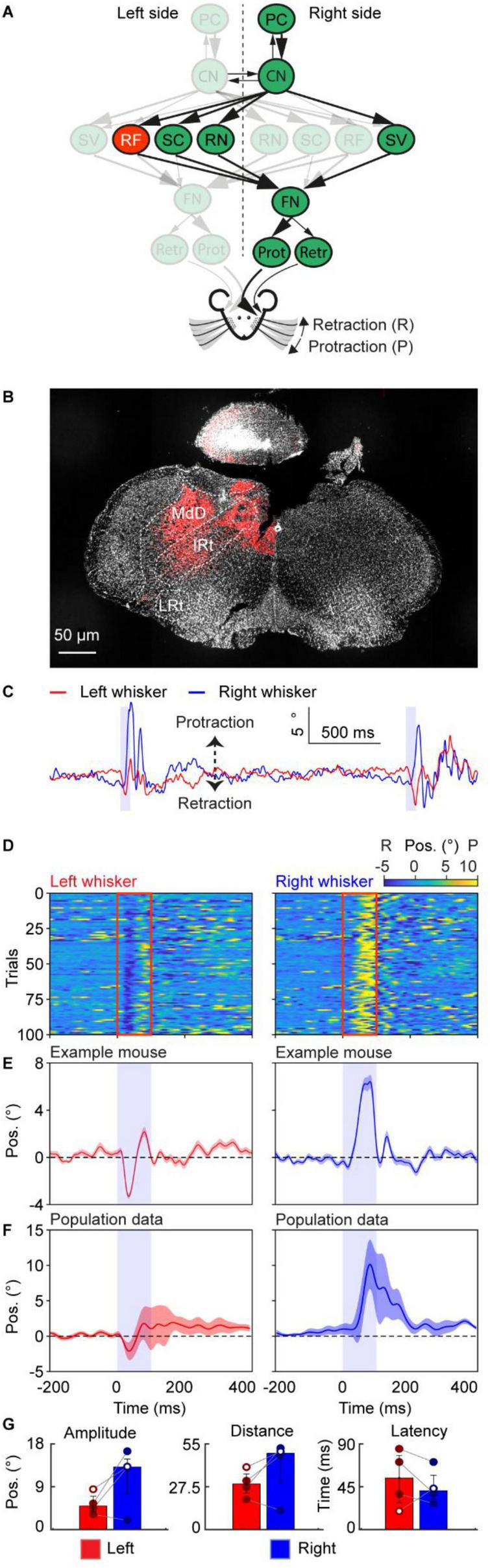 Figure 5
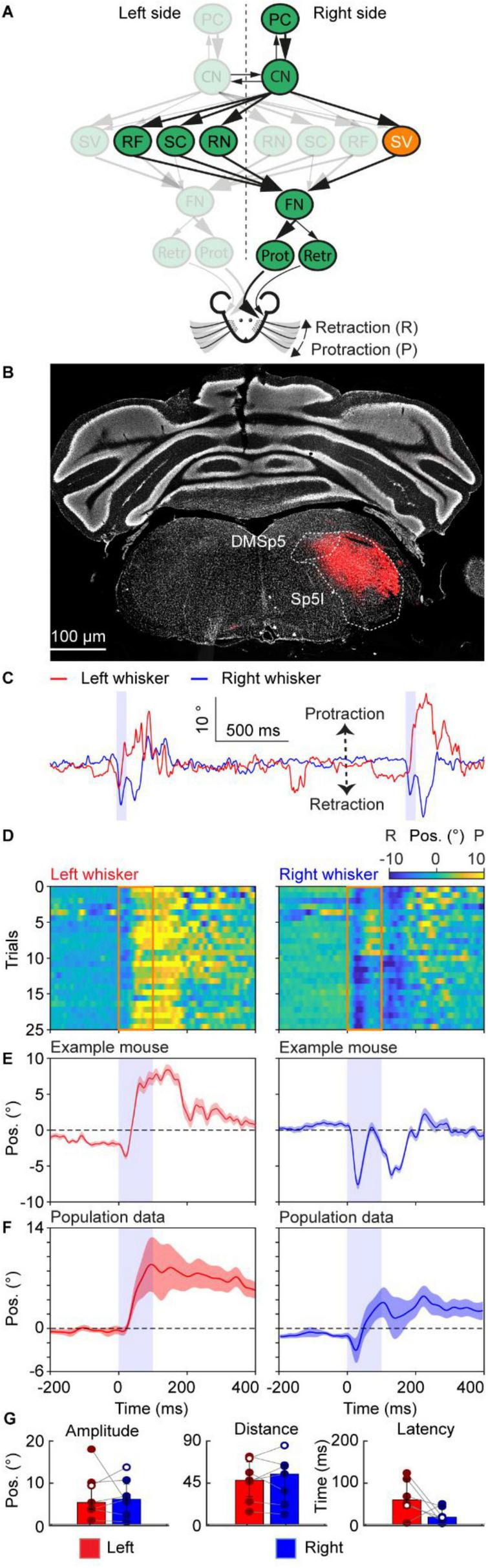 Figure 6
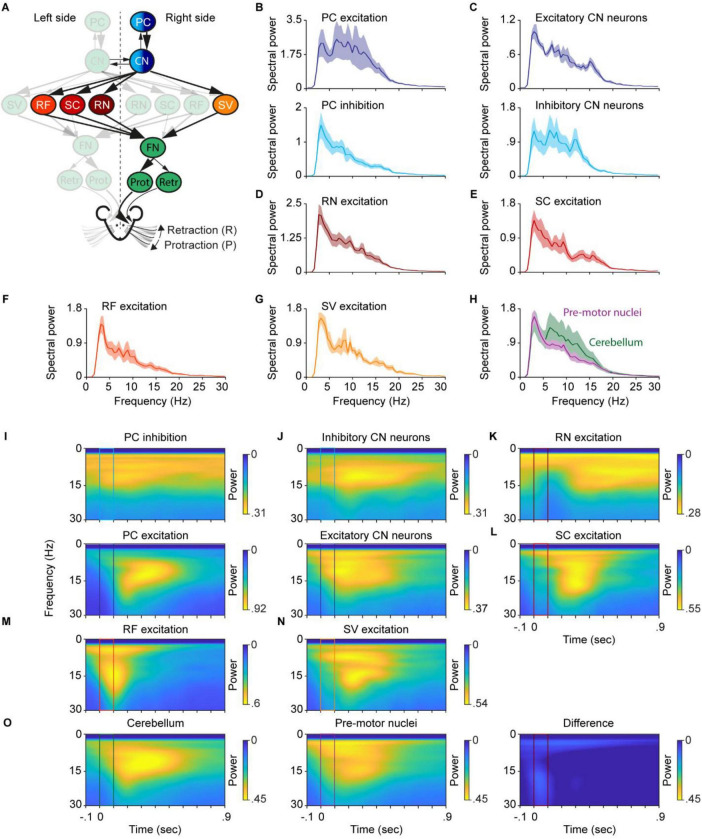 Figure 7
Peer Reviews
No public reviews on file for this paper yet. If you reviewed it on a platform where reviews are public (OpenReview, ICLR, NeurIPS, ICML), you can paste yours below so the community can read it here.
Videos
No videos yet. Explain this paper in a talk, walkthrough, or lecture? Add one.
Taxonomy
TopicsVestibular and auditory disorders · Hearing, Cochlea, Tinnitus, Genetics · Neural dynamics and brain function