Temporal changes in first-phase ejection fraction during evolution of heart failure with preserved ejection fraction and afterload-induced heart failure in mice
Haotian Gu, Norman Catibog, Yue Zhao, Asjad Visnagri, Philip J. Chowienczyk, Ajay M. Shah, Min Zhang

TL;DR
This study shows that early systolic dysfunction, measured by EF1, occurs before diastolic changes in mouse models of heart failure with preserved ejection fraction.
Contribution
The study introduces EF1 as an early marker of systolic dysfunction in HFpEF progression in mice.
Findings
EF1 decreases early in both afterload-induced and HFpEF models, preceding changes in EF and GLS.
IVRT prolongation occurs before LA enlargement in the HFpEF model.
Systolic and diastolic dysfunction interplay is evident in the progression of HFpEF.
Abstract
The interplay between systolic and diastolic dysfunction in heart failure with preserved ejection fraction (HFpEF) progression is unclear. First-phase ejection fraction (EF1), a sensitive marker of early systolic function, aids in assessing systolic-diastolic relationships in human hypertension and aortic stenosis. This study examines temporal changes in these relationships in mouse models of HFpEF and elevated afterload. Mouse models of abdominal aortic banding (AAB) and HFpEF (induced by hypertension and high fat feeding) underwent comprehensive serial echocardiography. In AAB, EF1 significantly decreased at week 1 post-surgery (18.8 ± 1.2 vs 24.3 ± 0.8%, p<0.001) compared to controls, with further reduction at week 3 (16.8 ± 0.6%) and week 6 (13.9 ± 0.9%, both p<0.001). EF, global longitudinal strain (GLS) and longitudinal strain rate (LSR) remained unchanged until week 3. Isovolumic…
Genes, proteins, chemicals, diseases, species, mutations and cell lines named across the full text — each resolved to its canonical identifier and authoritative record.
Click any figure to enlarge with its caption.
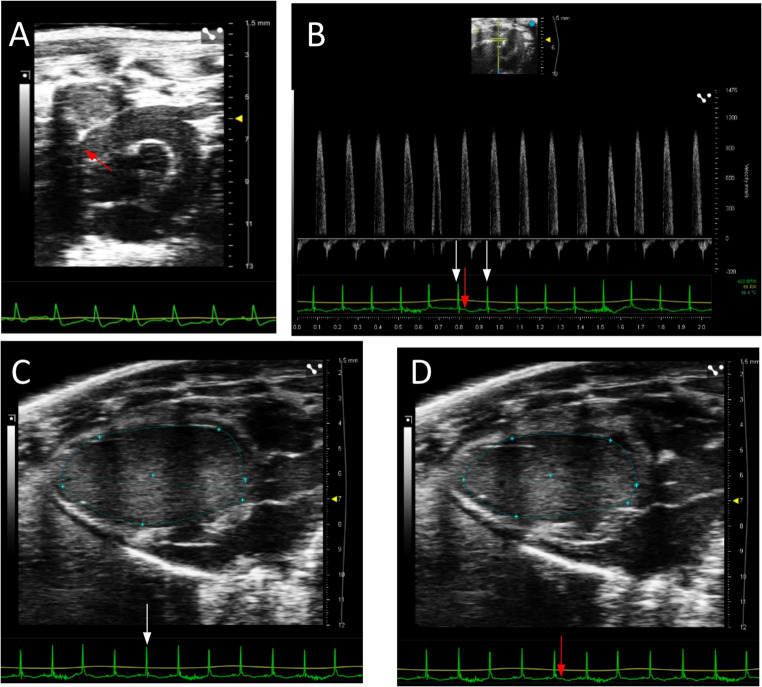 Figure 1
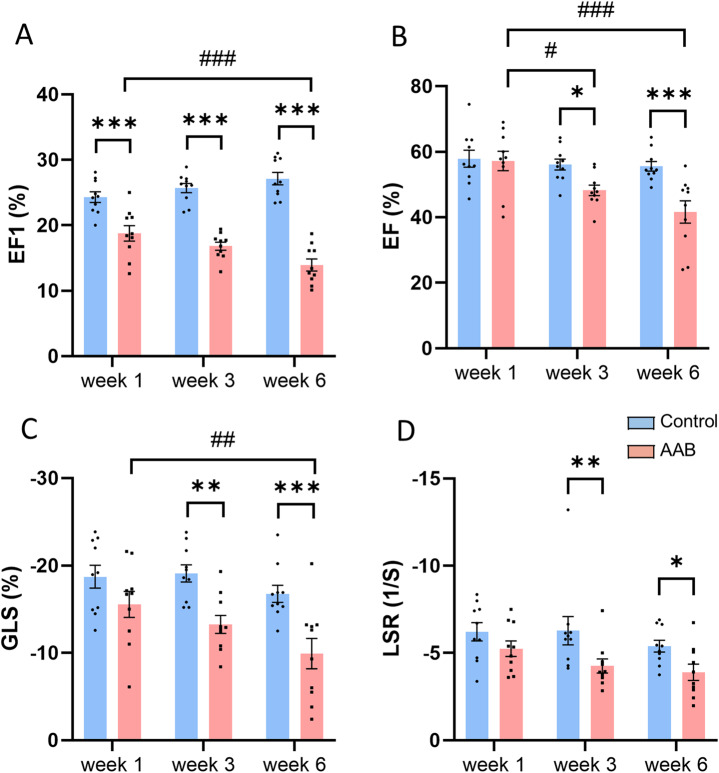 Figure 2
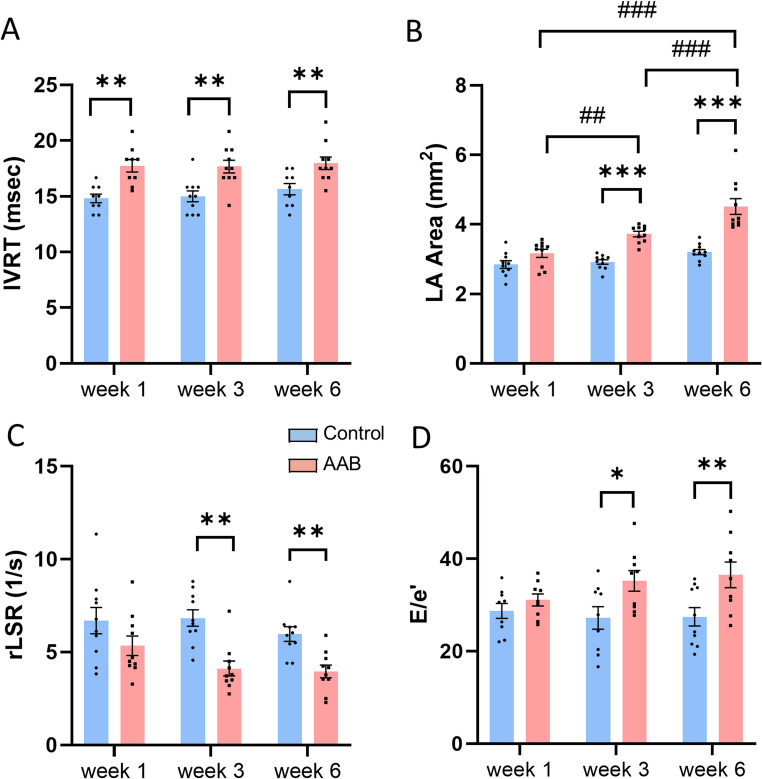 Figure 3
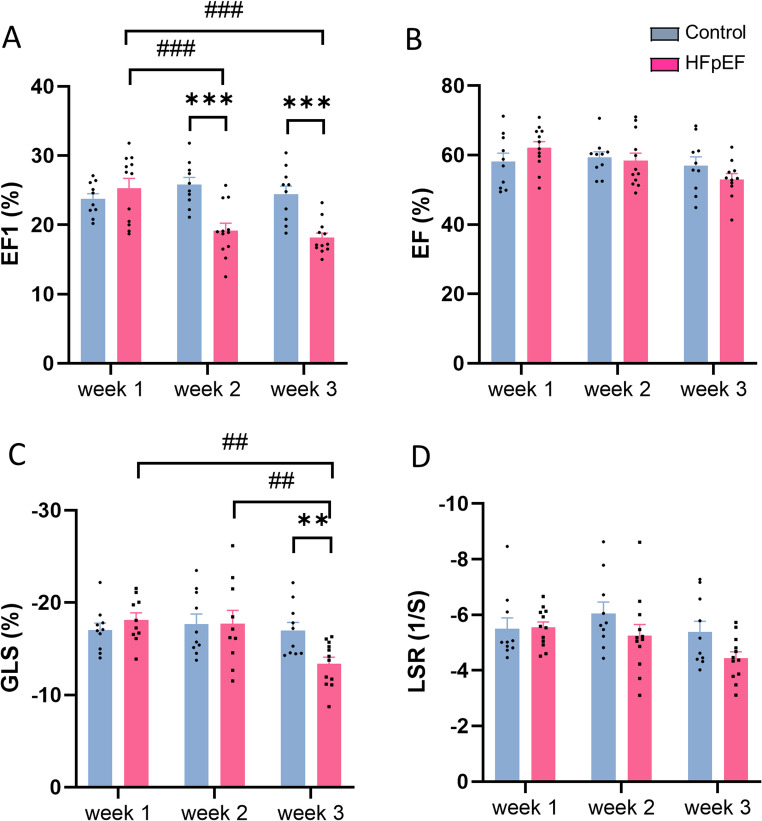 Figure 4
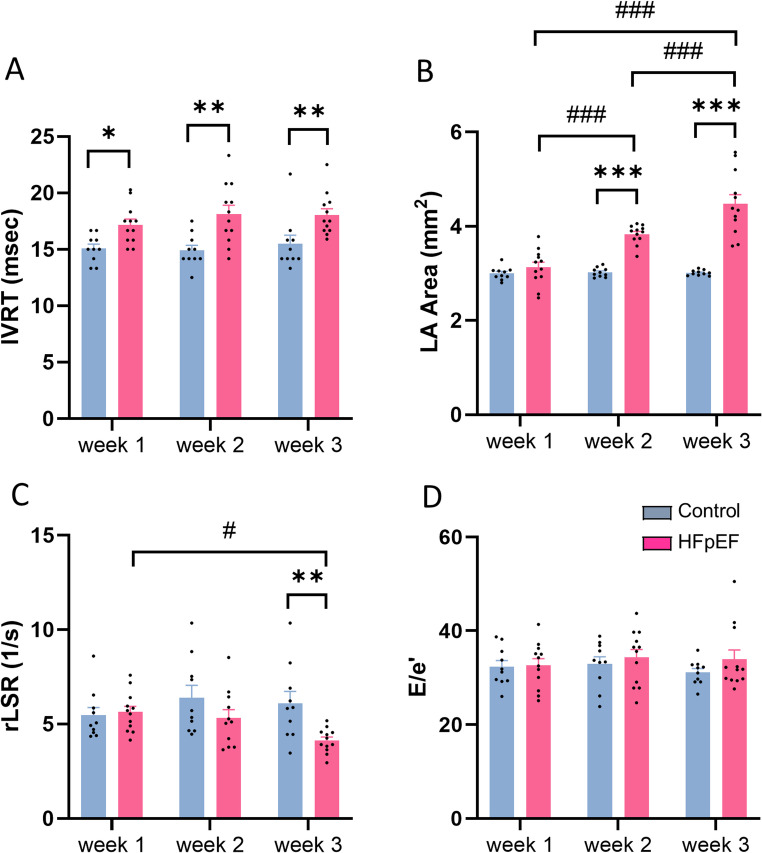 Figure 5
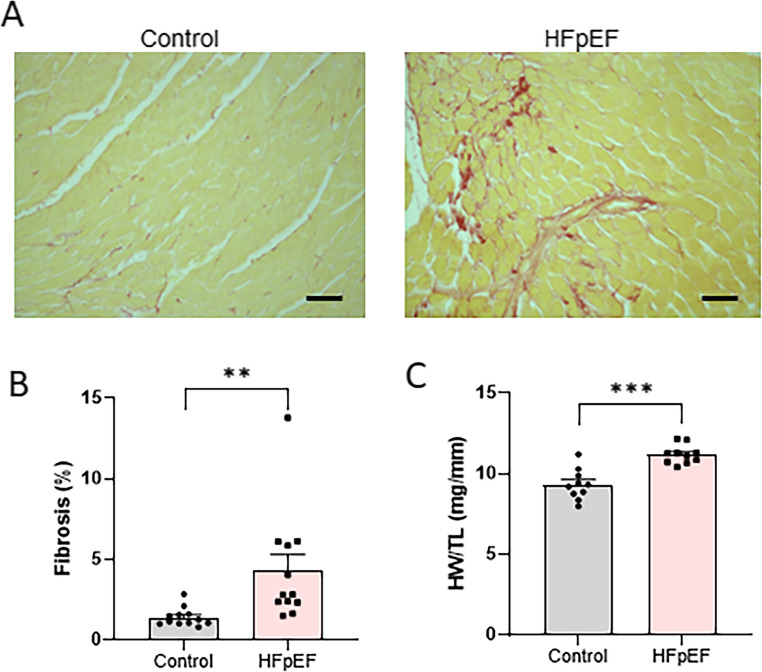 Figure 6
Peer Reviews
No public reviews on file for this paper yet. If you reviewed it on a platform where reviews are public (OpenReview, ICLR, NeurIPS, ICML), you can paste yours below so the community can read it here.
Videos
No videos yet. Explain this paper in a talk, walkthrough, or lecture? Add one.
Taxonomy
TopicsCardiovascular Function and Risk Factors · Cardiac Fibrosis and Remodeling · Cardiovascular Disease and Adiposity