Factors Affecting Anal Sphincter Recruitment During Intraoperative Pudendal Nerve Stimulation: An Observational Study
Amador C. Lagunas, Po-Ju Chen, Luis Ruiz, Amolak S. Jhand, Nystha Baishya, Scott F. Lempka, Priyanka Gupta, Tim M. Bruns

TL;DR
This study examines how factors like stimulation settings and electrode placement affect anal sphincter activation during pudendal nerve stimulation.
Contribution
The study identifies optimal pulse width and electrode placement for effective pudendal neuromodulation.
Findings
A pulse width of 210 µs requires less current and charge for anal sphincter activation.
Greater electrode-to-nerve distance reduces sphincter response and increases activation threshold.
Sphincter activation threshold and response magnitude correlate with electrode placement accuracy.
Abstract
The relationship between pudendal neuromodulation and patient factors is not well understood. This observational study was aimed at identifying and quantifying physiological, demographic, and stimulation factors that significantly affect external anal sphincter (EAS) recruitment and outcomes in participants receiving pudendal neuromodulation for treatment of lower urinary tract symptoms and pelvic pain. Participants (N = 16) provided demographic and diagnostic information upon entry to this observational study. EAS activation at different stimulation amplitudes and pulse widths was recorded during lead implantation. Magnetic resonance imaging and computed tomography were used to determine the distance of the electrodes on the implanted lead from the nerve. Linear mixed modeling was used to quantify the impact of each variable on EAS recruitment. Participant sex, age, and body mass…
Genes, proteins, chemicals, diseases, species, mutations and cell lines named across the full text — each resolved to its canonical identifier and authoritative record.
Click any figure to enlarge with its caption.
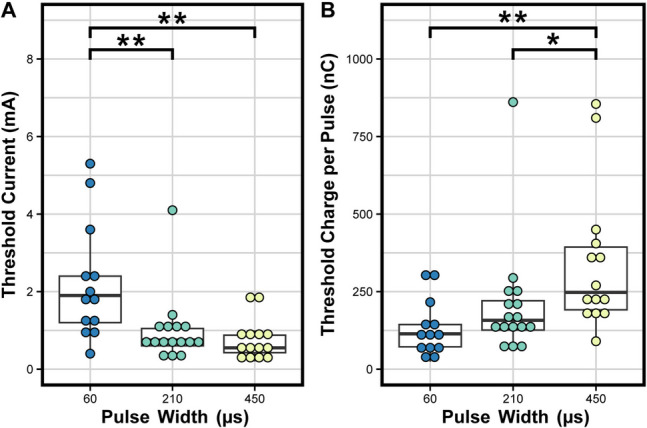 Figure 1
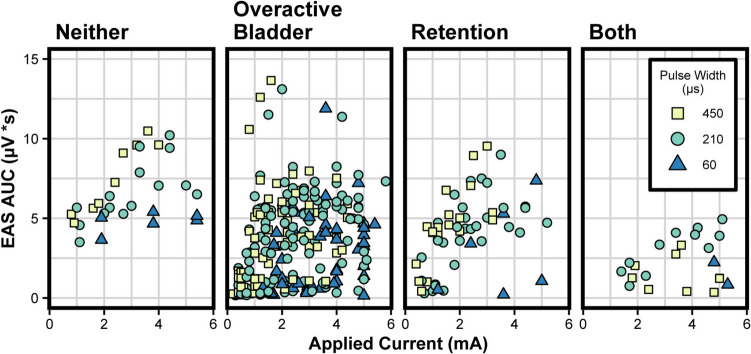 Figure 2
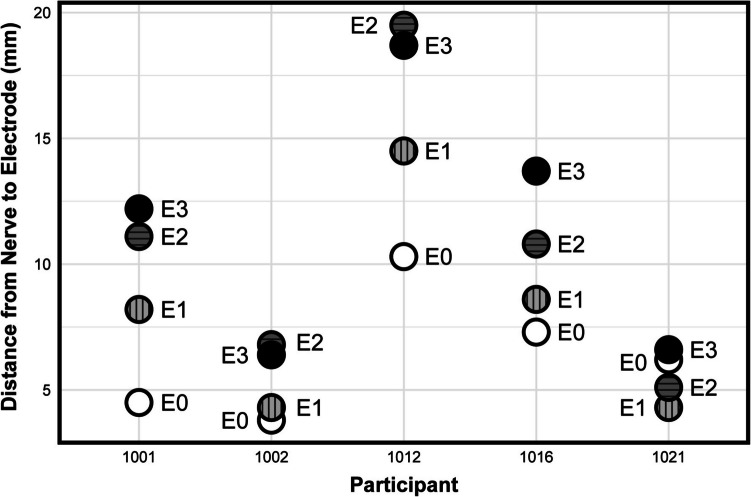 Figure 3
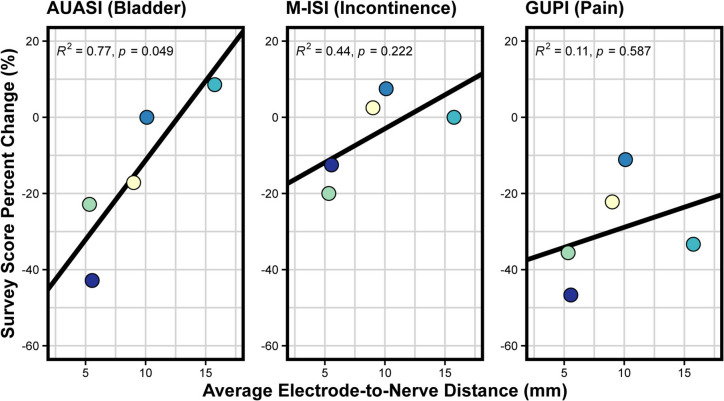 Figure 4
Peer Reviews
No public reviews on file for this paper yet. If you reviewed it on a platform where reviews are public (OpenReview, ICLR, NeurIPS, ICML), you can paste yours below so the community can read it here.
Videos
No videos yet. Explain this paper in a talk, walkthrough, or lecture? Add one.
Taxonomy
TopicsPelvic floor disorders treatments · Anorectal Disease Treatments and Outcomes · Diverticular Disease and Complications