Fig Leaf Bioactivity and Safety: Temperature Optimization and FTIR Authentication
Ekarat Vasupen, Kanokkarn Rabpairee, Watcharaporn Toommuangpak, Onpilin Sompeerapun, Utumporn Chaiwong, Phattharaporn Yuthachit, Natta Kachenpukdee, Siriwan Nawong, Numphon Thaiwong

TL;DR
This study finds that fig leaves dried at 60°C retain the most bioactive compounds and are safe, with one cultivar showing strong antioxidant properties and selective cancer cell toxicity.
Contribution
The study identifies optimal drying conditions for fig leaves and demonstrates their safety and selective anti-cancer potential using water extraction.
Findings
60°C is the optimal drying temperature for preserving bioactivity in fig leaves.
Longue d'Aout cultivar showed the highest antioxidant activity and selective toxicity to cancer cells.
FTIR spectroscopy achieved 96.8% accuracy in distinguishing fig leaf cultivars.
Abstract
Ficus carica L. leaves represent an underutilized agricultural byproduct despite growing consumer interest in functional foods. Four fig leaf cultivars representing diverse geographic origins (BTM, Black Violet, Longue d'Aout, and Sultane) were compared to investigate drying temperature (50°C–80°C) effects on bioactivity through water extraction. The extract demonstrating superior antioxidant activity was subsequently evaluated for safety using cell‐based cytotoxicity testing. Bioactive profiling assessed total phenolic content (TPC) and total flavonoid content (TFC). Fourier‐transform infrared (FTIR) spectroscopy with principal component analysis (PCA) accomplished cultivar discrimination. Cell‐based cytotoxicity testing via 3‐(4,5‐dimethylthiazol‐2‐yl)‐2,5‐diphenyltetrazolium bromide (MTT) assay evaluated safety on Caco‐2, HepG2, and THLE‐2 cells. Results identified 60°C as the…
Genes, proteins, chemicals, diseases, species, mutations and cell lines named across the full text — each resolved to its canonical identifier and authoritative record.
Click any figure to enlarge with its caption.
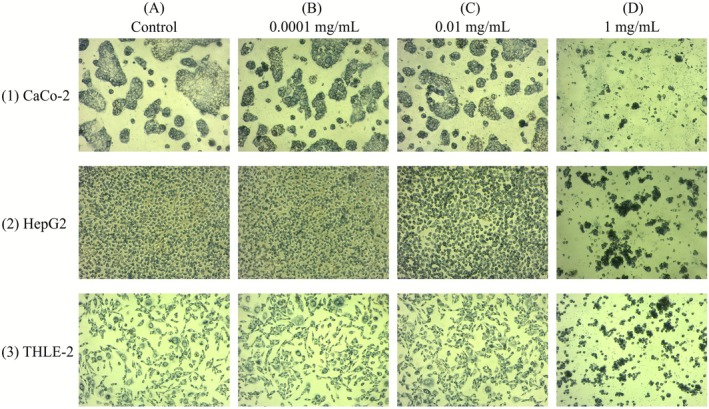 Figure 1
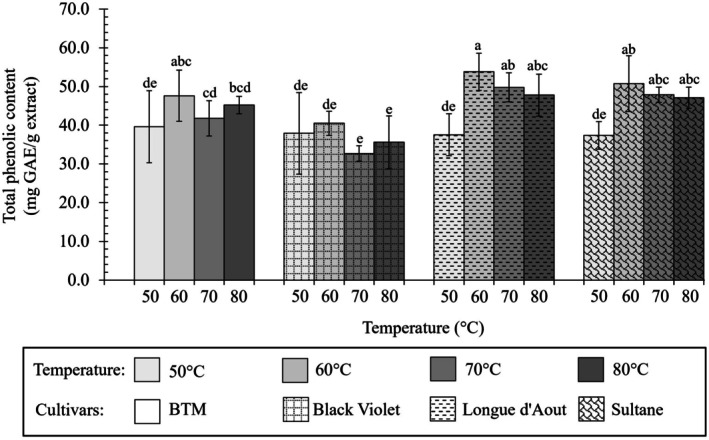 Figure 2
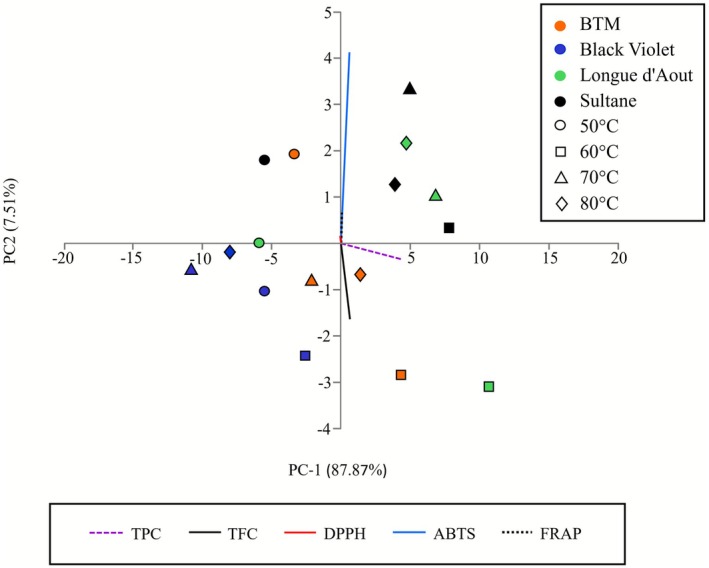 Figure 3
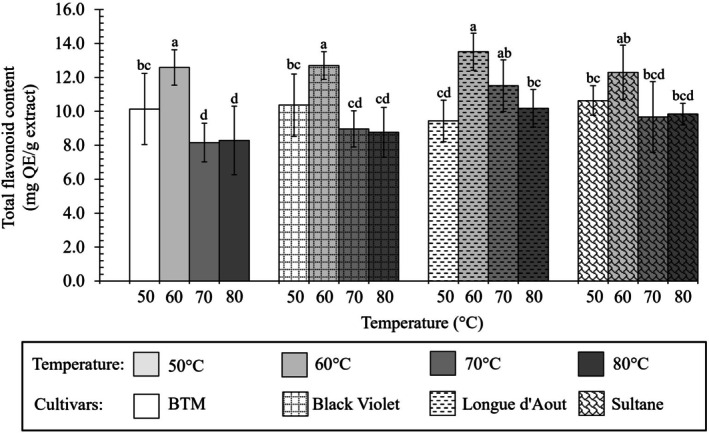 Figure 4
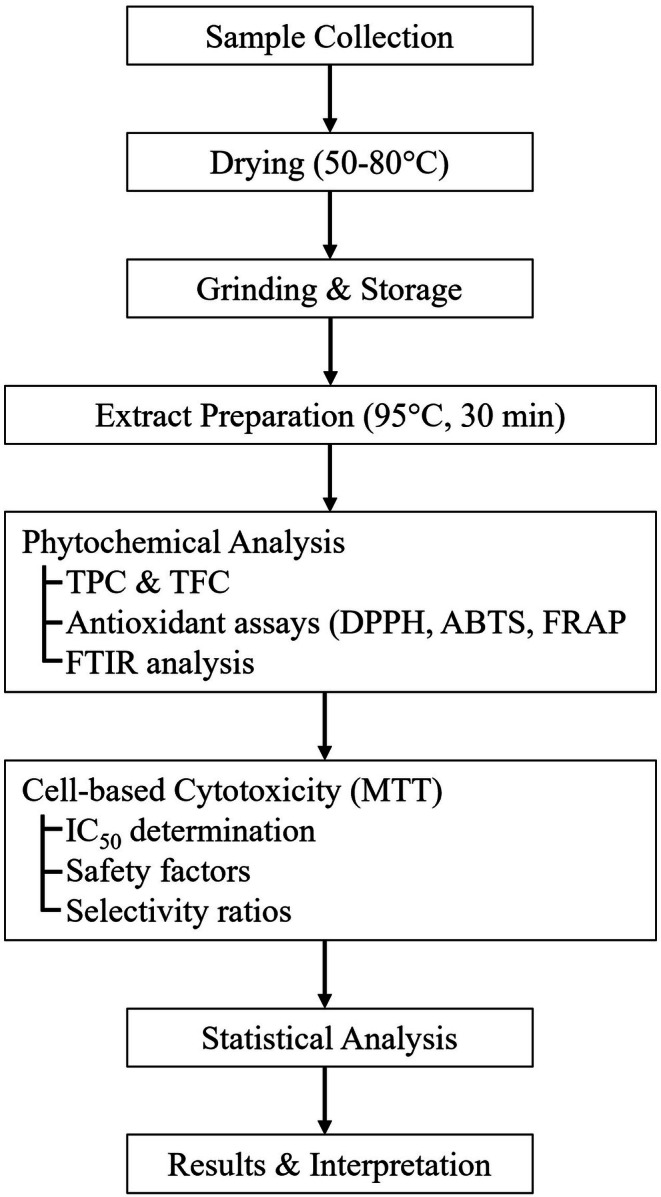 Figure 5
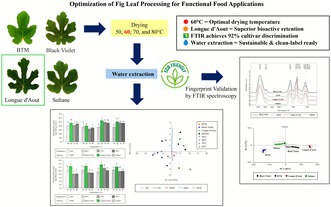 Figure 6
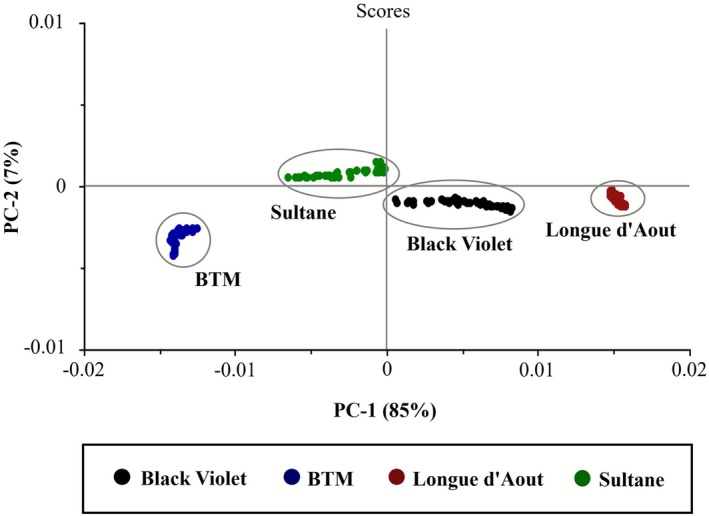 Figure 7
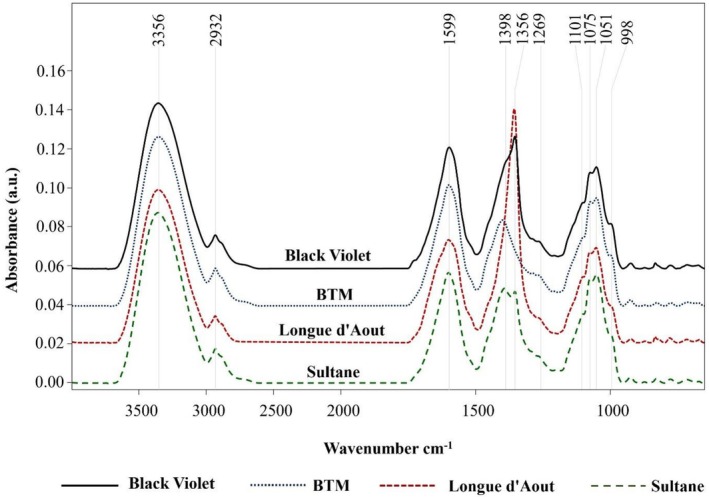 Figure 8
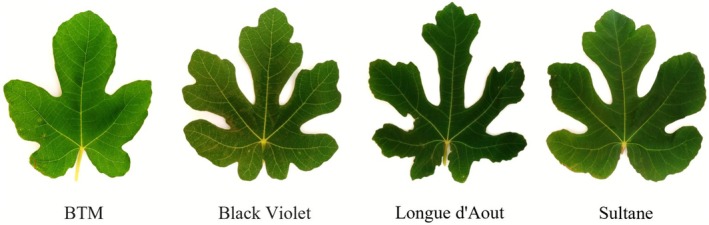 Figure 9
Peer Reviews
No public reviews on file for this paper yet. If you reviewed it on a platform where reviews are public (OpenReview, ICLR, NeurIPS, ICML), you can paste yours below so the community can read it here.
Videos
No videos yet. Explain this paper in a talk, walkthrough, or lecture? Add one.
Taxonomy
TopicsPhytochemistry and biological activities of Ficus species · Chemical synthesis and alkaloids · Garlic and Onion Studies