Biopsy Diagnosis Challenges in Oral Carcinoma Cuniculatum: A Case Report
Shingo Kodama, Takayuki Kurimoto, Takasuke Usuki, Yuichiro Hamamoto, Shoichiro Ishii

TL;DR
This case report describes the challenges in diagnosing oral carcinoma cuniculatum, a rare cancer, and highlights the importance of deep tissue biopsies for accurate identification.
Contribution
The report emphasizes the diagnostic value of keratin-like discharge and deep tissue sampling in confirming OCC.
Findings
Initial biopsies of OCC may be inconclusive, requiring deeper tissue sampling for accurate diagnosis.
Keratin-like discharge from the tumor may serve as a diagnostic clue for OCC.
Abstract
Oral carcinoma cuniculatum (OCC) is an extremely rare variant of squamous cell carcinoma that often poses diagnostic difficulties on biopsy despite clinical indications of malignancy. We report the case of a 90-year-old woman who presented with a granular endophytic lesion on the maxillary gingiva, accompanied by numerous fistulas exuding white, keratin-like material. Computed tomography revealed marked bone resorption. Although two initial biopsies were inconclusive, a third biopsy targeting deeper tumor tissue adjacent to the resorbed bone confirmed the diagnosis of OCC. The presence of keratin-like discharge from the tumor may be a diagnostic clue, and obtaining tissue from deeply infiltrated regions is essential for accurate diagnosis.
Genes, proteins, chemicals, diseases, species, mutations and cell lines named across the full text — each resolved to its canonical identifier and authoritative record.
Click any figure to enlarge with its caption.
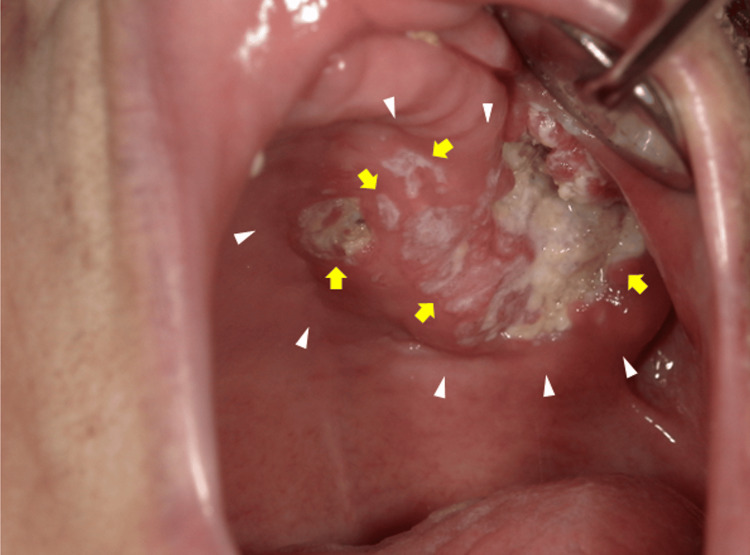 Figure 1
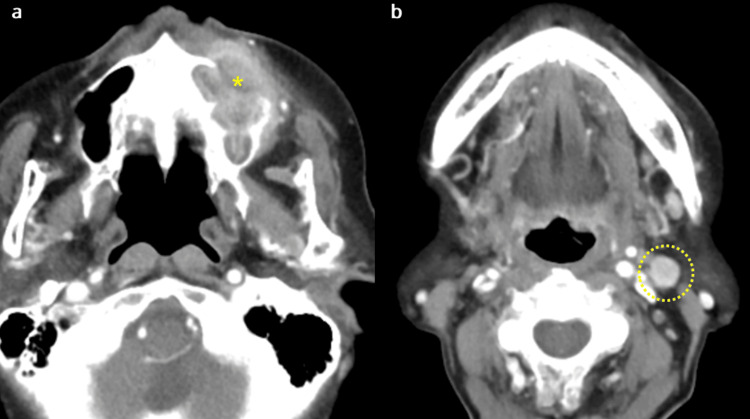 Figure 2
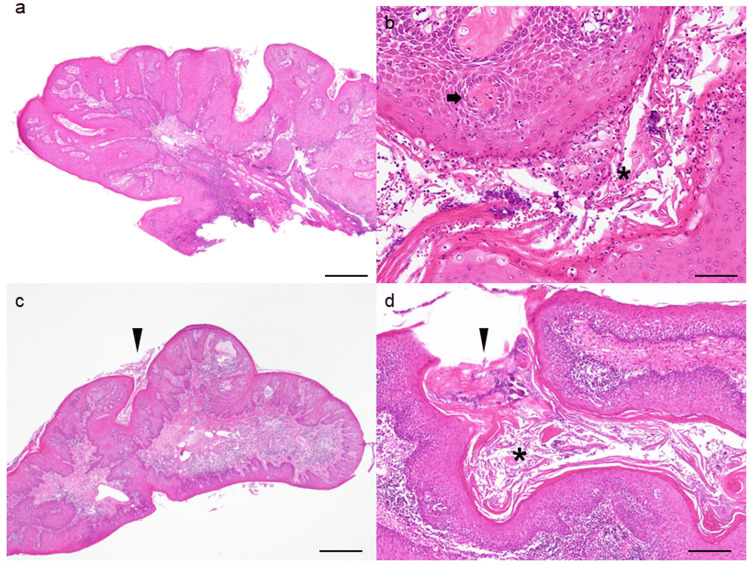 Figure 3
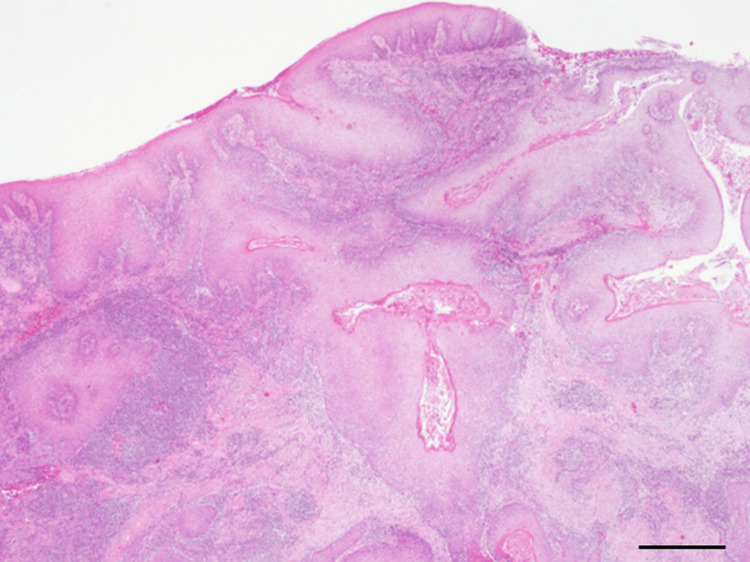 Figure 4
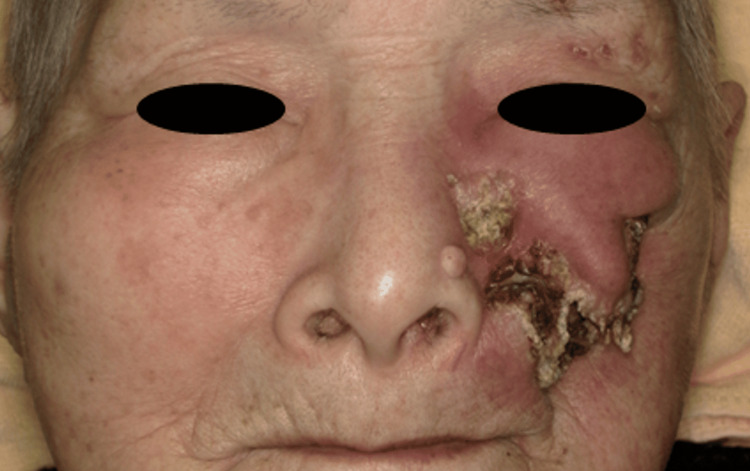 Figure 5
Peer Reviews
No public reviews on file for this paper yet. If you reviewed it on a platform where reviews are public (OpenReview, ICLR, NeurIPS, ICML), you can paste yours below so the community can read it here.
Videos
No videos yet. Explain this paper in a talk, walkthrough, or lecture? Add one.
Taxonomy
TopicsOral and Maxillofacial Pathology · Oral Health Pathology and Treatment · Oral and Craniofacial Lesions