Are radiology residents safe to report feeding nasogastric (NG) tubes on chest X-rays?
Cindy Chew, Lucy McGuire, Patrick J O’Dwyer, David Young

TL;DR
Radiology residents may not be properly trained to determine if feeding tubes are correctly placed in chest X-rays, which could affect patient safety.
Contribution
This study reveals a critical training gap in radiology residents' ability to interpret nasogastric tube positions on chest X-rays.
Findings
Only 35.7% of radiology residents correctly identified all NG tube positions on chest X-rays.
The most common error was misidentifying correctly placed NG tubes as mal-positioned.
Residents who performed well were significantly more confident in their abilities.
Abstract
The task of issuing reports on whether nasogastric (NG) tubes are safe for enteral nutrition on chest X-ray (CXR) often falls to radiology residents. The aims of this study are to evaluate whether radiology residents are formally trained and their performance in interpreting NG tube position on CXR. Radiology residents were invited to participate in an online study evaluating NG tube position on CXR. The CXR images comprised 20 NG tubes, 14 of which were correctly sited, while 4 were in the distal oesophagus and 2 in the lung. Twenty-eight (of 185, 15%) radiology residents responded—despite incentives to participate and directed by Training Program Directors/Heads of School. Of those, only 10 (35.7%) correctly identified all NG tube positions on CXR. The most common error was reporting a correctly sited NG tube as mal-positioned for enteral nutrition. Global error rate was 8.9%.…
Click any figure to enlarge with its caption.
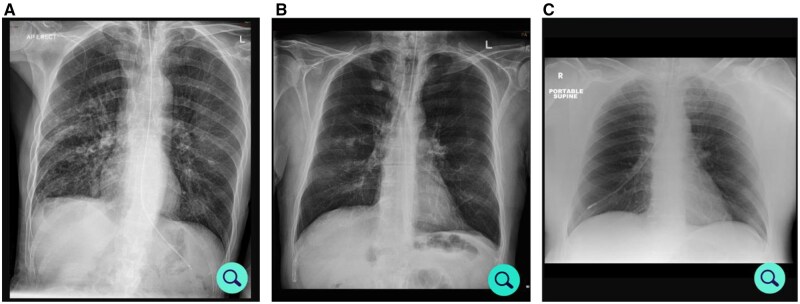 Figure 1
Peer Reviews
No public reviews on file for this paper yet. If you reviewed it on a platform where reviews are public (OpenReview, ICLR, NeurIPS, ICML), you can paste yours below so the community can read it here.
Videos
No videos yet. Explain this paper in a talk, walkthrough, or lecture? Add one.
Taxonomy
TopicsRadiology practices and education · Colorectal Cancer Screening and Detection · Ultrasound in Clinical Applications