Active monitoring vs. spontaneous reporting of antineoplastic drug–related adverse drug reactions: evidence from the Chinese hospital pharmacovigilance system
Hao Jing, Du Jie, Wang Zhong, Ma Xiao, Zhang Qingxuan, Li Sha, Zhang Shuai, Xiao Yunyan, Lv Mingxiao, Liu Yahui

TL;DR
This study compares active monitoring and spontaneous reporting for detecting cancer drug side effects in Chinese hospitals, showing active monitoring is more effective and faster.
Contribution
The study demonstrates the advantages of active monitoring over spontaneous reporting in detecting and predicting adverse drug reactions in cancer therapy.
Findings
Active monitoring detected more ADRs (160 vs. 50) and identified them earlier (4.2 vs. 10.7 days) than spontaneous reporting.
Severe ADRs led to hospitalization (34.6%), treatment discontinuation (23.1%), and death (9.6%).
Predictive models using active monitoring data showed strong performance (AUC = 0.84) compared to spontaneous reporting (AUC = 0.72).
Abstract
Adverse drug reactions (ADRs) remain a major barrier to safe and effective cancer therapy. Existing pharmacovigilance systems predominantly rely on spontaneous reporting, which suffers from underreporting and delays. The Chinese Hospital Pharmacovigilance System (CHPS) provides an opportunity for active monitoring using multidimensional hospital data. We conducted a retrospective cohort study, including 500 patients who received chemotherapy, targeted therapy, or immunotherapy. ADRs were identified through CHPS, classified by the Common Terminology Criteria for Adverse Events (CTCAE), and assessed using both active monitoring and spontaneous reporting. Signal detection employed disproportionality analyses (PRR, ROR, IC). Risk factors were analyzed with logistic regression, and predictive models for severe ADRs were evaluated with ROC curve analysis. The overall ADR incidence was 37.0%…
Genes, proteins, chemicals, diseases, species, mutations and cell lines named across the full text — each resolved to its canonical identifier and authoritative record.
Click any figure to enlarge with its caption.
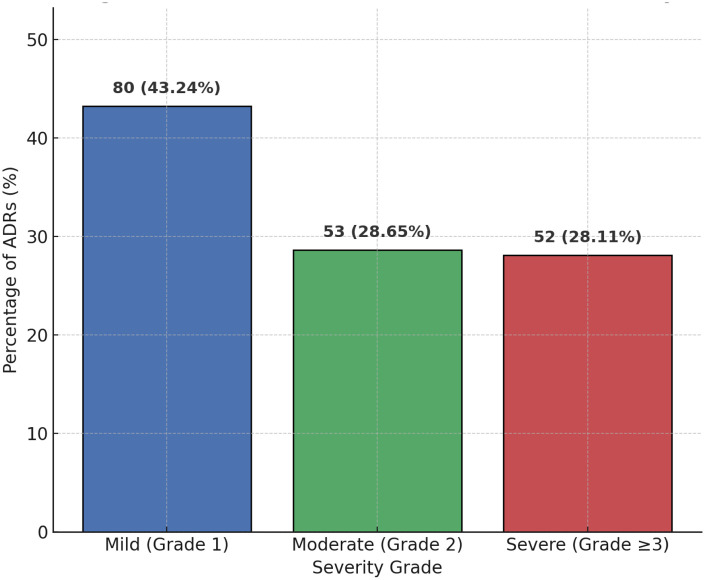 Figure 1
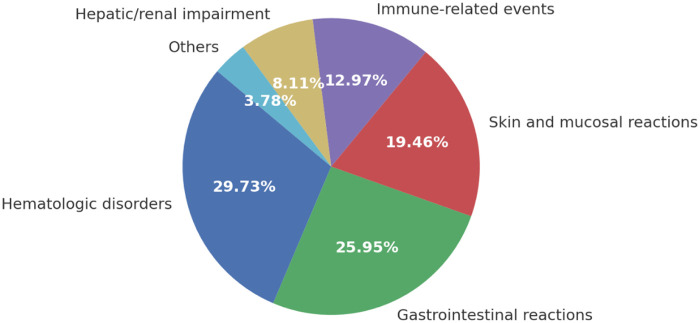 Figure 2
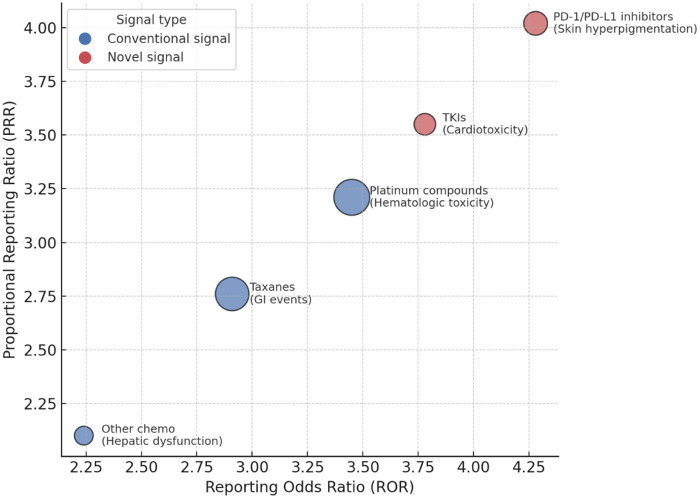 Figure 3
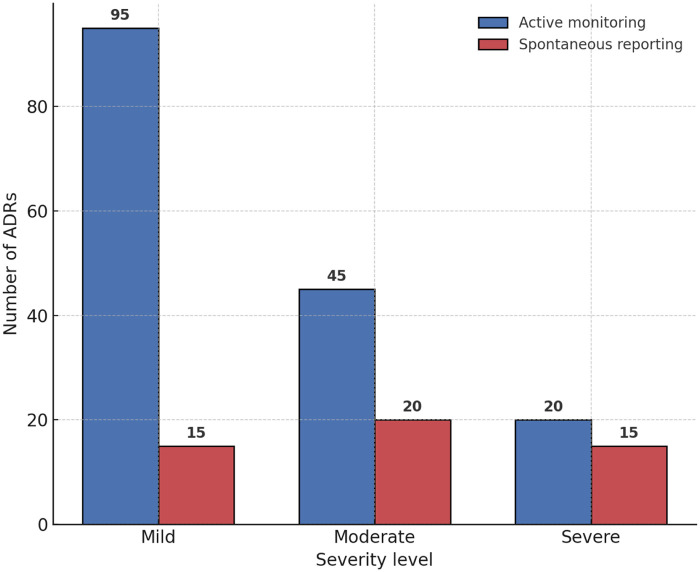 Figure 4
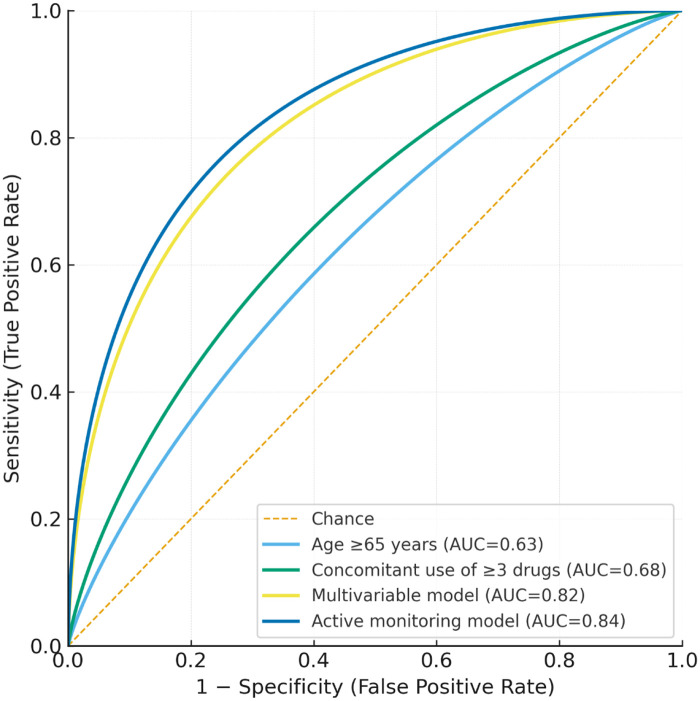 Figure 5
Peer Reviews
No public reviews on file for this paper yet. If you reviewed it on a platform where reviews are public (OpenReview, ICLR, NeurIPS, ICML), you can paste yours below so the community can read it here.
Videos
No videos yet. Explain this paper in a talk, walkthrough, or lecture? Add one.
Taxonomy
TopicsPharmacovigilance and Adverse Drug Reactions · Pharmaceutical Practices and Patient Outcomes · Drug-Induced Adverse Reactions