Mechanism of exercise-derived circulating exosomes as a target for sarcopenia management
Xiangbo Wang, Hui Huang, Jie Chen, Qing Zhang, Zhichao Yuan, Mingyue Yin, Chenggen Peng, Songlin Liu

TL;DR
This paper reviews how exercise-derived exosomes may help manage sarcopenia by improving muscle health through various biological mechanisms.
Contribution
The paper provides a comprehensive review of the biogenesis and systemic roles of exercise-derived exosomes in mitigating sarcopenia.
Findings
Exercise-derived exosomes are produced via ESCRT-dependent and independent pathways and are regulated by RAB and SNARE proteins.
These exosomes help in muscle repair by reducing lipotoxicity through the FGF21-adiponectin axis and modulating macrophage polarization.
They also maintain protein homeostasis via miR-29c regulation and offer translational promise as therapeutic targets for sarcopenia.
Abstract
Sarcopenia, an age-related syndrome characterized by the progressive decline of skeletal muscle mass and function, threatens the health of older adults through underlying mechanisms that include dysregulated protein metabolism, autophagy-mitochondrial dysfunction, chronic inflammation, and impaired regenerative capacity of muscle stem cells. Exercise-derived circulating exosomes, which act as key mediators of intercellular communication, show considerable potential in mitigating sarcopenia-related damage. In this review, we summarize the biogenesis of exercise-induced exosomes, encompassing both ESCRT-dependent and independent pathways, secretion regulated by RAB and SNARE proteins, and their release mediated through mechanical, calcium, metabolic, and neuroendocrine signaling during exercise. We further elaborate on the systemic roles of these exosomes in muscle repair, including…
Genes, proteins, chemicals, diseases, species, mutations and cell lines named across the full text — each resolved to its canonical identifier and authoritative record.
Click any figure to enlarge with its caption.
 Figure 1
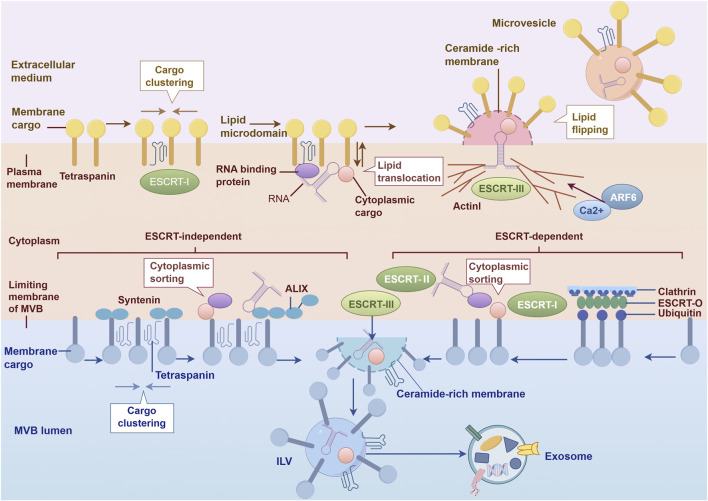 Figure 2
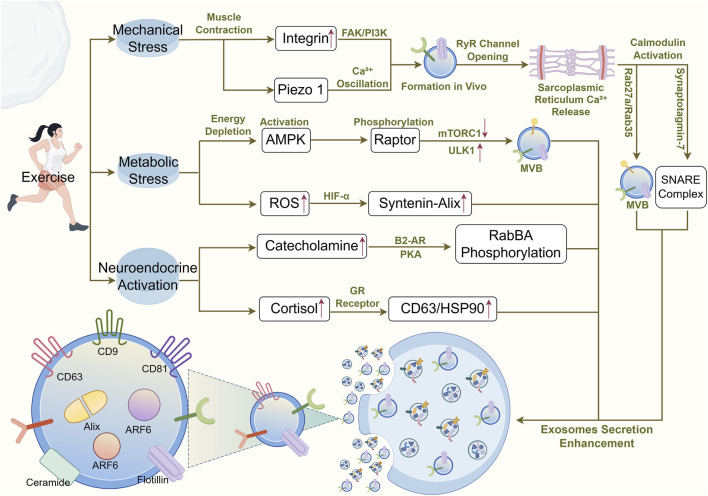 Figure 3
Peer Reviews
No public reviews on file for this paper yet. If you reviewed it on a platform where reviews are public (OpenReview, ICLR, NeurIPS, ICML), you can paste yours below so the community can read it here.
Videos
No videos yet. Explain this paper in a talk, walkthrough, or lecture? Add one.
Taxonomy
TopicsExtracellular vesicles in disease · Muscle Physiology and Disorders · Nutrition and Health in Aging