Neuromuscular adaptations to auto-regulated velocity-based versus fixed percentage-based squat training in sprinters
Hanzhao Guo, Lingfeng Zhang, Zhanfei Zheng, Chang Liu, Feng Chen, Wenhai Wu

TL;DR
This study compares two squat training methods in sprinters and finds that velocity-based training improves strength and sprint performance more than fixed percentage-based training.
Contribution
The study introduces auto-regulated velocity-based training as a more effective method for improving maximal strength and sprint performance in collegiate sprinters.
Findings
Both training methods improved countermovement jump, long jump, and maximal strength.
Velocity-based training led to significantly greater improvements in sprint times and change of direction performance.
Velocity-based training showed larger effect sizes for maximal strength and sprint performance compared to fixed percentage-based training.
Abstract
To compare auto-regulated velocity-based training (VBT) with traditional fixed percentage-based training (PBT) on neuromuscular performance in collegiate sprinters. Twenty resistance-trained males performed 6 weeks of back squat exercise 3 times per week. Both groups completed five sets of five repetitions with 3-min inter-set rest, matched for exercise selection and volume. The VBT group adjusted load based on real-time barbell velocity to maintain a target mean propulsive velocity of ∼0.54 m·s-1 (≈80% 1RM), whereas the PBT group trained with a fixed 80% of pre-intervention 1RM without further adjustment. Countermovement jump (CMJ), Standing long jump (SLJ), 20-m sprint times (T20-m), maximal strength (1RM back squat), and COD (T-test) were measured pre- and post-intervention. Both groups significantly improved CMJ height (VBT: +7.8%, ES = 0.48; PBT: +6.7%, ES = 0.44), relative peak…
Click any figure to enlarge with its caption.
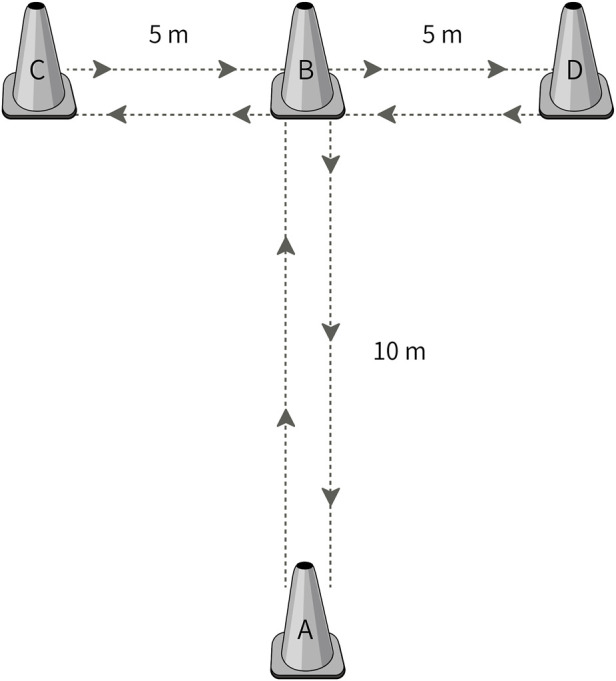 Figure 1
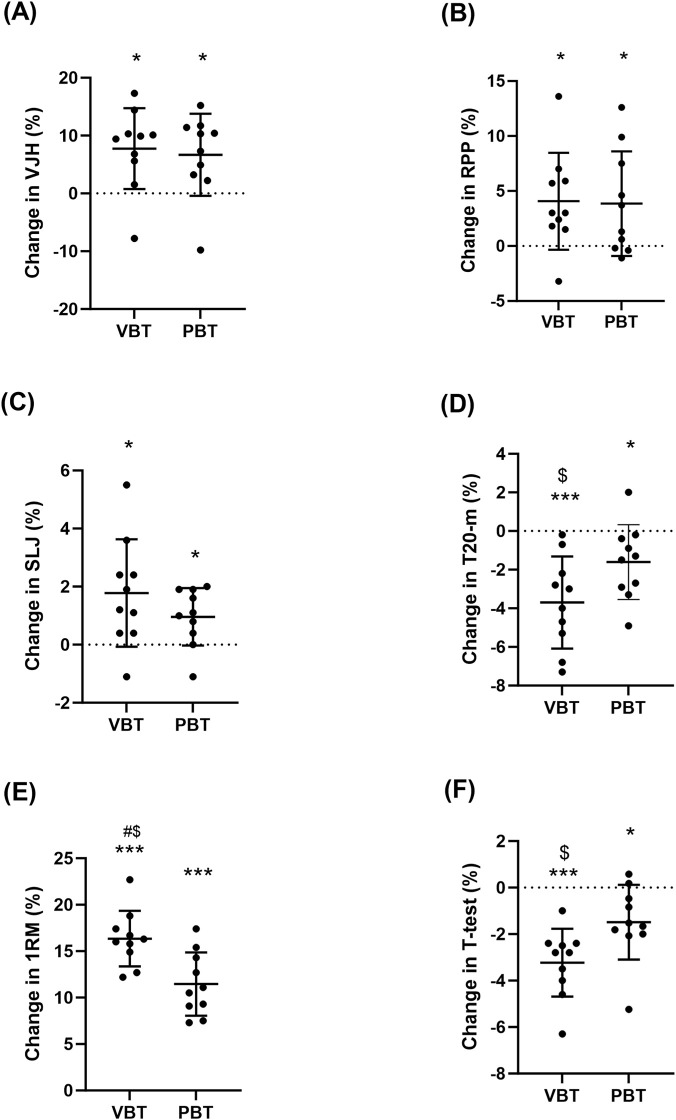 Figure 2
Peer Reviews
No public reviews on file for this paper yet. If you reviewed it on a platform where reviews are public (OpenReview, ICLR, NeurIPS, ICML), you can paste yours below so the community can read it here.
Videos
No videos yet. Explain this paper in a talk, walkthrough, or lecture? Add one.
Taxonomy
TopicsSports Performance and Training · Cardiovascular and exercise physiology · Sports injuries and prevention