Machine learning-based estimation of trunk fat percentage and its association with cardiometabolic risk leveraging two large national cohorts
Liangming Zeng, Xuemin Guo, Hesen Wu, Changjing Huang

TL;DR
This study developed a machine learning model to estimate trunk fat using basic measurements and found it better predicts cardiometabolic risks than whole-body fat.
Contribution
A simplified, accurate machine learning model for trunk fat estimation that outperforms whole-body fat in predicting cardiometabolic diseases.
Findings
The XGBoost model achieved an R2 of 0.8509 in estimating trunk fat percentage.
A simplified model with five variables retained 99.3% of the full model's accuracy.
Trunk fat percentage outperformed whole-body fat in predicting diabetes and other cardiometabolic conditions.
Abstract
This study aimed to develop and validate a machine learning model for accurate estimation of trunk fat percentage using readily available anthropometric measures, and to evaluate its discriminative performance for cardiometabolic diseases compared with conventional whole-body fat percentage. We utilized data from the National Health and Nutrition Examination Survey (NHANES; 1999–2006 and 2011–2018) as the development cohort (n = 30,443). Trunk fat percentage, measured by dual-energy X-ray absorptiometry (DXA), served as the gold standard. Six regression algorithms were evaluated, with model performance assessed by the coefficient of determination (R2). External validation was performed using the China Health and Retirement Longitudinal Study (CHARLS) cohort (n = 13,524), where the discriminative power for hypertension, dyslipidemia, diabetes, heart disease, and stroke was evaluated…
Genes, proteins, chemicals, diseases, species, mutations and cell lines named across the full text — each resolved to its canonical identifier and authoritative record.
Click any figure to enlarge with its caption.
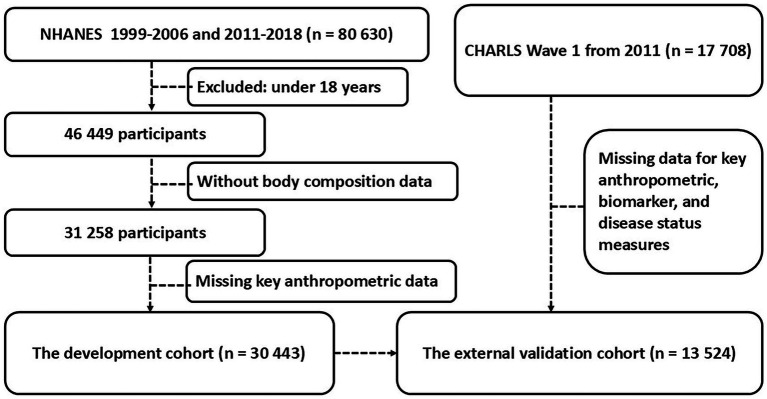 Figure 1
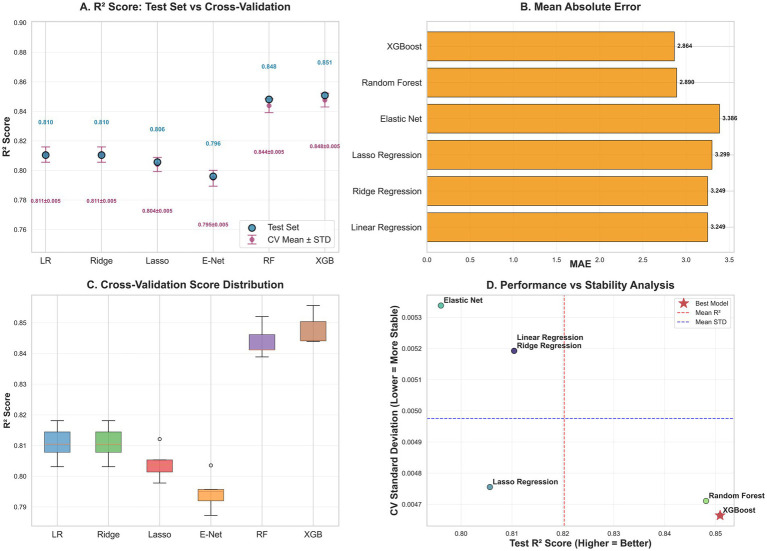 Figure 2
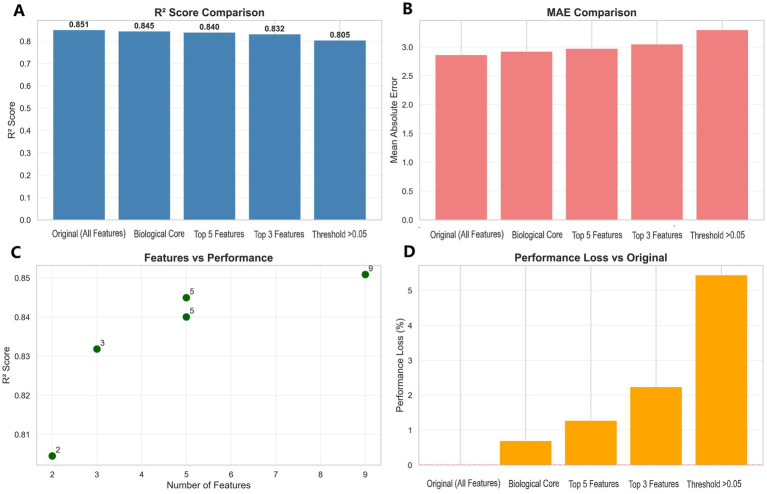 Figure 3
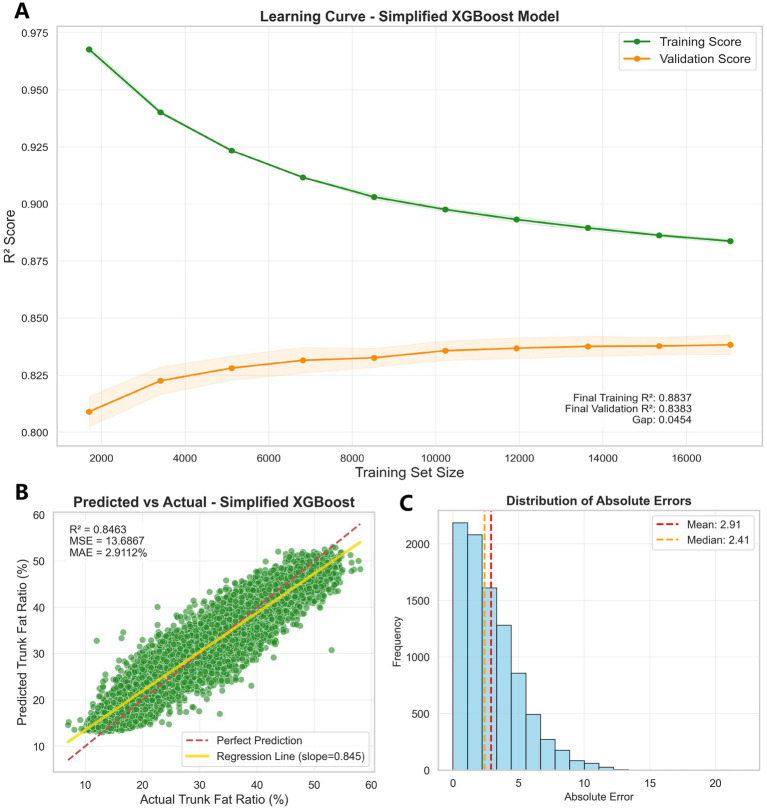 Figure 4
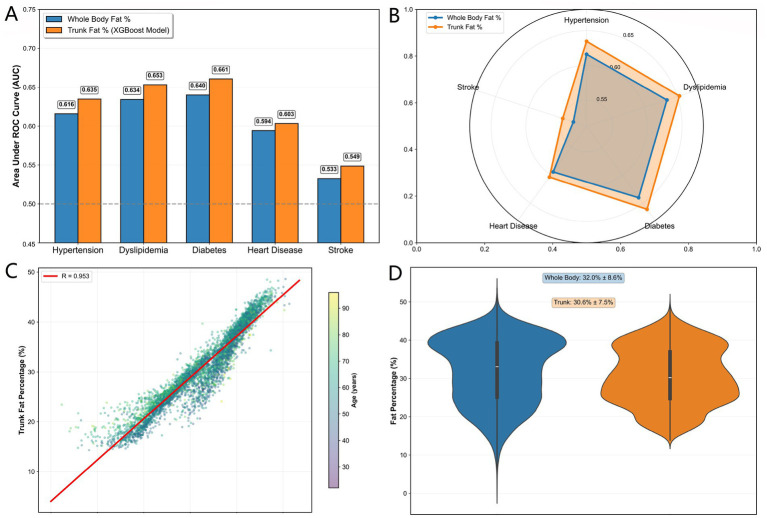 Figure 5
Peer Reviews
No public reviews on file for this paper yet. If you reviewed it on a platform where reviews are public (OpenReview, ICLR, NeurIPS, ICML), you can paste yours below so the community can read it here.
Videos
No videos yet. Explain this paper in a talk, walkthrough, or lecture? Add one.
Taxonomy
TopicsBody Composition Measurement Techniques · Nutrition and Health in Aging · Diabetes, Cardiovascular Risks, and Lipoproteins