Efficacy and tolerability of mogamulizumab in mycosis fungoides and Sézary Syndrome: a monocentric retrospective study
Antonio Giordano, Luana Fianchi, Marianna Criscuolo, Martina Quattrone, Alessia Di Pilla, Livio Pagano

TL;DR
This study examines how well Mogamulizumab works and how safe it is for treating Mycosis Fungoides and Sézary Syndrome in real-world patients.
Contribution
A real-world retrospective analysis of Mogamulizumab's efficacy and tolerability in MF/SS patients with diverse clinical backgrounds.
Findings
Mogamulizumab showed a 50% overall response rate in patients with Mycosis Fungoides and Sézary Syndrome.
The median progression-free survival was 5.4 months, and the median overall survival was 11.5 months.
Common adverse events included MAR in 33% of patients and colitis in 6%.
Abstract
Mycosis Fungoides (MF) is a common subtype of primary cutaneous T-cell lymphoma (CTCL), a group of non-Hodgkin lymphomas. The clinical spectrum of MF ranges from isolated cutaneous lesions to widespread involvement of lymph nodes, blood, and skin, as seen in its aggressive variant, Sézary Syndrome (SS). Mogamulizumab, a defucosylated humanized IgG1-κ anti-CCR4 monoclonal antibody approved for relapsed/refractory MF/SS, has demonstrated a favorable safety and efficacy profile in multiple case series. This retrospective, monocentric observational study analyzed data from 12 patients treated with Mogamulizumab between January 1, 2019, and December 31, 2024. We aim to evaluate the tolerability and clinical response to Mogamulizumab in patients with MF/SS. Of the 12 patients treated, 8 had MF and 4 had SS. The median follow-up time was 29.9 months (range 2.8–68.6 months). Four patients…
Genes, proteins, chemicals, diseases, species, mutations and cell lines named across the full text — each resolved to its canonical identifier and authoritative record.
Click any figure to enlarge with its caption.
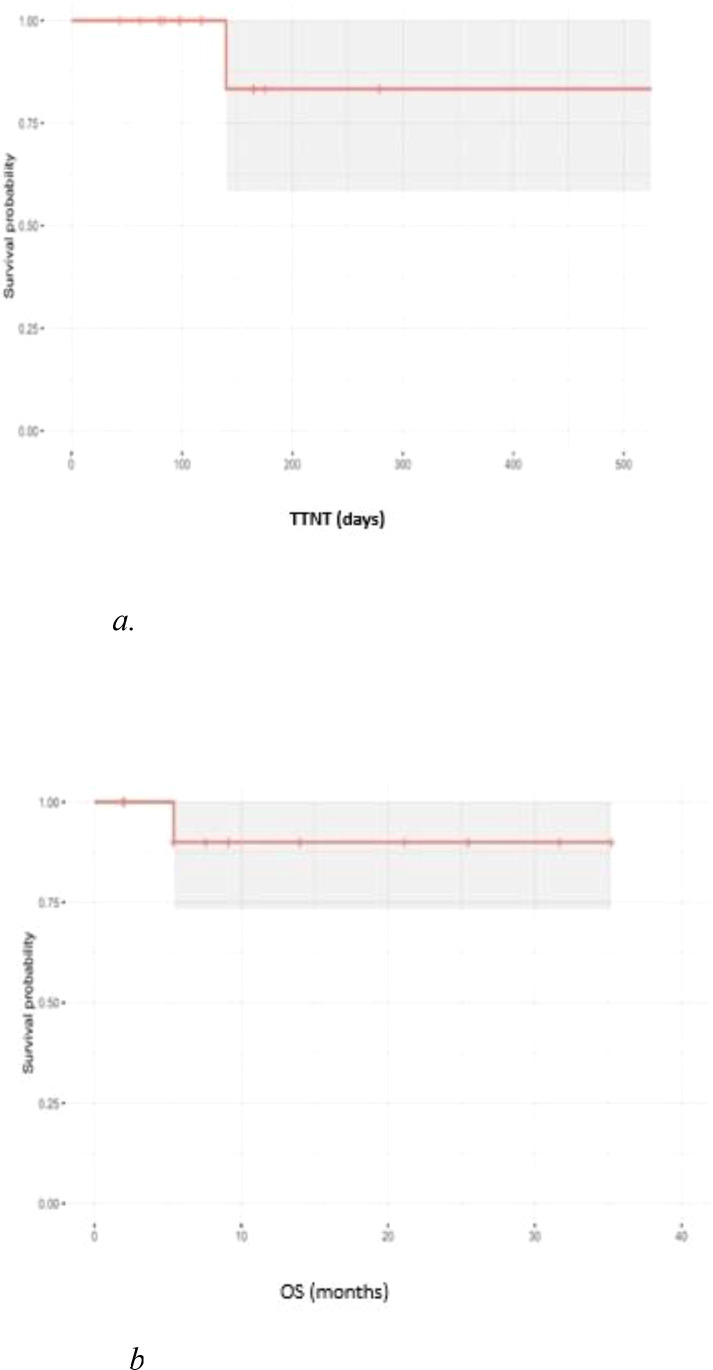 Figure 1
Peer Reviews
No public reviews on file for this paper yet. If you reviewed it on a platform where reviews are public (OpenReview, ICLR, NeurIPS, ICML), you can paste yours below so the community can read it here.
Videos
No videos yet. Explain this paper in a talk, walkthrough, or lecture? Add one.
Taxonomy
TopicsCutaneous lymphoproliferative disorders research · Lymphoma Diagnosis and Treatment · Chronic Lymphocytic Leukemia Research