Challenges and adaptation strategies for improving quality and biochemical changes of Flame Seedless grapevines in Mediterranean environment under increasing climate variability
Abdullah Alebidi, Mahmoud G. Abd El-Gawad, Hayam M. Elmenofy, Hoda Galal, Hail Z. Rihan, Mahmoud Abdel-Sattar

TL;DR
This study explores how using plant hormones and plastic covering can improve grape quality and reduce losses in Mediterranean climates affected by climate change.
Contribution
The study introduces a novel combination of gibberellic acid and brassinosteroids under plastic covering to enhance grape quality and biochemical traits.
Findings
GA3 at 20 µL L−1 improved berry firmness, coloration, and reduced acidity and small berries.
Combining GA3 at 20 µL L−1 with BR at 2.0 µL L−1 significantly enhanced cluster and berry dimensions and color intensity.
The combination treatment also improved antioxidant defenses in grape leaves and reduced postharvest losses.
Abstract
Grapevine cultivation in a Mediterranean environment is significantly influenced by climate conditions, which determine vine growth characteristics and berry quality, resulting in financial losses for growers. To address these issues and meet the export standards of Flame Seedless grapes, integrated strategies were adopted, including plastic covering along with foliar applications of 24-epibrassinosteroids and gibberellic acid. A split-plot experiment was conducted in 2024 and 2025, testing two gibberellic acid (GA3) regimes (one at 110 µL L−1 [ppm] applied at three stages and another at 20 µL L−1 applied at two stages), alongside various concentrations of foliar-applied brassinosteroid (BR) at 0, 0.5, 1.0, 1.5, and 2.0 µL L−1. The results indicated that the application of GA3 and/or 24-epibrassinosteroids significantly improved the quality of grape clusters and berries, including their…
Genes, proteins, chemicals, diseases, species, mutations and cell lines named across the full text — each resolved to its canonical identifier and authoritative record.
Click any figure to enlarge with its caption.
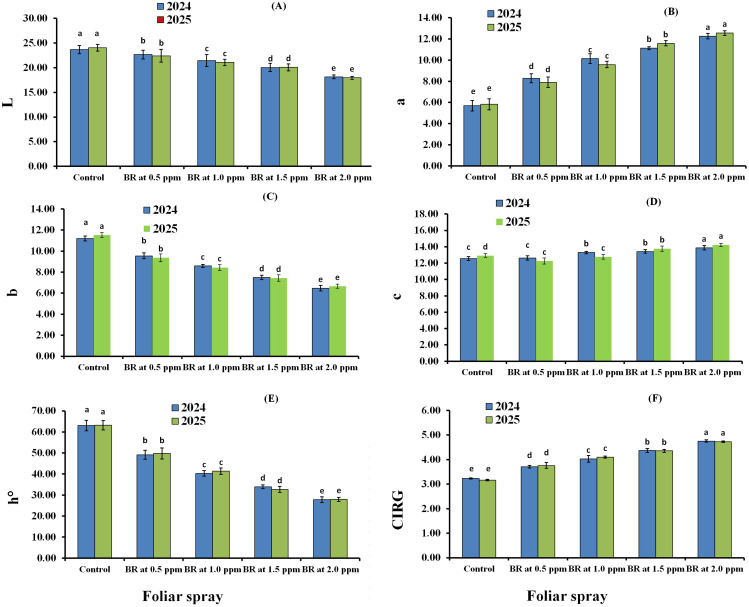 Figure 1
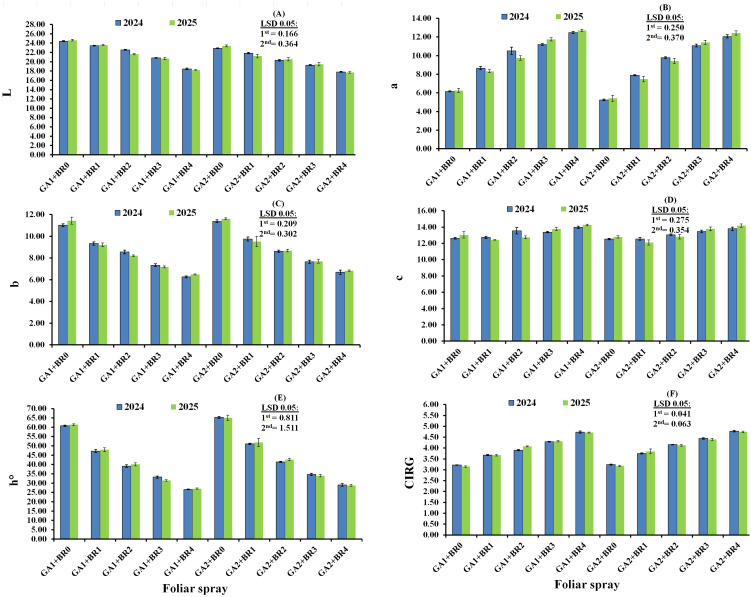 Figure 2
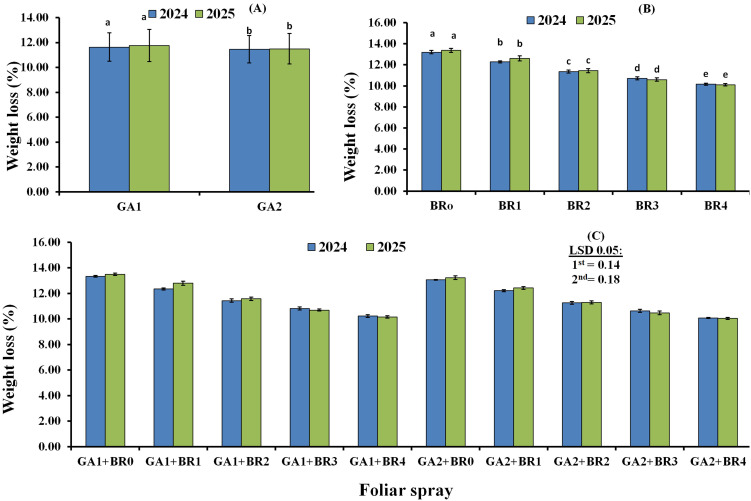 Figure 3
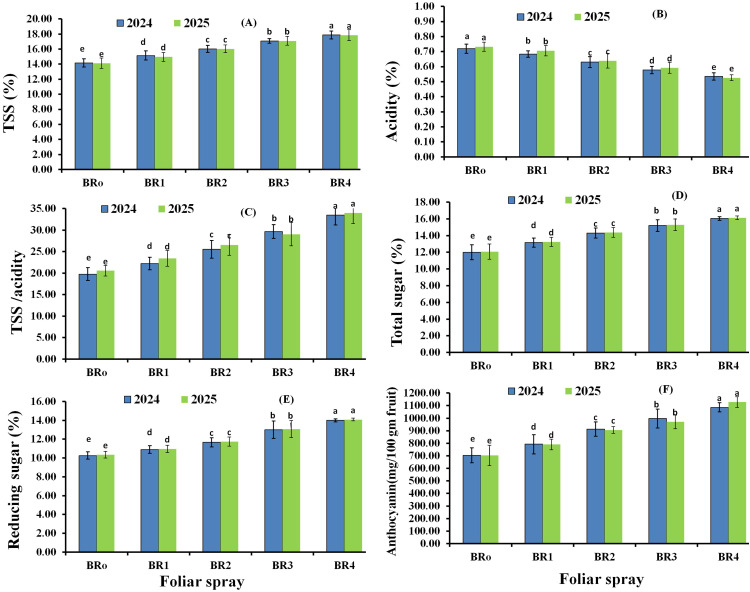 Figure 4
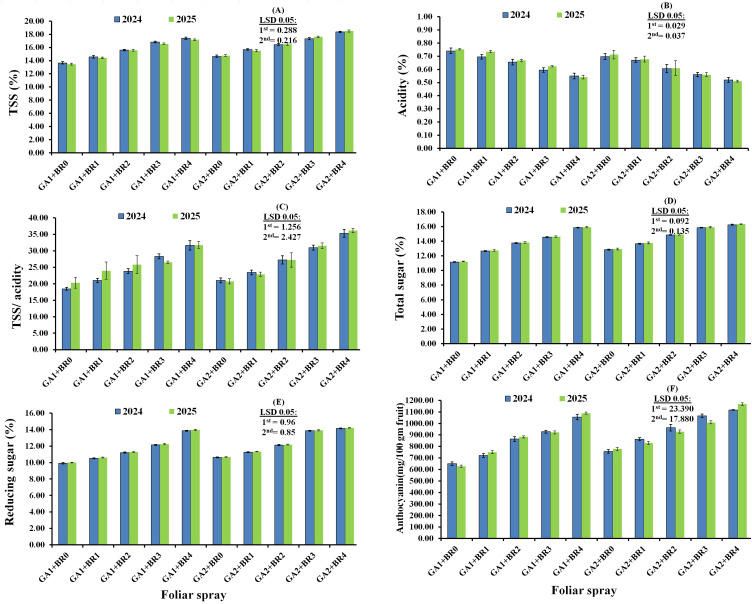 Figure 5
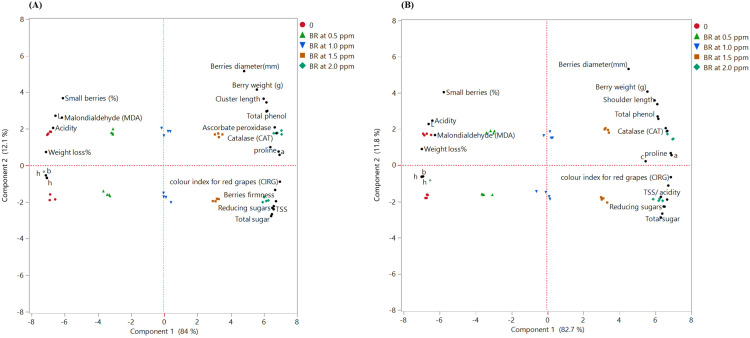 Figure 6
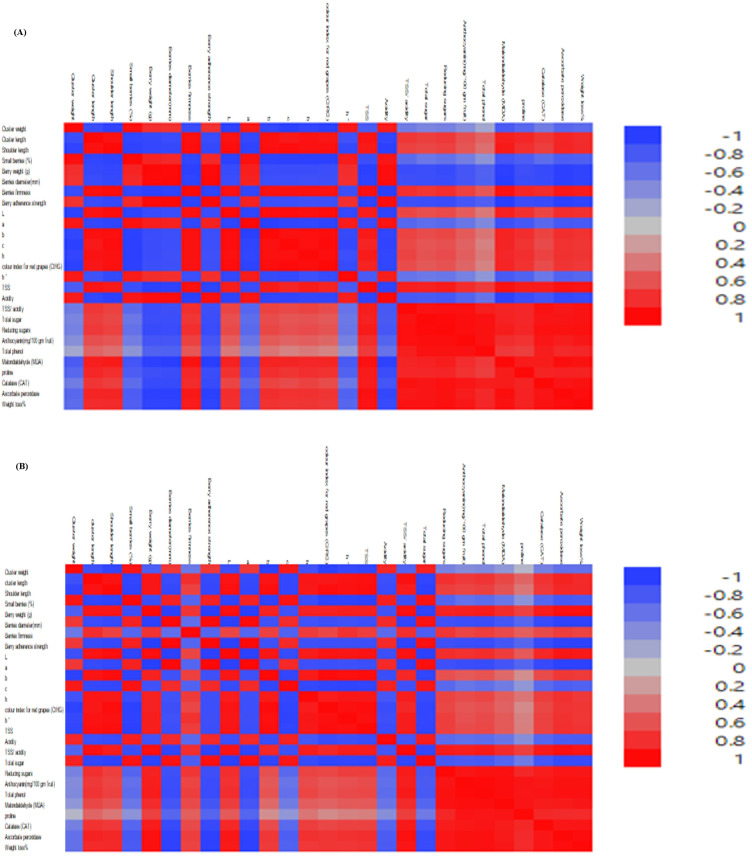 Figure 7
Peer Reviews
No public reviews on file for this paper yet. If you reviewed it on a platform where reviews are public (OpenReview, ICLR, NeurIPS, ICML), you can paste yours below so the community can read it here.
Videos
No videos yet. Explain this paper in a talk, walkthrough, or lecture? Add one.
Taxonomy
TopicsHorticultural and Viticultural Research · Plant Physiology and Cultivation Studies · Plant Gene Expression Analysis