Opportunities and challenges in recurrent diffuse podocytopathy post-transplantation: the critical value of the definition
Rachel Nuccitelli, Amadea Toutoungis, Elena Martinelli, Simone Sanna-Cherchi, Astrid Weins, Heather K. Morris, Andrew S. Bomback, Ibrahim Batal

TL;DR
Accurate diagnosis of diffuse podocytopathy in native kidneys is vital for predicting and preventing its recurrence after kidney transplantation.
Contribution
The study emphasizes the importance of stringent diagnostic criteria to better understand and predict DP recurrence post-transplantation.
Findings
Applying strict criteria increased DP recurrence rate from 9% to 36% in kidney transplant recipients.
Excluding monogenic FSGS and high-risk APOL1 genotypes further raised recurrence to 54%.
Accurate diagnosis of DP is critical for developing effective treatment and prevention strategies.
Abstract
Diffuse podocytopathy (DP) is a clinical and pathological entity, which comprises minimal change disease and primary focal segmental glomerulosclerosis (FSGS). It is characterized by diffuse podocyte foot process effacement resulting in nephrotic syndrome. Cumulative evidence supports that DP is a complex disease caused by circulating permeability factors. Following kidney transplantation, DP may recur and severely compromise graft survival. However, prior studies aiming to define immune and genetic factors implicated in disease recurrence have been limited by small cohorts and lack of utilizing stringent criteria to define DP. In this report, we briefly review the important advances made in understanding genomic and permeability factors involved in DP in the native kidney and in the transplant setting, focusing on anti-nephrin antibodies. We stress the importance of applying stringent…
Genes, proteins, chemicals, diseases, species, mutations and cell lines named across the full text — each resolved to its canonical identifier and authoritative record.
Click any figure to enlarge with its caption.
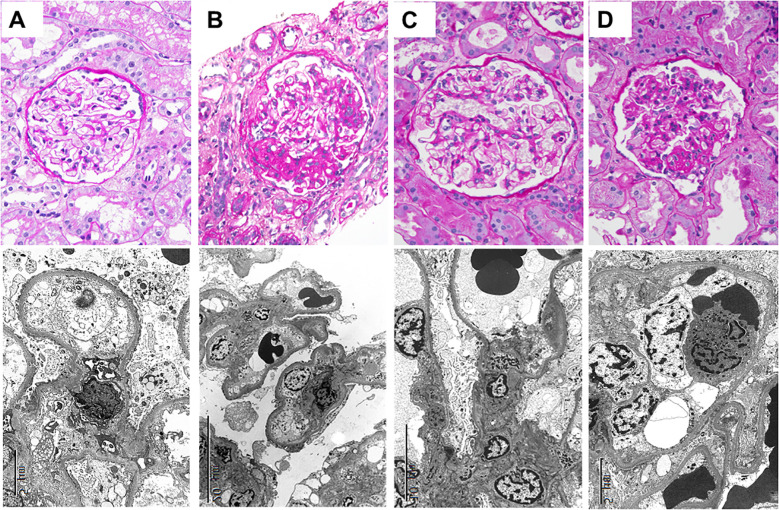 Figure 1
Peer Reviews
No public reviews on file for this paper yet. If you reviewed it on a platform where reviews are public (OpenReview, ICLR, NeurIPS, ICML), you can paste yours below so the community can read it here.
Videos
No videos yet. Explain this paper in a talk, walkthrough, or lecture? Add one.
Taxonomy
TopicsRenal Diseases and Glomerulopathies · Renal Transplantation Outcomes and Treatments · Amyloidosis: Diagnosis, Treatment, Outcomes