Near‐Infrared Spectroscopy as a Resource for Assessing the Rest and Activation of Pelvic Floor Muscles in Young Adult Women: A Cross‐Sectional Study
Iasmin Pereira Cabral Miranda, Marcos Venicius Bentes do Nascimento, Pablo Fabiano Moura das Neves, Maria Clara Pinheiro do Nascimento, Fernanda Caroline de Jesus Viana, Mayara Carolina Jorge Moraes, Emili Beatriz Chaves de Brito, Fabiane Yasmin de Miranda Lobato

TL;DR
This study shows that near-infrared spectroscopy can noninvasively detect oxygenation changes in pelvic floor muscles during rest and contraction in young women.
Contribution
The study demonstrates NIRS as a noninvasive alternative to intracavitary methods for assessing pelvic floor muscle activity.
Findings
NIRS detected significant oxygenation changes during maximum sustained voluntary contractions.
The bulbospongiosus muscle showed higher sensitivity to NIRS measurements compared to the transverse muscle.
NIRS can distinguish metabolic differences between rest and muscle activation on the skin surface.
Abstract
This study evaluated the potential of near‐infrared spectroscopy (NIRS) as a noninvasive tool to assess pelvic floor muscle oxygenation in young adult women. Thirty‐eight participants were divided into a control group (rest) and an activation group (phasic and sustained contractions). Measurements were obtained with the Humon Hex device placed on the skin overlying the bulbospongiosus and superficial transverse muscles. Muscle activation, especially during maximum sustained voluntary contraction, resulted in significant oxygenation changes, with greater variability in the activation group. The bulbospongiosus showed higher sensitivity, whereas the transverse muscle presented more stable responses. Despite limitations related to sensor adaptation and signal stability, NIRS detected differences in metabolic demands between rest and activation when placed on the skin surface. These…
Genes, proteins, chemicals, diseases, species, mutations and cell lines named across the full text — each resolved to its canonical identifier and authoritative record.
Click any figure to enlarge with its caption.
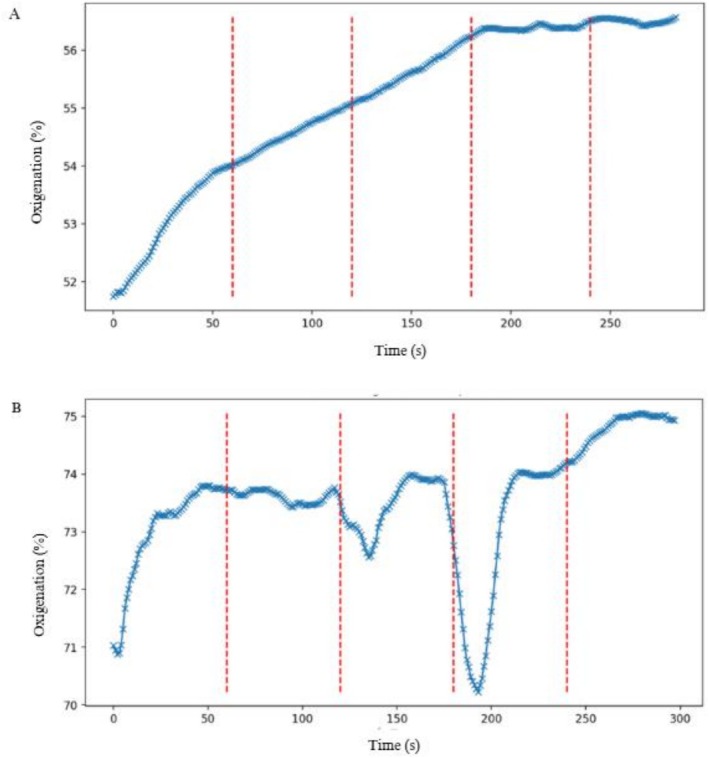 Figure 1
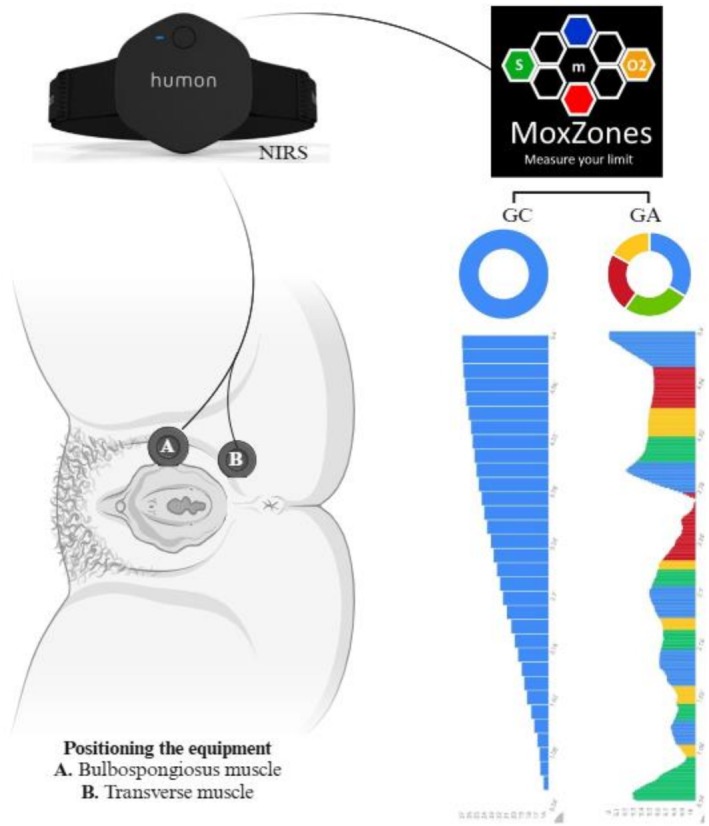 Figure 2
 Figure 3
Peer Reviews
No public reviews on file for this paper yet. If you reviewed it on a platform where reviews are public (OpenReview, ICLR, NeurIPS, ICML), you can paste yours below so the community can read it here.
Videos
No videos yet. Explain this paper in a talk, walkthrough, or lecture? Add one.
Taxonomy
TopicsPelvic floor disorders treatments · Musculoskeletal pain and rehabilitation · Thermoregulation and physiological responses