Expression of CD38 on resting peripheral iNKT cells defines an immature subpopulation with distinct functionality in humans
Christopher Menne, Naeimeh Tavakolinia, Louis Perriman, Wiebke Moskorz, Christine Cosmovici, Andreas Walker, Lara Olejnik, Katharina Raba, Mei RM Du, Fernando J Rossello, Igor E Konstantinov, Stuart P Berzins, Daniel G Pellicci, Jörg Timm

TL;DR
The study identifies a unique immature subset of iNKT cells marked by CD38 expression in resting state, revealing new insights into iNKT cell heterogeneity.
Contribution
CD38 is shown to mark an immature iNKT cell subset in humans, distinct from activation states and known maturity markers.
Findings
CD38+ resting iNKT cells resemble undifferentiated cells with reduced type 1 cytokine release and EOMES expression.
CD38+ iNKT cells are abundant in infant thymus and cord blood, supporting their immature nature.
In vitro stimulation shows CD38 expression distinguishes resting from activated iNKT cells.
Abstract
Human invariant natural killer T cells (iNKT) play an important role in an orchestrated immune response; however, the heterogeneity of iNKT subsets is not yet fully understood. Here, we uncovered CD38 as a marker of iNKT differentiation, decoupling it from its role as a marker of activation by comparing the phenotype, cytokine profile and transcription factor expression of iNKT cell subsets in humans. Expression of CD38 on resting iNKT cells was restricted to cells that were low in well‐described maturity markers such as CD161 and CCR5 and co‐expressed markers associated with undifferentiated T cells (CD45RA, CCR7, CD62L). High abundance of CD38+ iNKT cells in human infant thymus and cord blood supported the immature nature of this subset. Functional analysis revealed that the CD38+ phenotype of resting iNKT cells was accompanied by diminished type 1 cytokine release, which was…
Genes, proteins, chemicals, diseases, species, mutations and cell lines named across the full text — each resolved to its canonical identifier and authoritative record.
Click any figure to enlarge with its caption.
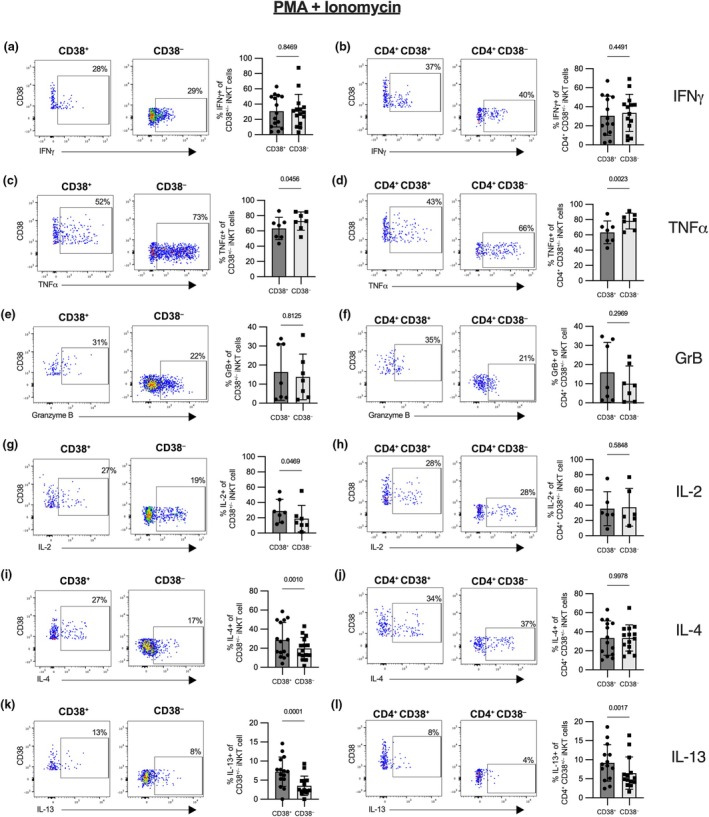 Figure 1
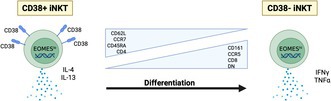 Figure 2
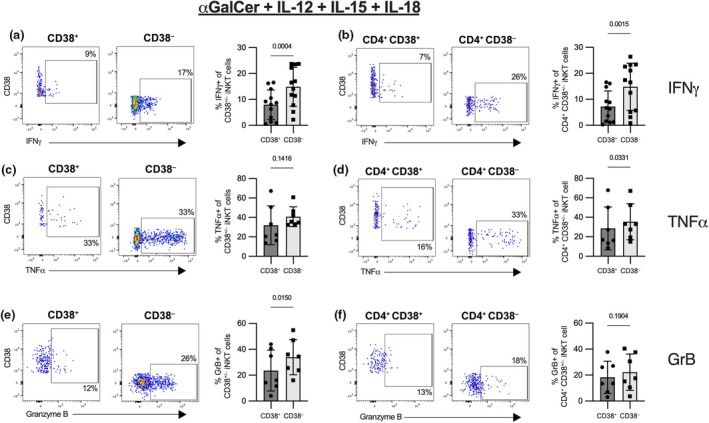 Figure 3
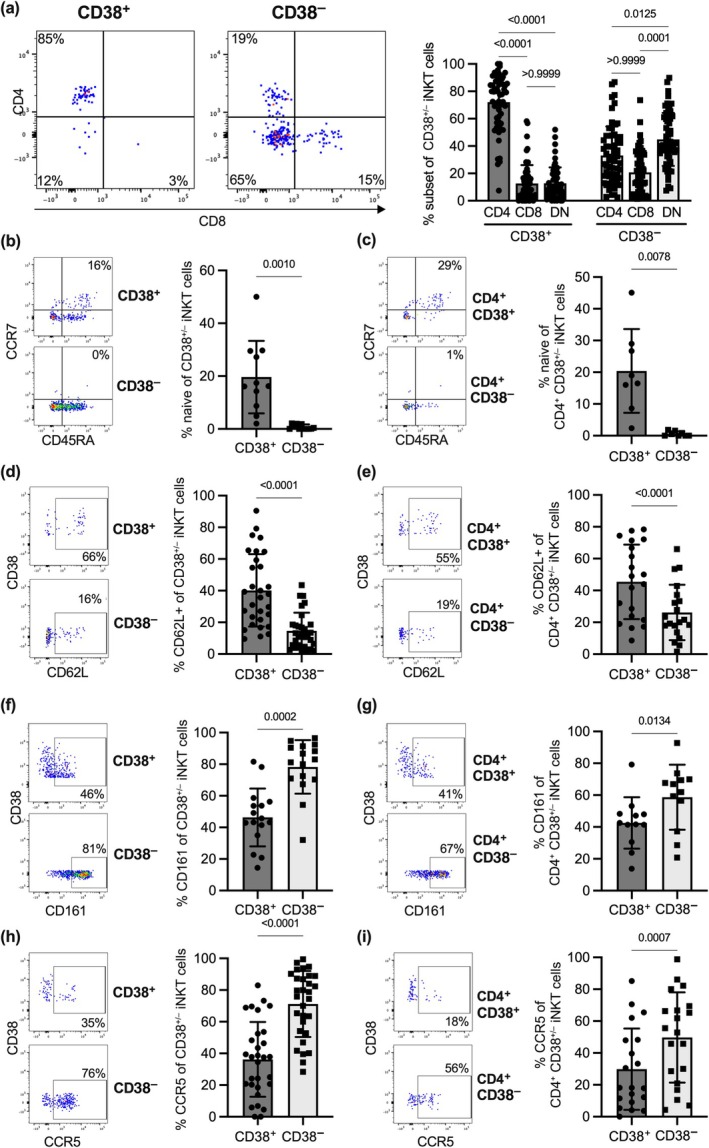 Figure 4
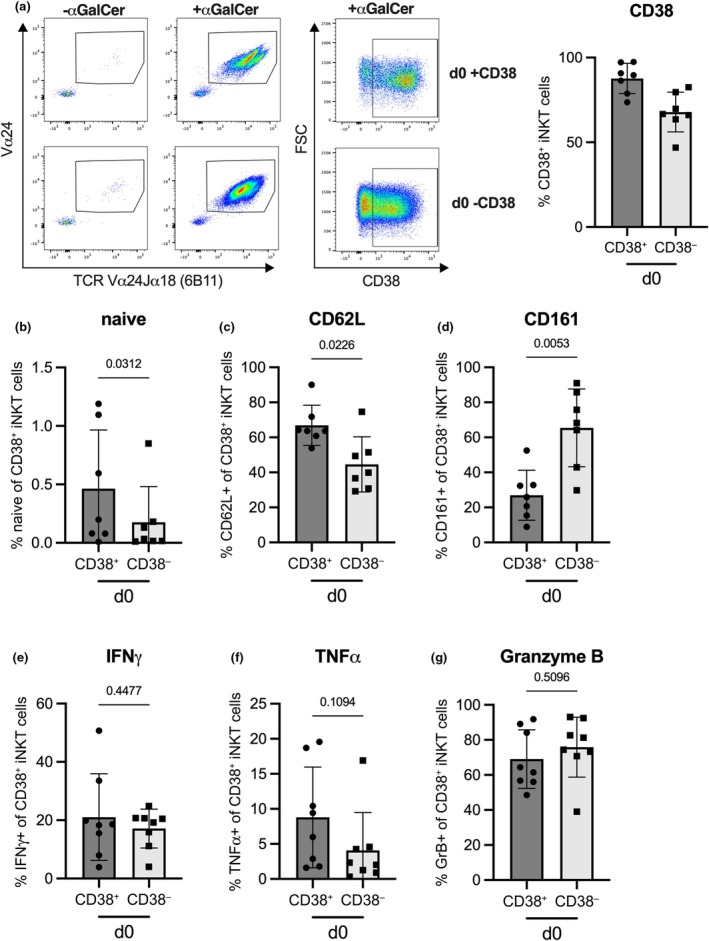 Figure 5
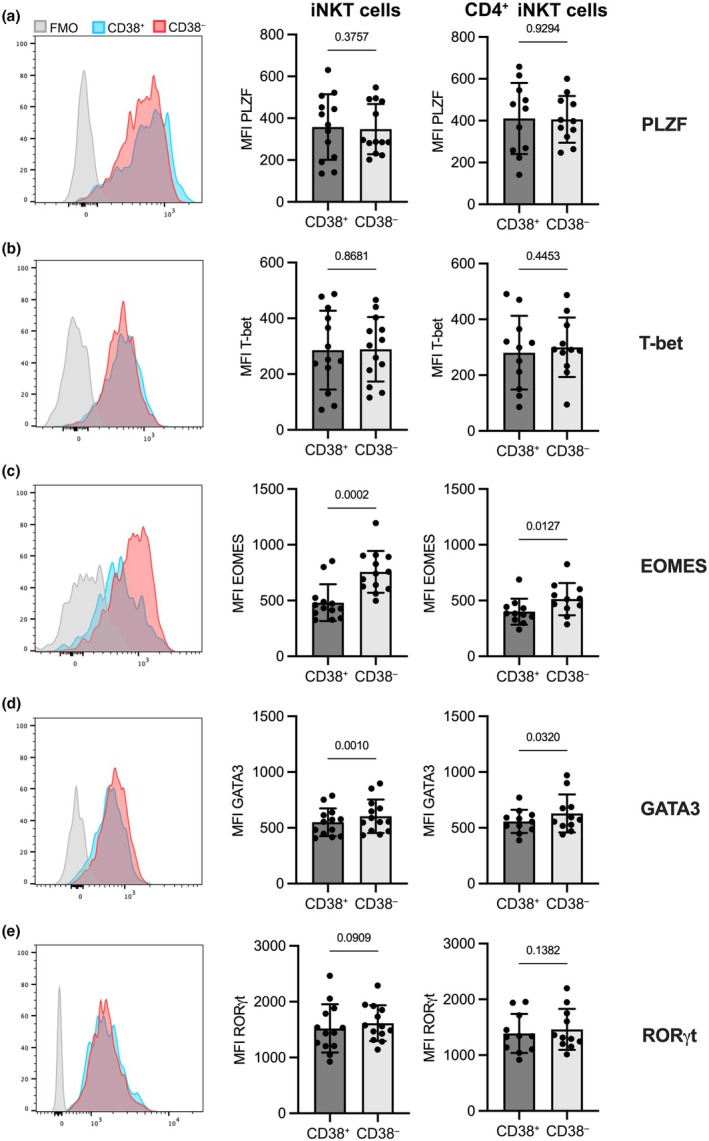 Figure 6
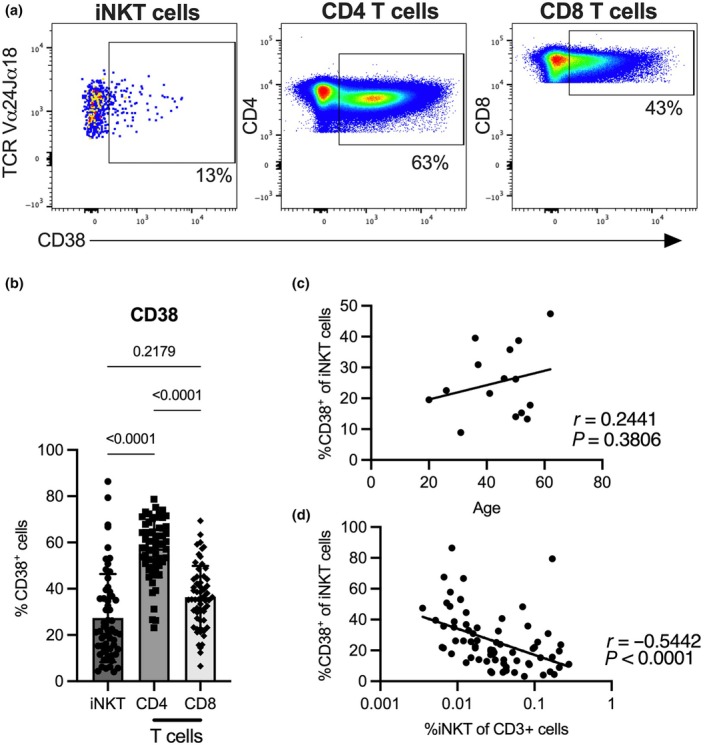 Figure 7
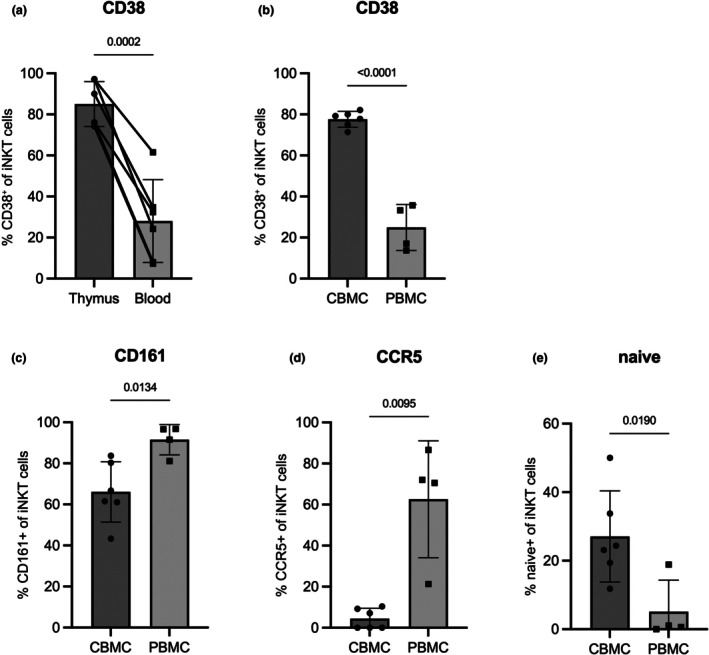 Figure 8
Peer Reviews
No public reviews on file for this paper yet. If you reviewed it on a platform where reviews are public (OpenReview, ICLR, NeurIPS, ICML), you can paste yours below so the community can read it here.
Videos
No videos yet. Explain this paper in a talk, walkthrough, or lecture? Add one.
Taxonomy
TopicsImmune Cell Function and Interaction · CAR-T cell therapy research · Immunodeficiency and Autoimmune Disorders