Clinical Models of Care for Adults With Intellectual Disabilities in Forensic Mental Health Services: A Scoping Review
Alina Haines‐Delmont, Dineesha Georgeena Rajan, Sian Cooper, Faye McLoughlin, Sahrish Ali, Katie Goodall, Joy Duxbury, Faith Hurley, Camilla Lindekilde, Michaela Thomson, Rachel Whyte, Erica Hateley, Tella Lantta

TL;DR
This review identifies best practices for caring for adults with intellectual disabilities in forensic mental health services, aiming to improve outcomes and reduce hospital stays.
Contribution
This is the first review to integrate clinical effectiveness with patient and staff experiences in forensic mental health care for people with intellectual disabilities.
Findings
Four best practice models of care were identified, including the Discharge Pathway Protocol and FIDSS Model of Care.
These models reduce hospital stays and improve patient outcomes through person-centred approaches.
The review highlights the need for larger studies on predictors of successful discharge and long-term outcomes.
Abstract
People with intellectual disabilities (ID) and forensic histories face significant health inequalities, including reduced quality of life and prolonged stays in mental health hospitals. This is a global health issue, and there is an urgent need for evidence‐based specific forensic interventions, models of care and service models to allow for effective discharge in the community, improve long‐term outcomes and reduce healthcare costs. This scoping review was conducted in accordance with the Preferred Reporting Items for Systematic Reviews and Meta‐Analyses (PRISMA) Extension for Scoping Reviews. We have adapted Morrisey's framework to report outcomes of clinical models of care to include (i) effectiveness of treatment; (ii) patient safety; (iii) patient and family experience of care; and (iv) staff outcomes, skills and attributes. Fifty‐six studies were included in this review,…
Genes, proteins, chemicals, diseases, species, mutations and cell lines named across the full text — each resolved to its canonical identifier and authoritative record.
Click any figure to enlarge with its caption.
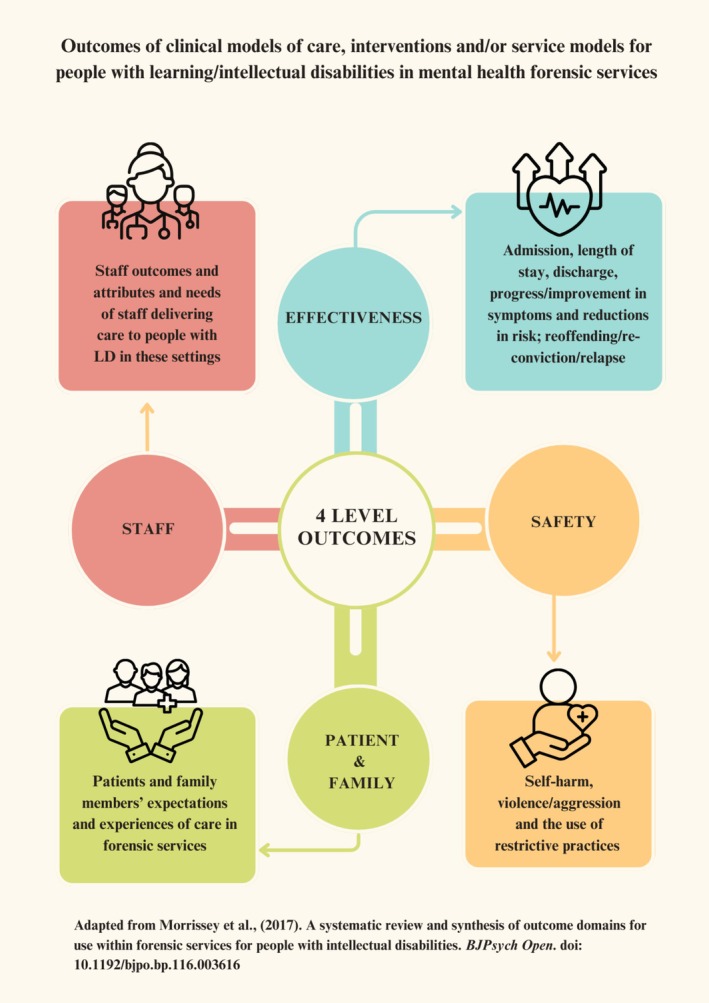 Figure 1
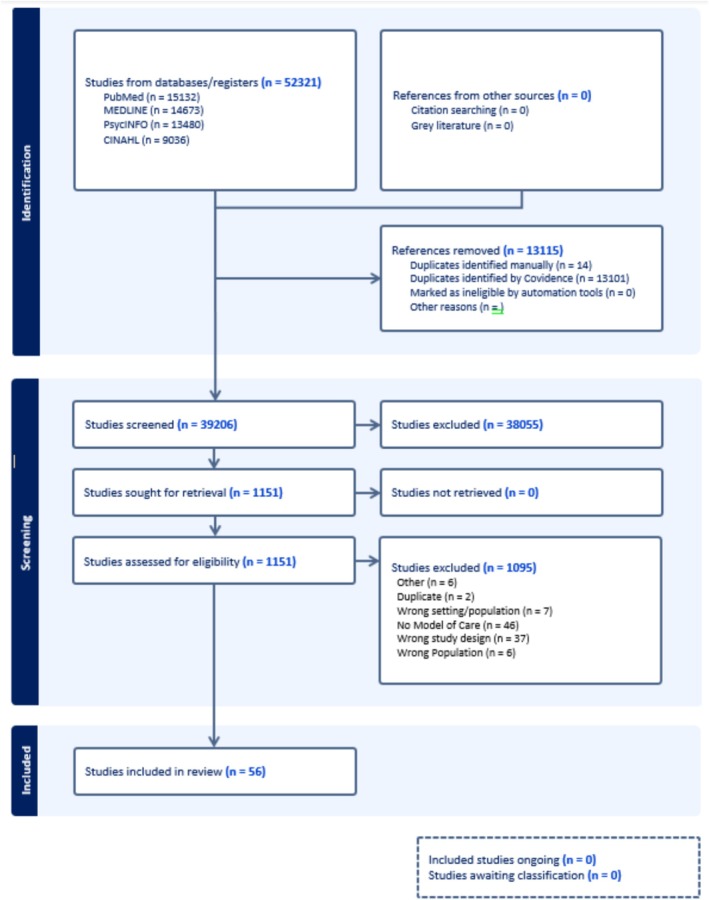 Figure 2
Peer Reviews
No public reviews on file for this paper yet. If you reviewed it on a platform where reviews are public (OpenReview, ICLR, NeurIPS, ICML), you can paste yours below so the community can read it here.
Videos
No videos yet. Explain this paper in a talk, walkthrough, or lecture? Add one.
Taxonomy
TopicsDown syndrome and intellectual disability research · Schizophrenia research and treatment · Healthcare Decision-Making and Restraints