Largely Distinct Post‐Translational Modifications Differentiate Skeletal Muscle Wasting Caused by Cancer, Dexamethasone and Aging
Anna Stephan, Flavia A. Graca, Suresh Poudel, Yingxue Fu, Yong‐Dong Wang, Myriam Labelle, Fabio Demontis

TL;DR
This study shows that different causes of muscle wasting, like cancer, dexamethasone, and aging, lead to distinct changes in protein modifications, with one modification being common across all.
Contribution
The study identifies stimulus-specific post-translational modifications and a general marker (Lrpprc P27 dihydroxylation) for muscle wasting.
Findings
Most post-translational modifications are specific to the cause of muscle wasting.
P27 dihydroxylation of Lrpprc declines in all types of muscle wasting.
Reducing Lrpprc dihydroxylation weakens muscle force in both young and old mice.
Abstract
Skeletal muscle wasting and weakness are prominent disease features. Originally considered to arise from common transcriptional changes, recent analyses demonstrated that different stimuli induce muscle wasting via largely distinct mRNA and protein changes. Here, we examined the post‐translational modifications (PTMs) associated with muscle wasting induced by cancer (n = 15 078), dexamethasone (n = 15 078) and aging (n = 8777) in mice by utilising the JUMPptm pipeline to recover modified peptides from TMT (tandem mass tag) mass spectrometry analyses. We find that most PTMs that are significantly regulated are stimulus‐specific and that only a few are cross‐shared (n = 10; p < 0.05). These include P27 dihydroxylation of Lrpprc (leucine‐rich pentatricopeptide repeat containing), an RNA binding protein and transcriptional co‐activator mutated in Leigh syndrome, a mitochondrial disease.…
Genes, proteins, chemicals, diseases, species, mutations and cell lines named across the full text — each resolved to its canonical identifier and authoritative record.
Click any figure to enlarge with its caption.
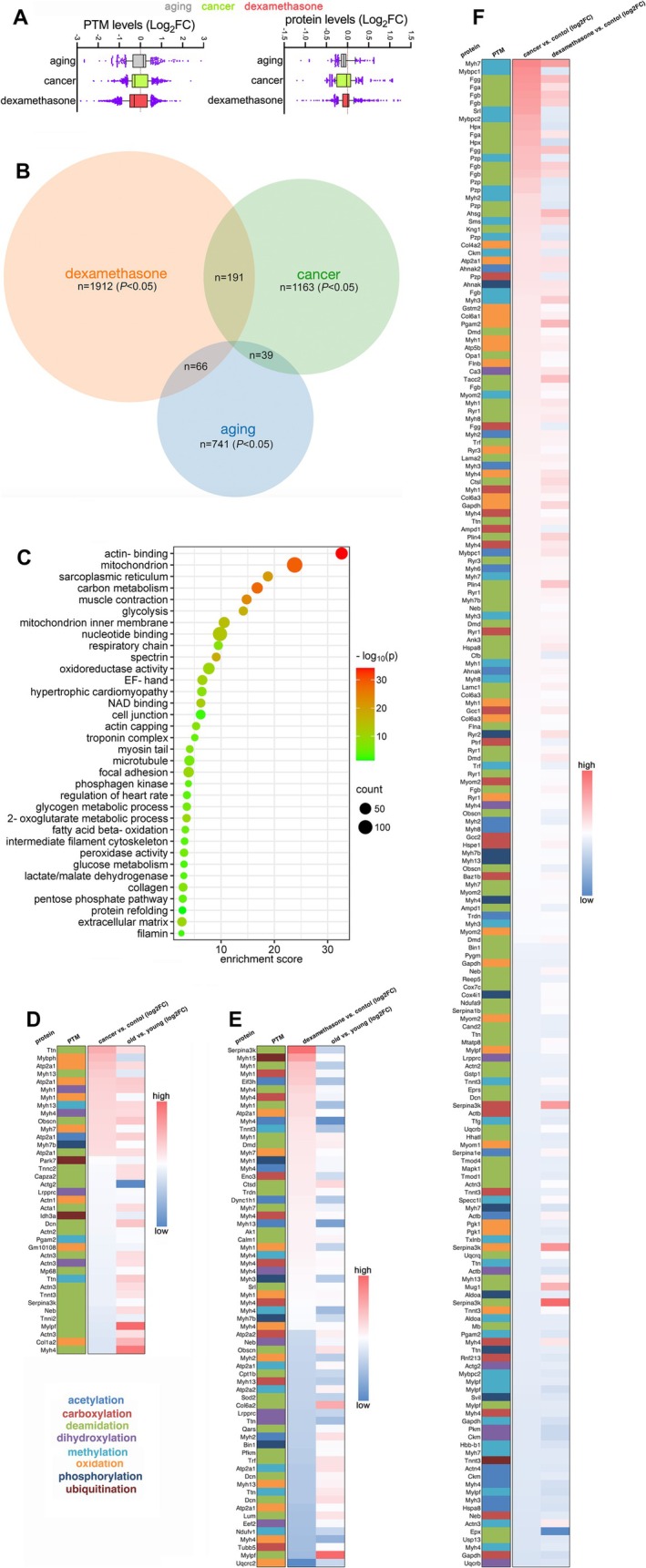 Figure 1
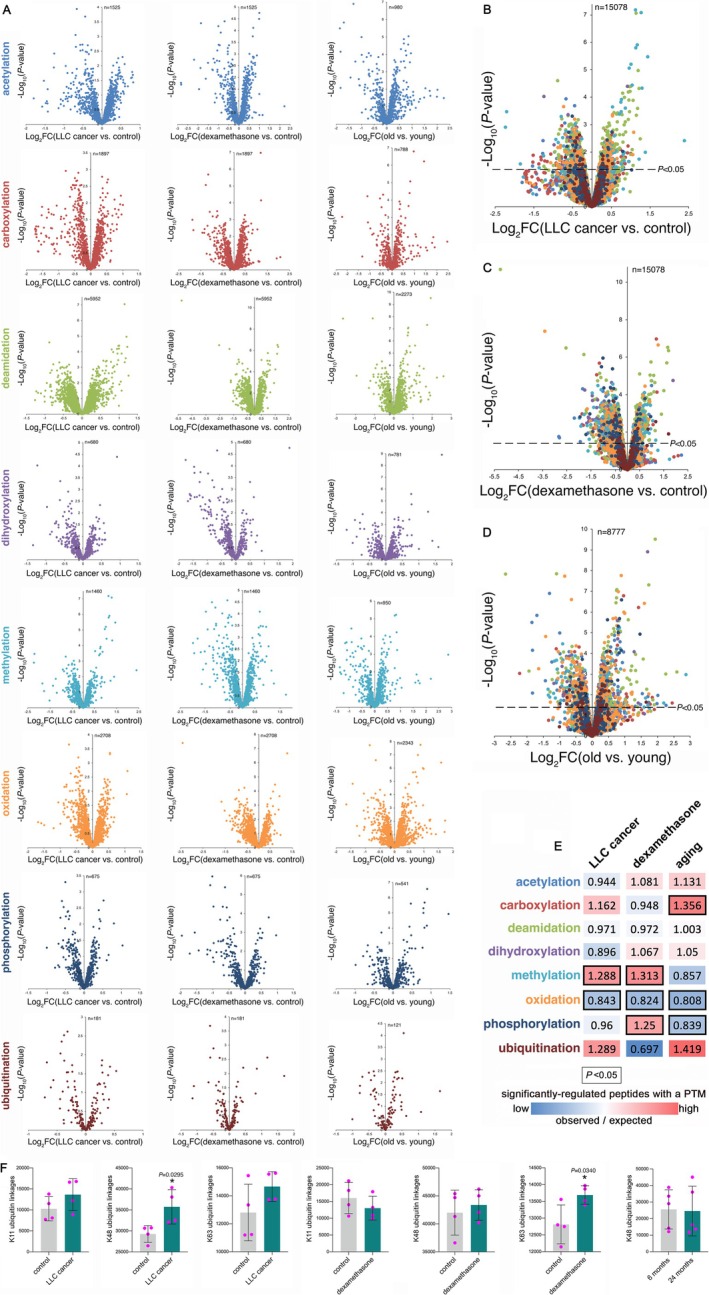 Figure 2
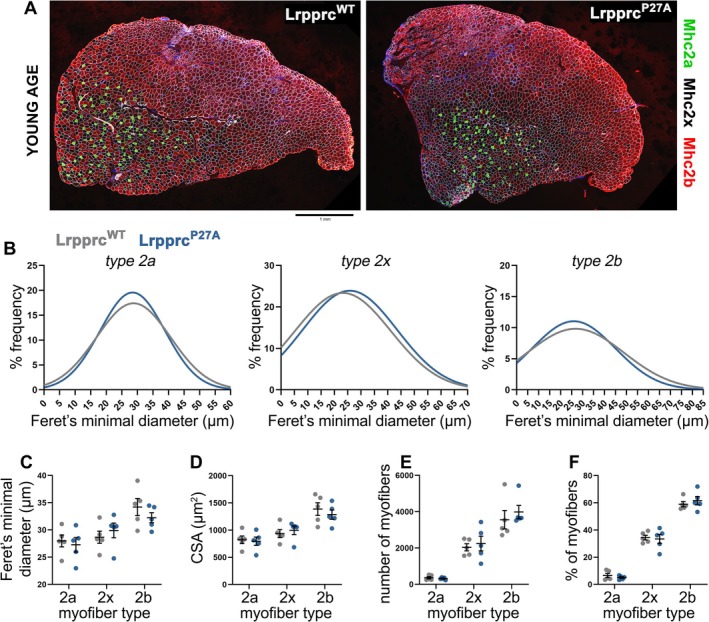 Figure 3
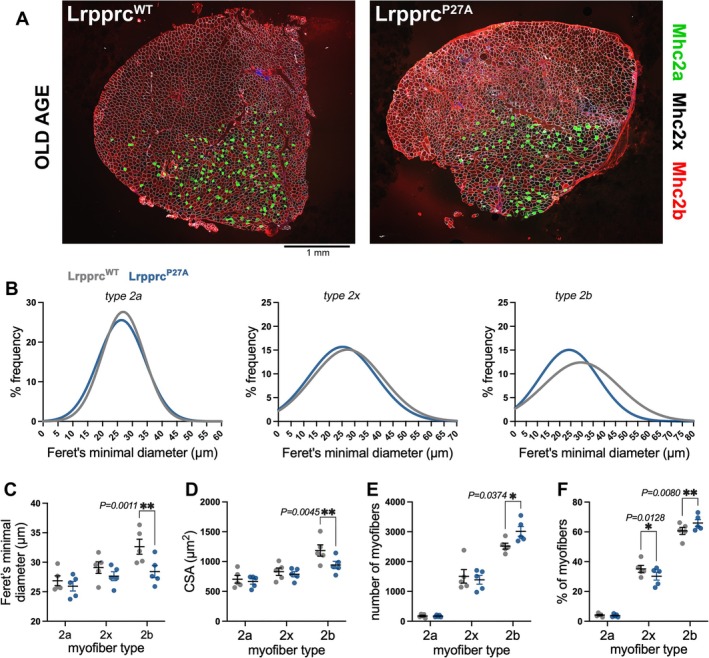 Figure 4
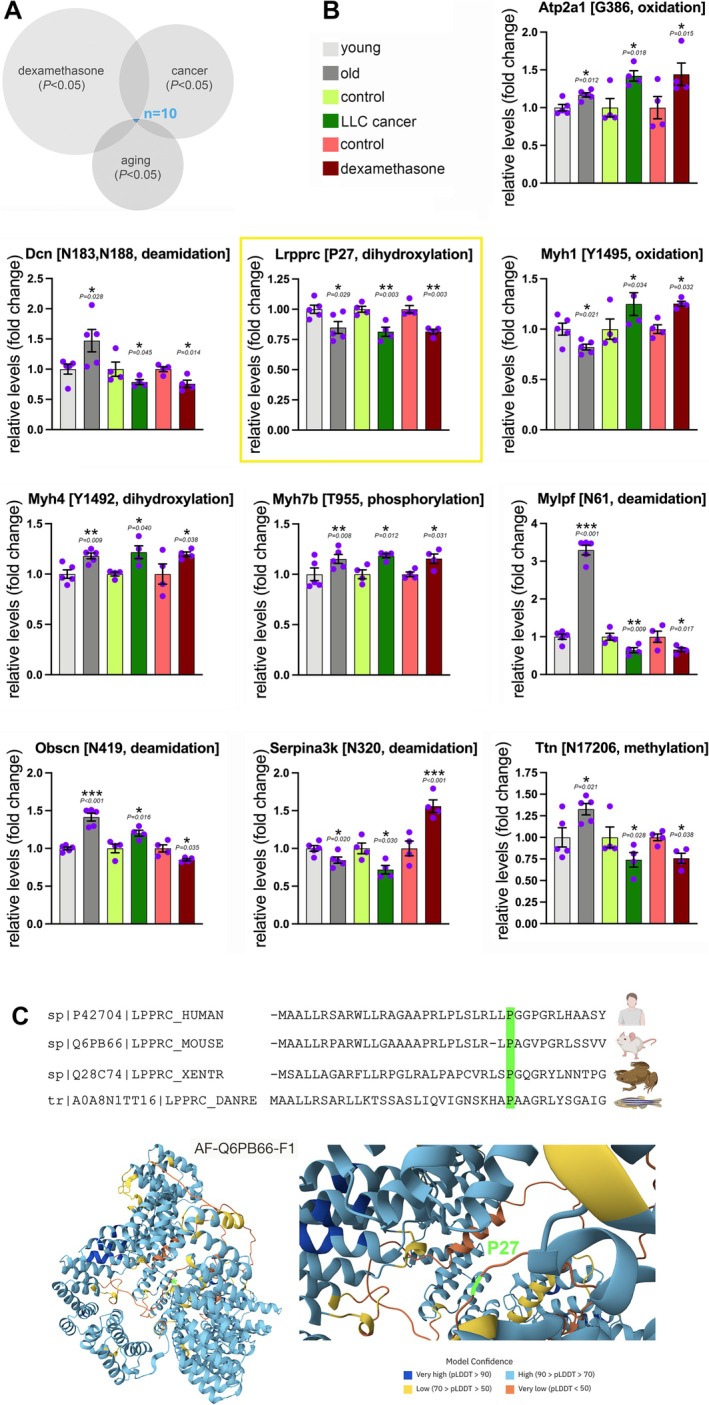 Figure 5
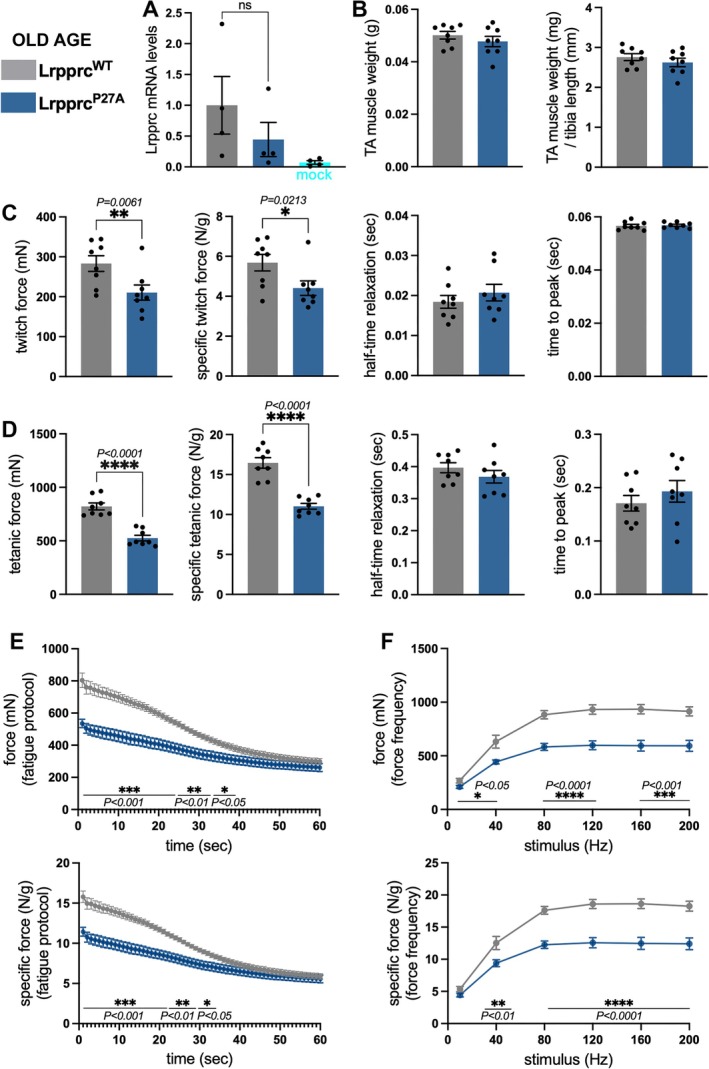 Figure 6
 Figure 7
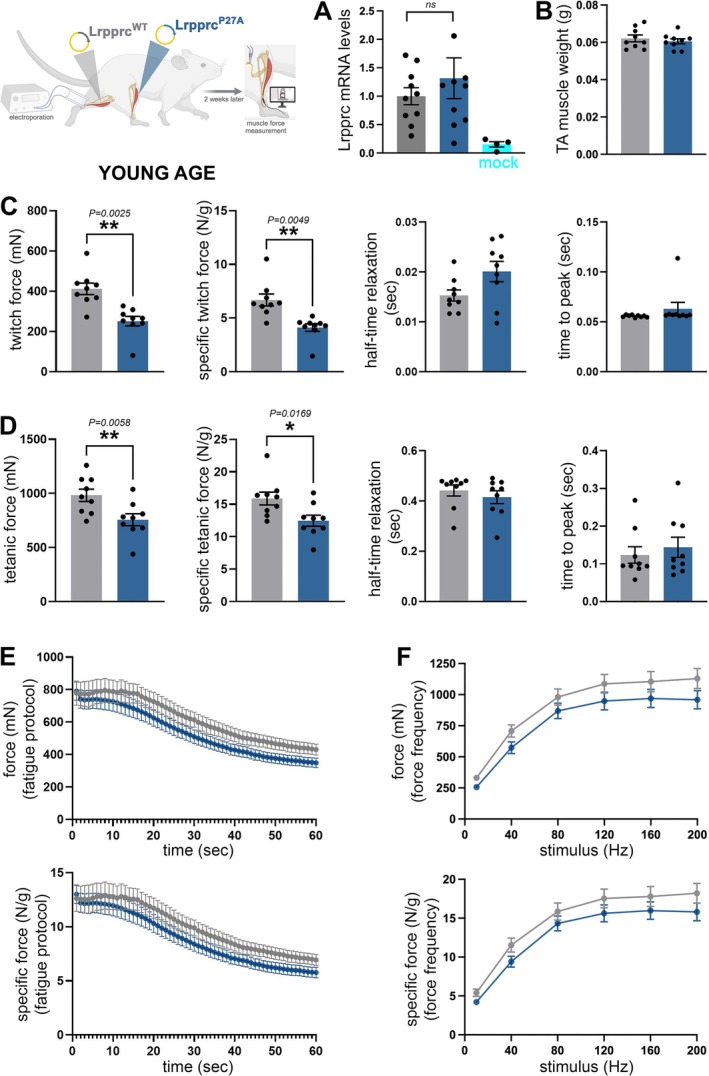 Figure 8
Peer Reviews
No public reviews on file for this paper yet. If you reviewed it on a platform where reviews are public (OpenReview, ICLR, NeurIPS, ICML), you can paste yours below so the community can read it here.
Videos
No videos yet. Explain this paper in a talk, walkthrough, or lecture? Add one.
Taxonomy
TopicsMuscle Physiology and Disorders · Mitochondrial Function and Pathology · Cardiomyopathy and Myosin Studies