Metagenomic and biogenic amine changes in cassava fermentation for tucupi production using Pediococcus acidilactici starter culture
Danielle Gama Brício, Maria Beatriz A Gloria, José Augusto Pires Bitencourt, Leandro Araujo Argôlo, Rafaela de Lima Ribeiro, Ilzane Abreu da Silva, Rosinelson da Silva Pena, Alessandra Santos Lopes, Gilson CA Chagas Junior, Nelson Rosa Ferreira

TL;DR
Using Pediococcus acidilactici as a starter culture improves tucupi sauce production by enhancing quality and safety during cassava fermentation.
Contribution
Demonstrates how Pediococcus acidilactici starter culture optimizes tucupi fermentation by controlling microbial communities and biogenic amines.
Findings
Fermentation with Pediococcus acidilactici increased acidity and reduced sugar levels compared to control.
Pediococcus acidilactici reduced the prevalence of pathogenic bacteria like Bacillus and Enterococcus.
Higher levels of biogenic amines were observed in Pediococcus acidilactici treatments due to increased Lactobacillus prevalence.
Abstract
The use of starter cultures is essential for producing fermented foods with desirable standardized characteristics and for preventing pathogens. Pediococcus acidilactici, isolated from cocoa fermentation, was used in the production of tucupi, a widely appreciated sauce made from the juice of cassava root (manipueira) in the Brazilian Amazon. Manipueira was submitted to fermentation with and without Pediococcus acidilactici inoculum at 1 × 10¹² CFU mL−1 (Pa treatment and control treatment (CT), respectively), over a 24‐h period. Samples were collected at 4‐h intervals and analyzed for physicochemical characteristics following official methods, bioactive amines by high‐performance liquid chromatography with fluorescence detection (HPLC‐FLD), and microbial genera identification by metagenomic analysis. Physicochemical results indicated that fermentation took its due course, with increased…
Genes, proteins, chemicals, diseases, species, mutations and cell lines named across the full text — each resolved to its canonical identifier and authoritative record.
Click any figure to enlarge with its caption.
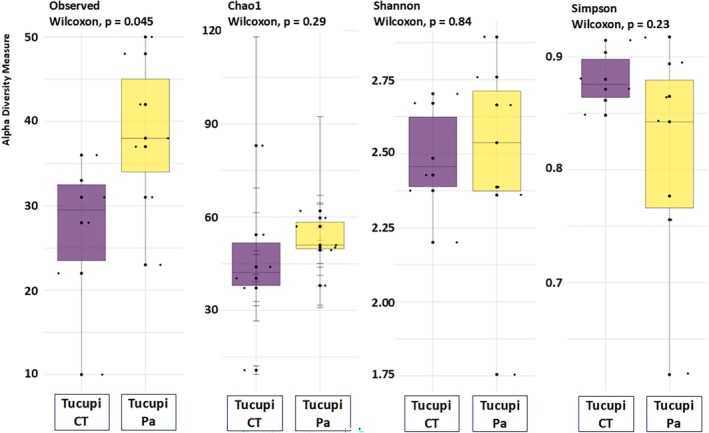 Figure 1
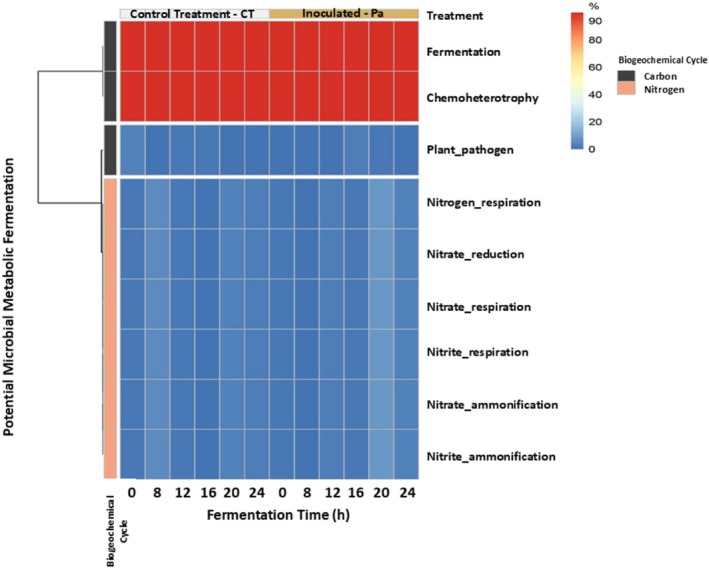 Figure 2
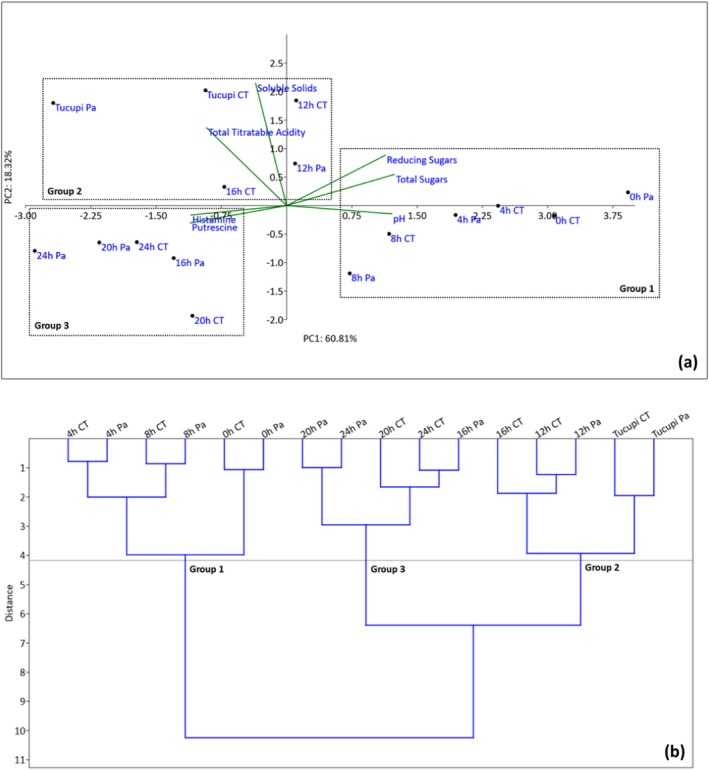 Figure 3
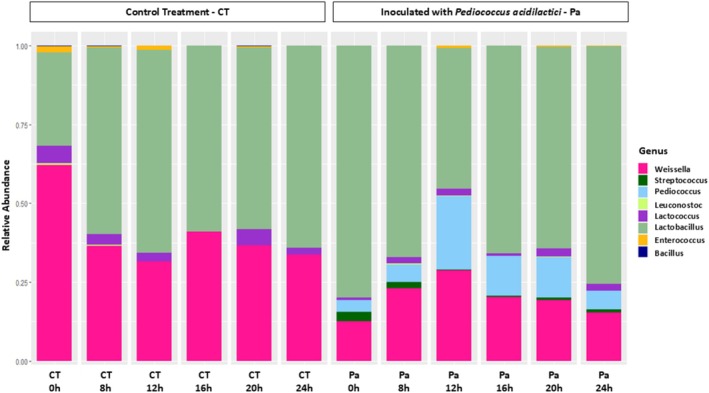 Figure 4
Peer Reviews
No public reviews on file for this paper yet. If you reviewed it on a platform where reviews are public (OpenReview, ICLR, NeurIPS, ICML), you can paste yours below so the community can read it here.
Videos
No videos yet. Explain this paper in a talk, walkthrough, or lecture? Add one.
Taxonomy
TopicsCassava research and cyanide · GABA and Rice Research · Plant Micronutrient Interactions and Effects