Comparative analysis of pomological and phytochemical characteristics in white‐ and red‐fleshed pitaya ( Hylocereus spp.), with molecular docking insights into key bioactive compounds
Kerem Mertoglu, Annik Fischer, Sina Zargarchi, Melekber Sulusoglu Durul, Magdalena Köpsel, Erdi Can Aytar, Ibrahim Bulduk, Barıs Kaki, Tuba Esatbeyoglu

TL;DR
This study compares white and red-fleshed pitaya fruits, finding that red-fleshed varieties have higher antioxidant compounds and nutrients, while white-fleshed ones are larger and heavier.
Contribution
The study integrates phytochemical analysis, multivariate statistics, and molecular docking to reveal antioxidant mechanisms and practical applications in pitaya species.
Findings
Red-fleshed H. polyrhizus fruits have higher total phenolics, flavonoids, and antioxidant activity compared to white-fleshed H. undatus.
Molecular docking suggests that key acids and phenolics from pitaya bind to a human iron-regulatory protein, potentially explaining antioxidant effects.
Principal component analysis separated the fruits along size/°Brix versus phenolic/antioxidant axes, explaining 83.3% of the variance.
Abstract
Cacti, including pitaya (Hylocereus spp.), are rich in antioxidants that will undoubtedly gain importance under ongoing climate change as water resources decline. Yet the molecular basis linking composition to antioxidant function remains incompletely defined. We compared white‐fleshed H. undatus and red‐fleshed H. polyrhizus across physicochemical traits, integrating correlation, principal component analysis, and molecular docking to a human iron‐regulatory protein (IRP1). White‐fleshed fruits were larger and heavier (length 103.4 mm; width 60.2 mm; weight 204.7 g) than red‐fleshed (71.9 mm; 54.5 mm; 126.3 g). Conversely, red‐fleshed fruits showed higher total soluble solids (13.47 vs. 9.60 °Brix), total phenolics (379.7 vs. 183.0 mg L−1), total flavonoids (303.7 vs. 147.3 mg L−1), and antioxidant activity (52.3% vs. 30.0%). Organic acids and phenolics differed by species (e.g.,…
Genes, proteins, chemicals, diseases, species, mutations and cell lines named across the full text — each resolved to its canonical identifier and authoritative record.
Click any figure to enlarge with its caption.
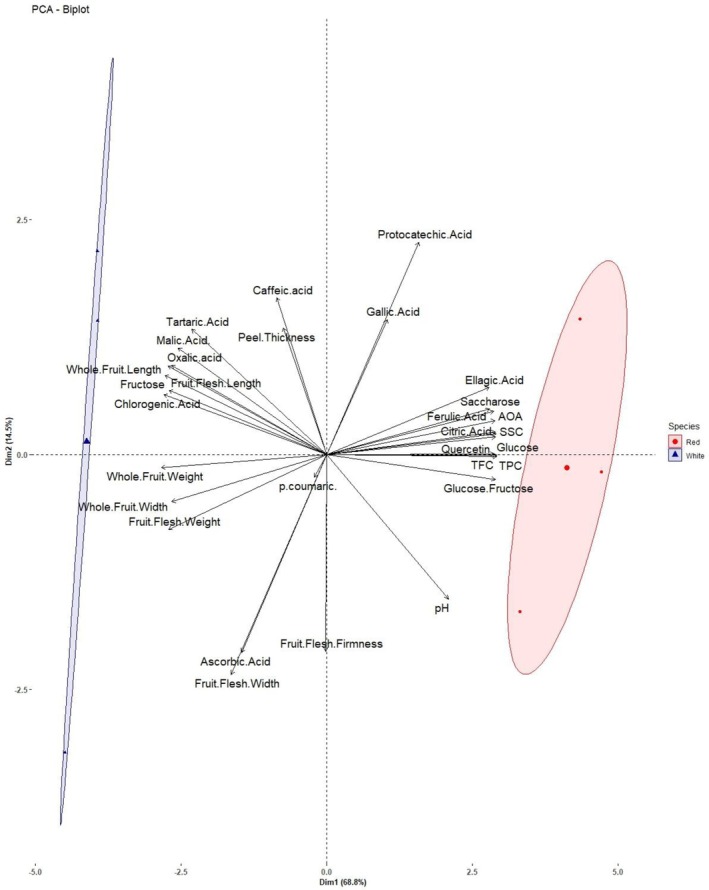 Figure 1
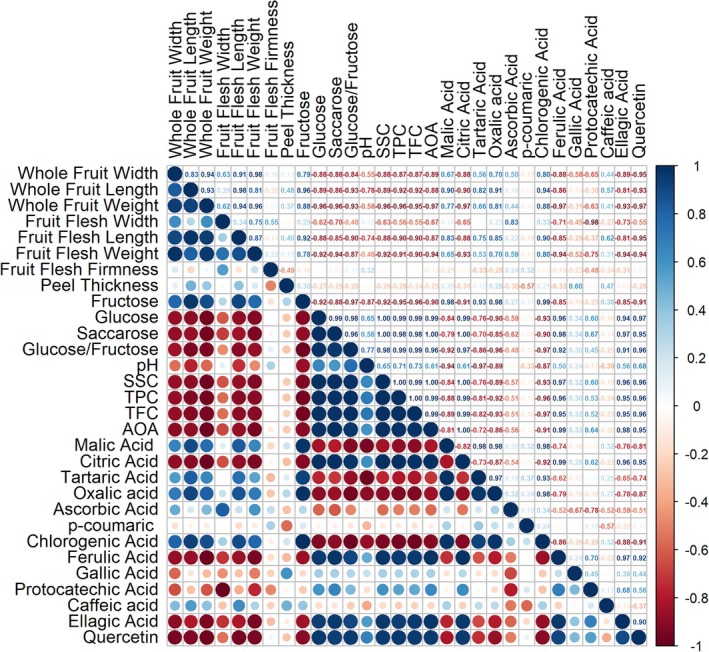 Figure 2
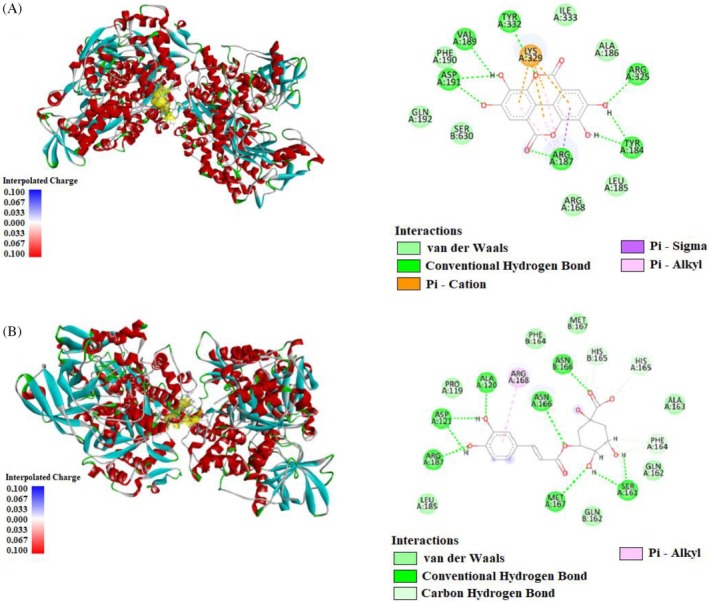 Figure 3
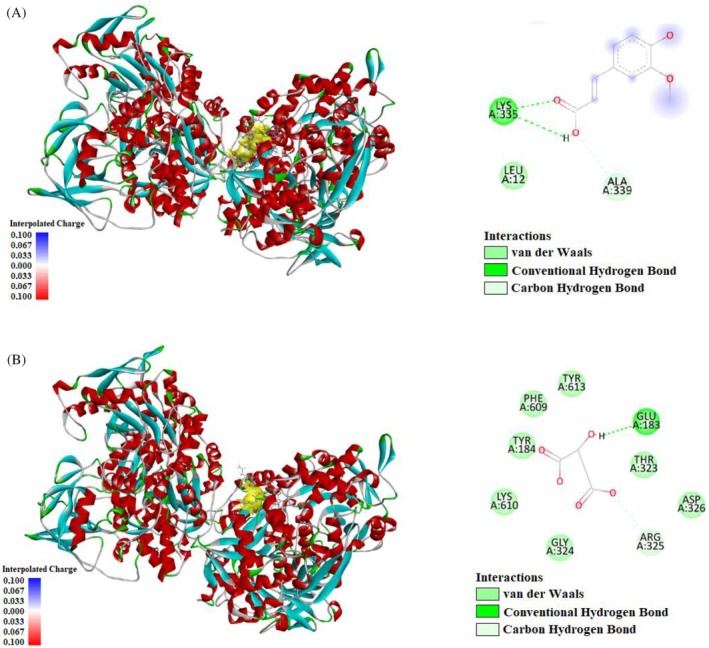 Figure 4
Peer Reviews
No public reviews on file for this paper yet. If you reviewed it on a platform where reviews are public (OpenReview, ICLR, NeurIPS, ICML), you can paste yours below so the community can read it here.
Videos
No videos yet. Explain this paper in a talk, walkthrough, or lecture? Add one.
Taxonomy
TopicsBotanical Research and Applications · Polysaccharides Composition and Applications · Psidium guajava Extracts and Applications