Injuries caused by sea urchins on the Brazilian coast: advances in the development of therapeutic methods and prevention of wounds
Vidal Haddad

TL;DR
This study examines sea urchin injuries on Brazilian beaches and evaluates methods for spicule removal and prevention.
Contribution
The study introduces a less painful spicule removal method using watchmaker's forceps and suggests public awareness strategies for prevention.
Findings
Echinometra lucunter was the only sea urchin species causing injuries, and it is not venomous.
Plantar regions were most commonly affected, with a risk of secondary infections and granulomas.
No. 10 watchmaker's forceps were effective for spicule removal and less painful than traditional methods.
Abstract
Sea urchins inhabit rocky areas and lagoons near tourist bathing sites. These animals have sharp spicules on their surfaces that cause injuries to bathers. Over 24 months, the author identified sea urchin species and mapped the beaches where injuries occurred. Samples of spicules were stored. In some patients, spicules were extracted using fine watchmaker's forceps. The intensity of pain and late infections were also recorded. Sixty-two patients (48 men, 77.42%) experienced injuries. The plantar regions were affected in 58 (93.55%) patients. In 26 cases, spicules were collected, being of the species Echinometra lucunter, which is not venomous. Twenty patients were randomly selected for spicule extraction using No. 10 watchmaker's forceps. Larger fragments were easily and practically painlessly removed; however, the forceps were not fully effective for small fragments. Injuries caused…
Genes, proteins, chemicals, diseases, species, mutations and cell lines named across the full text — each resolved to its canonical identifier and authoritative record.
Click any figure to enlarge with its caption.
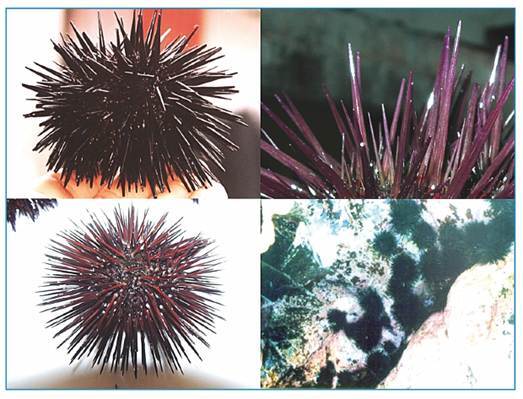 Figure 1
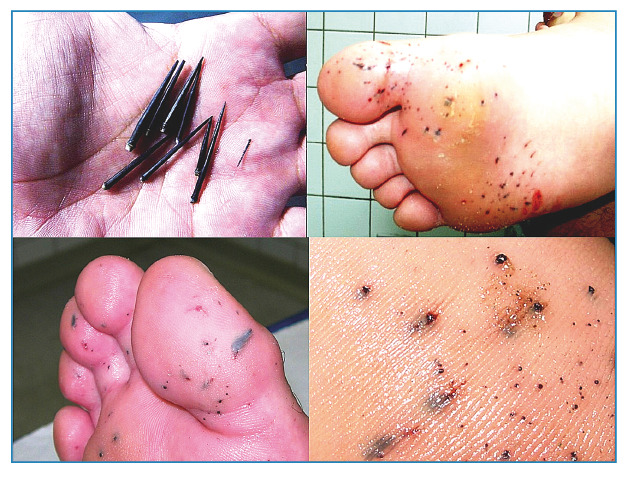 Figure 2
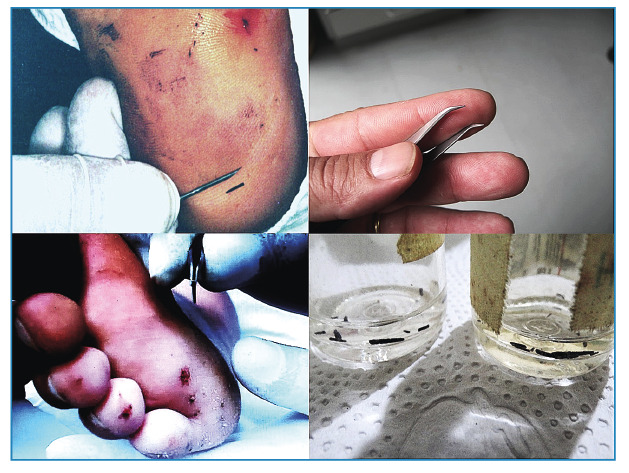 Figure 3
Peer Reviews
No public reviews on file for this paper yet. If you reviewed it on a platform where reviews are public (OpenReview, ICLR, NeurIPS, ICML), you can paste yours below so the community can read it here.
Videos
No videos yet. Explain this paper in a talk, walkthrough, or lecture? Add one.
Taxonomy
TopicsMarine Invertebrate Physiology and Ecology · Echinoderm biology and ecology · Traumatic Ocular and Foreign Body Injuries