The impact of vaporization on adenoma weight in benign prostatic hyperplasia surgery
André B. Silva, Bruno R. Lebani, Eduardo R. Pinto, Luciano T. Silva, Denise S. Gouveia, Hudson de Lima, Marcia E. Girotti, Milton Skaff, Fernando G. Almeida

TL;DR
This study shows that tissue vaporization during BPH surgery significantly reduces adenoma weight, making it unreliable for comparing surgical techniques.
Contribution
The study quantifies tissue loss due to vaporization during TURP and compares monopolar and bipolar techniques.
Findings
Adenoma weight decreases by about 28% after resection due to vaporization.
Bipolar resection causes a greater weight reduction (36.8%) compared to monopolar (19.4%).
MRI-estimated transition zone weight strongly correlates with enucleated specimen weight.
Abstract
The weight of adenoma removed during benign prostatic hyperplasia (BPH) surgery is commonly used as a surgical landmark. During endoscopic procedures, prostatic tissue is exposed to heat generated by electric current, resulting in tissue vaporization that may affect the final specimen weight. This study aimed to quantify tissue loss due to vaporization during TURP, comparing monopolar and bipolar techniques. Surgical specimens from 32 patients undergoing open simple prostatectomy were analysed. After enucleation, adenomas were weighed and then completely resected in vitro simulating TURP using monopolar or bipolar energy. The weight of the resected fragments was measured to estimate tissue loss associated with each energy source and compared with preoperative MRI‐estimated transition zone volumes. Mean patient age was 68.2 ± 5.75 years. There was a strong correlation between…
Genes, proteins, chemicals, diseases, species, mutations and cell lines named across the full text — each resolved to its canonical identifier and authoritative record.
Click any figure to enlarge with its caption.
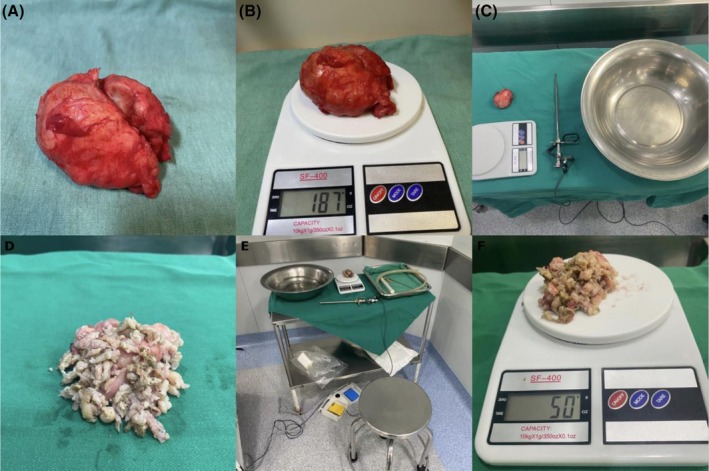 Figure 1
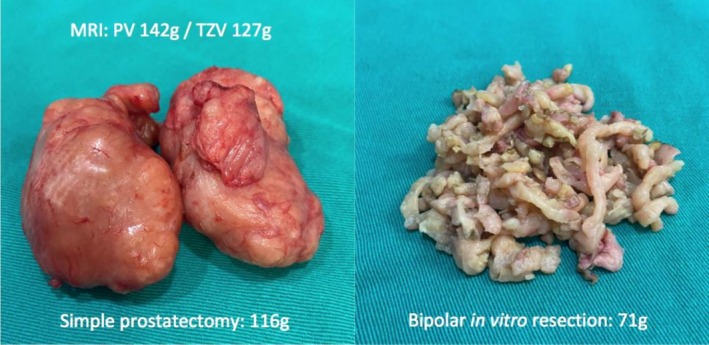 Figure 2
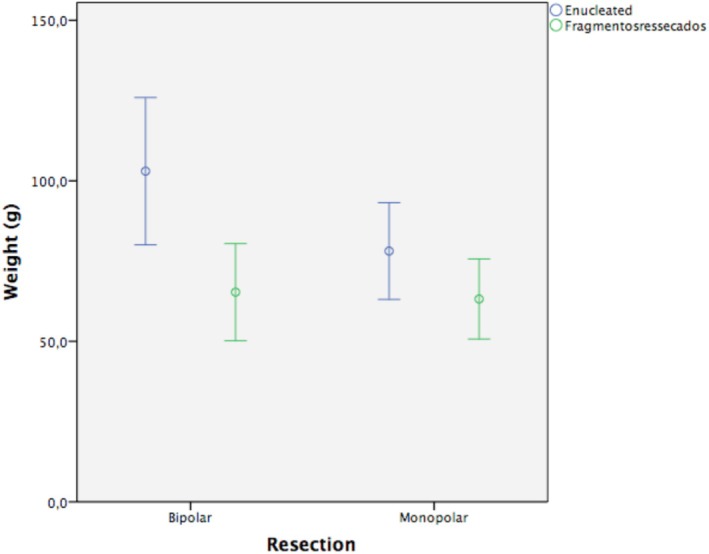 Figure 3
Peer Reviews
No public reviews on file for this paper yet. If you reviewed it on a platform where reviews are public (OpenReview, ICLR, NeurIPS, ICML), you can paste yours below so the community can read it here.
Videos
No videos yet. Explain this paper in a talk, walkthrough, or lecture? Add one.
Taxonomy
TopicsUrinary Bladder and Prostate Research · Prostate Cancer Diagnosis and Treatment · Kidney Stones and Urolithiasis Treatments