Evaluation of the effect of trans sodium crocetinate and crocetin on reperfusion injury in acute myocardial infarction with ST-segment elevation: A double-blind, randomized, placebo-controlled clinical trial
Ghazaleh Elahabadi, Arash Gholoobi, Javad Ramezani, Ali Eshraghi, Reza Javidi Dasht Bayaz, Vahid Ghavami, Majid Sezavar Dokht faroughi, Amir Hooshang Mohammadpour, Hossein Hosseinzadeh

TL;DR
This clinical trial tested if trans sodium crocetinate and crocetin reduce heart damage after a severe heart attack, finding some benefit in early recovery signs.
Contribution
The study is the first to evaluate TSC and crocetin's effect on reperfusion injury in STEMI patients in a placebo-controlled trial.
Findings
TSC improved ST-segment resolution, indicating better reperfusion.
No significant difference in CTIMIFC or echocardiographic parameters between groups.
TSC showed a trend toward lower arrhythmia rates, though not statistically significant.
Abstract
This randomized, double-blind trial evaluated trans sodium crocetinate (TSC)—a crocetin-derived antioxidant and crocetin with potential cardioprotective effects—on reperfusion injury in 90 ST-elevation myocardial infarction (STEMI) patients after primary percutaneous coronary intervention (PPCI). Patients received either TSC (0.5 mg/kg injection pre-PPCI + 7.5 mg crocetin tablets for 3 days) or placebo. The primary outcome was ≥ 70% ST-segment resolution 1-hr post-PPCI. Secondary outcomes included corrected thrombolysis in myocardial infarction frame count (CTIMIFC), arrhythmia rates, and echocardiographic parameters (left ventricular ejection fraction (LVEF) and LV size). ST-segment resolution occurrence was significantly higher in the TSC group versus placebo (p=0.018). There was no difference in CTIMIFC between the two groups. Echocardiographic parameters were similar between the…
Genes, proteins, chemicals, diseases, species, mutations and cell lines named across the full text — each resolved to its canonical identifier and authoritative record.
Click any figure to enlarge with its caption.
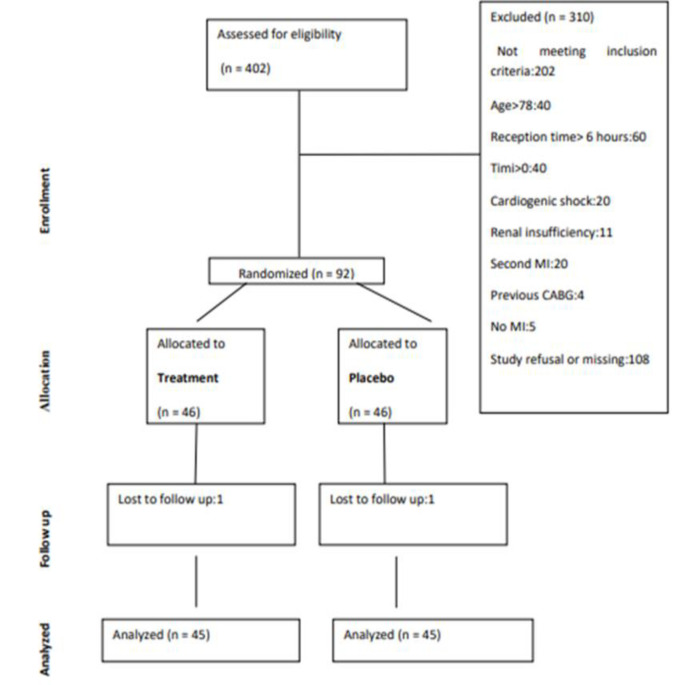 Figure 1
Peer Reviews
No public reviews on file for this paper yet. If you reviewed it on a platform where reviews are public (OpenReview, ICLR, NeurIPS, ICML), you can paste yours below so the community can read it here.
Videos
No videos yet. Explain this paper in a talk, walkthrough, or lecture? Add one.
Taxonomy
TopicsSaffron Plant Research Studies · Sunflower and Safflower Cultivation · Heavy Metals in Plants