Smile Esthetics and Rotated Maxillary Lateral Incisors
Alexa Spokane, Daniel Rinchuse, Thomas Zullo, John Burnheimer

TL;DR
This study explores how laypeople perceive the appearance of smiles with rotated maxillary lateral incisors, finding that no rotation is most preferred and a 40° rotation is clearly less attractive.
Contribution
The study introduces new insights into layperson perceptions of dental rotations, particularly identifying thresholds for noticeable esthetic differences.
Findings
Smiles with no rotation were rated significantly more attractive than those with rotated lateral incisors.
A 40° rotation was perceived as substantially less esthetic compared to 20° and 30° rotations.
Panelist gender did not significantly affect esthetic ratings of the smiles.
Abstract
Although tooth rotations are a common orthodontic problem, little research has addressed how lay observers perceive these rotations. Consequently, the aim of this study is to determine laypersons’ esthetic perceptions of changes in the rotation of the maxillary lateral incisors. An intraoral digital scan of a female adult’s dentition was manipulated with ClinCheck software to create four smile conditions: (A) no rotation either maxillary lateral incisor, (B) 20° mesial‐out rotation of both, (C) 30° mesial‐out rotation, and (D) 40° mesial‐out rotation. Each condition was shown with frontal and three‐quarter view images. A panel of laypeople (age 18–30, no dental training) rated the attractiveness of each smile using a 100 mm visual analog scale (VAS; 0 = least esthetic, 100 = most esthetic). The score for each condition was recorded. A mixed‐model two‐way ANOVA (gender × rotation) with…
Click any figure to enlarge with its caption.
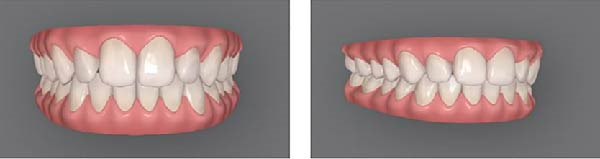 Figure 1
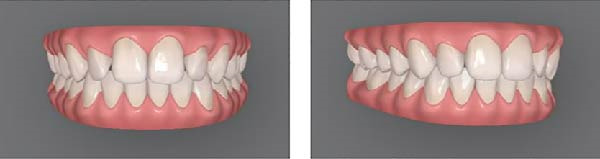 Figure 2
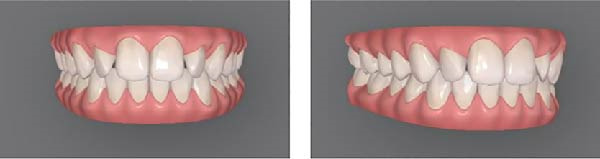 Figure 3
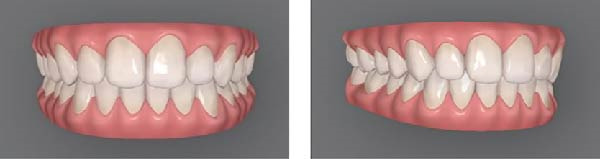 Figure 4
Peer Reviews
No public reviews on file for this paper yet. If you reviewed it on a platform where reviews are public (OpenReview, ICLR, NeurIPS, ICML), you can paste yours below so the community can read it here.
Videos
No videos yet. Explain this paper in a talk, walkthrough, or lecture? Add one.
Taxonomy
TopicsOrthodontics and Dentofacial Orthopedics · Temporomandibular Joint Disorders · dental development and anomalies