Pregnancy outcomes in women at high risk of preterm birth receiving a vaginal cervical cerclage with, or without, progesterone: A retrospective, secondary analysis of the C-STICH randomised controlled trial data
Victoria Hodgetts Morton, Katie Morris, Philip Toozs-Hobson, Lee Middleton, Nicole Pilarski, Lilah Bell, Martha Hogg, Rebecca Man, Fidan Israfil-Bayli, Andrew Shennan, Nigel Simpson, Christoph Lees, Catherine Moakes

TL;DR
This study found that combining vaginal cervical cerclage with progesterone may reduce pregnancy loss in high-risk women.
Contribution
The study provides new evidence on the combined use of cerclage and progesterone for reducing pregnancy loss.
Findings
Progesterone use with cerclage was linked to a 5.9% pregnancy loss rate versus 8.3% without.
Adjusted analysis showed a statistically significant reduction in pregnancy loss risk.
The study highlights the potential of combination therapy in high-risk pregnancies.
Abstract
Vaginal cervical cerclage and progesterone are established treatments for prevention of pregnancy loss and prematurity. There is limited data to assess the effect of these treatments in combination. The objective of this study was to investigate the association between progesterone and no progesterone treatment on pregnancy outcomes in women at high risk of preterm birth who had received a vaginal cervical cerclage. This is a secondary post-hoc analysis of women recruited to the C-STICH randomised controlled trial, which recruited in 75 obstetric units in the UK between 2015 and 2021. In the C-STICH trial, women with a singleton pregnancy, receiving a vaginal cervical cerclage due to a history of pregnancy loss or premature birth, or if indicated by ultrasound, were randomised to cerclage with braided or monofilament suture, with a primary outcome of pregnancy loss, defined as…
Genes, proteins, chemicals, diseases, species, mutations and cell lines named across the full text — each resolved to its canonical identifier and authoritative record.
Click any figure to enlarge with its caption.
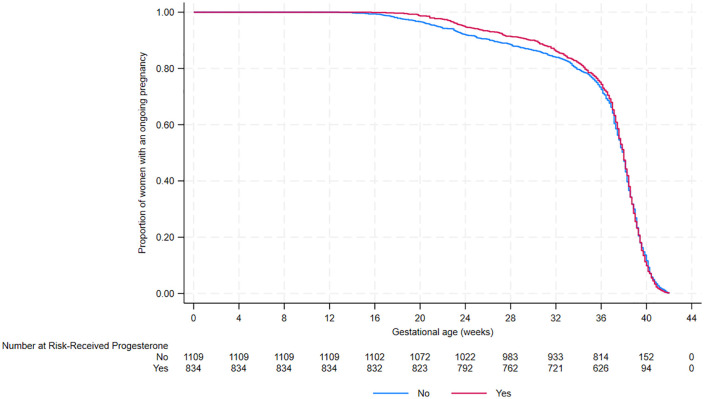 Figure 1
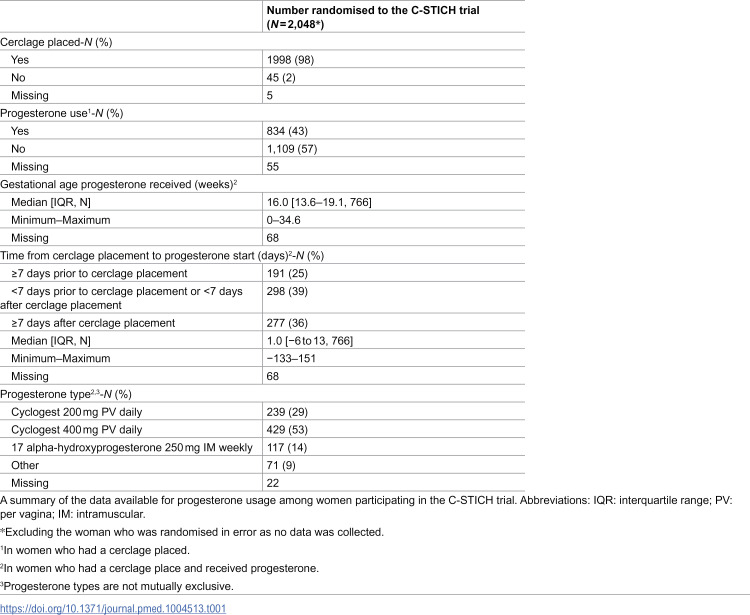 Figure 2
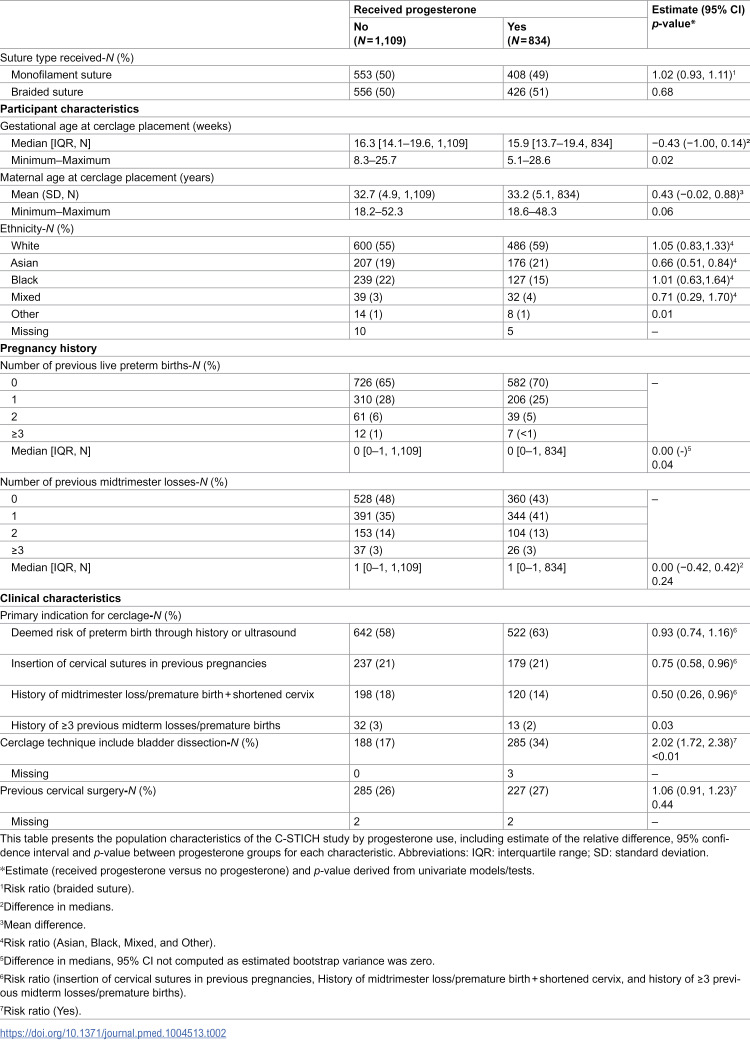 Figure 3
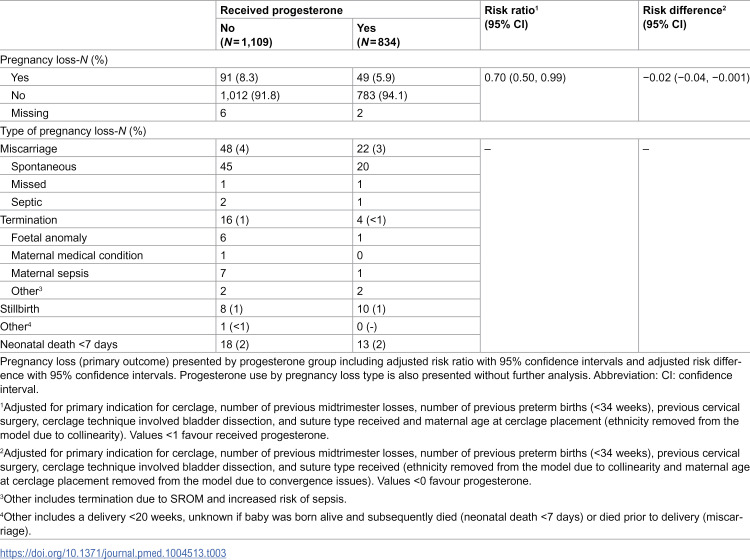 Figure 4
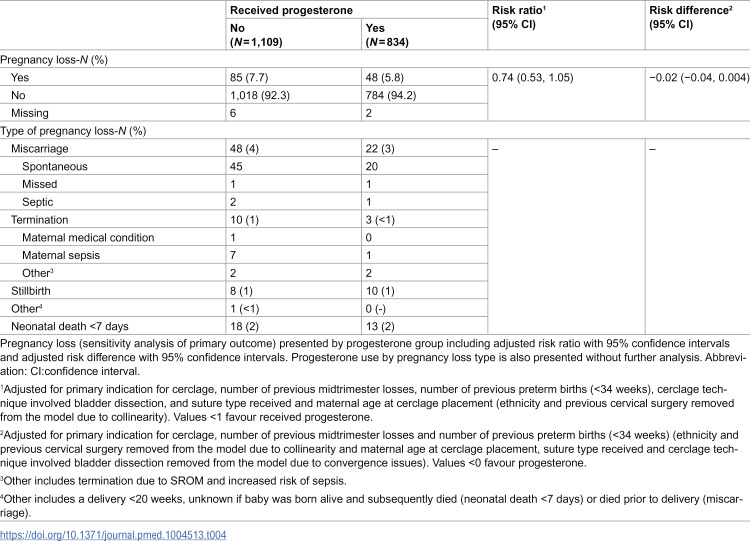 Figure 5
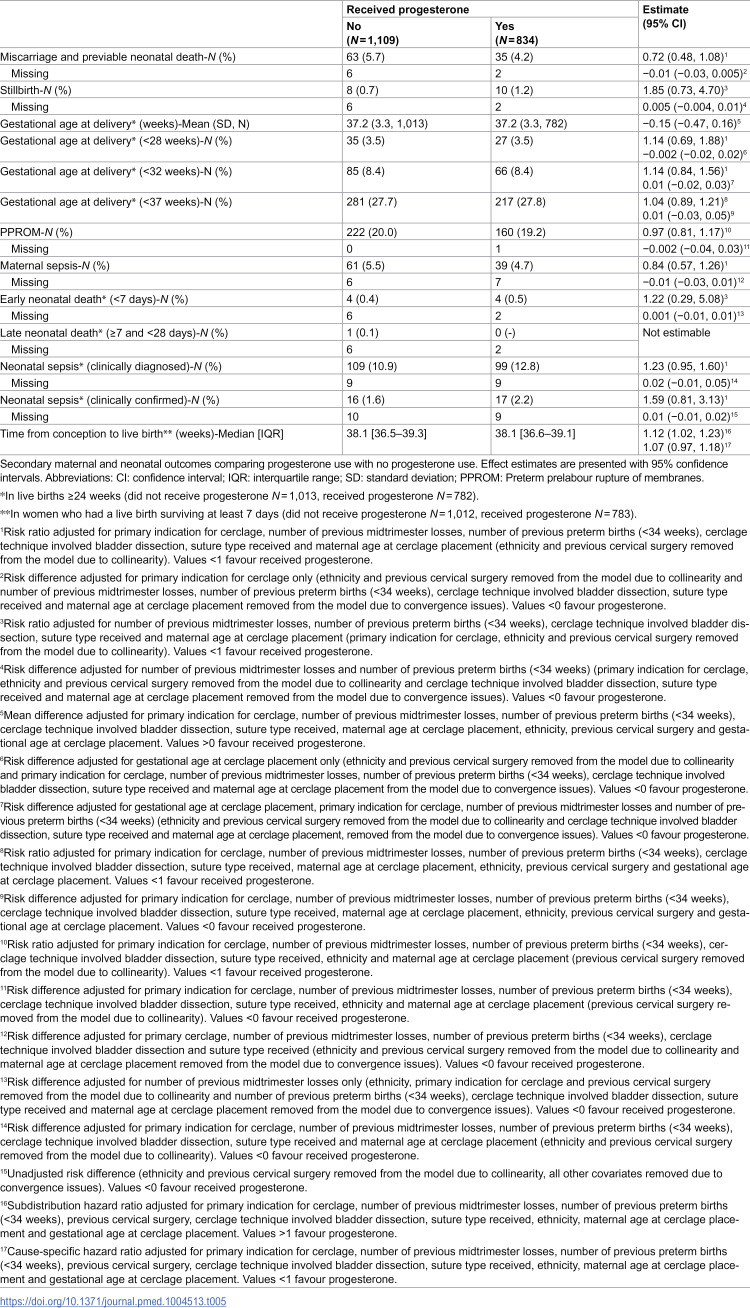 Figure 6
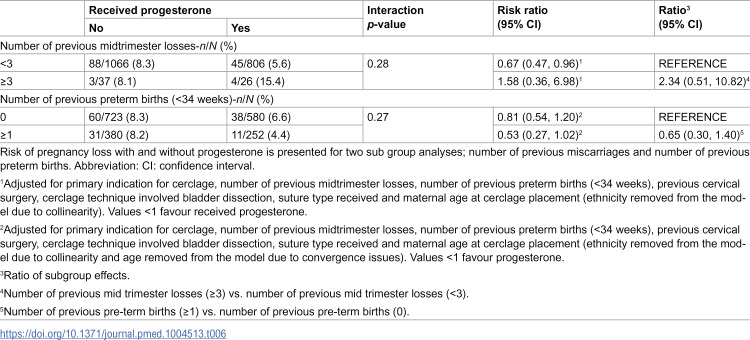 Figure 7
 Figure 8
Peer Reviews
No public reviews on file for this paper yet. If you reviewed it on a platform where reviews are public (OpenReview, ICLR, NeurIPS, ICML), you can paste yours below so the community can read it here.
Videos
No videos yet. Explain this paper in a talk, walkthrough, or lecture? Add one.
Taxonomy
TopicsPreterm Birth and Chorioamnionitis · Reproductive tract infections research · Maternal and Perinatal Health Interventions