Cortisol–CRP synchrony and mood recovery under clustered psychosocial stress in emerging adults
Fatin Nabila Abd Latiff, Dawn A. Stoner, Kah Lun Wang, Kok Bin Wong

TL;DR
This study explores how clustered psychosocial stress affects cortisol and CRP synchrony, influencing mood recovery in young adults.
Contribution
The study introduces a novel bi-axial pathway linking clustered stress to psychological outcomes through cortisol–CRP coordination.
Findings
Higher cumulative stress units disrupt cortisol–CRP synchrony and delay mood recovery.
Stronger physiological coupling between cortisol and CRP predicts faster emotional recovery.
Clustered stressors show a stronger impact on emotional resilience than isolated stressors.
Abstract
Psychosocial stress involving multiple life changes has well-documented effects on health, yet the physiological mechanisms linking stress exposure to emotional recovery remain incompletely understood. This simulation study examines how clustered life stress, quantified through the Holmes and Rahe Social Readjustment Rating Scale (SRRS) and Life Change Units (LCUs), influences synchrony between cortisol and C-reactive protein (CRP), and how this coupling predicts mood recovery in emerging adults. Using fully synthetic longitudinal data parameterized from published empirical ranges and established biometric patterns, we modeled cortisol–CRP coordination across varying LCU loads and buffering capacities. Results indicated that higher cumulative LCUs, particularly when stressors were temporally clustered, were associated with disrupted cortisol–CRP synchrony and delayed mood rebound.…
Genes, proteins, chemicals, diseases, species, mutations and cell lines named across the full text — each resolved to its canonical identifier and authoritative record.
Click any figure to enlarge with its caption.
 Figure 1
 Figure 2
 Figure 3
 Figure 4
 Figure 5
 Figure 6
 Figure 7
 Figure 8
 Figure 9
 Figure 10
 Figure 11
 Figure 12
 Figure 13
 Figure 14
 Figure 15
 Figure 16
 Figure 17
 Figure 18
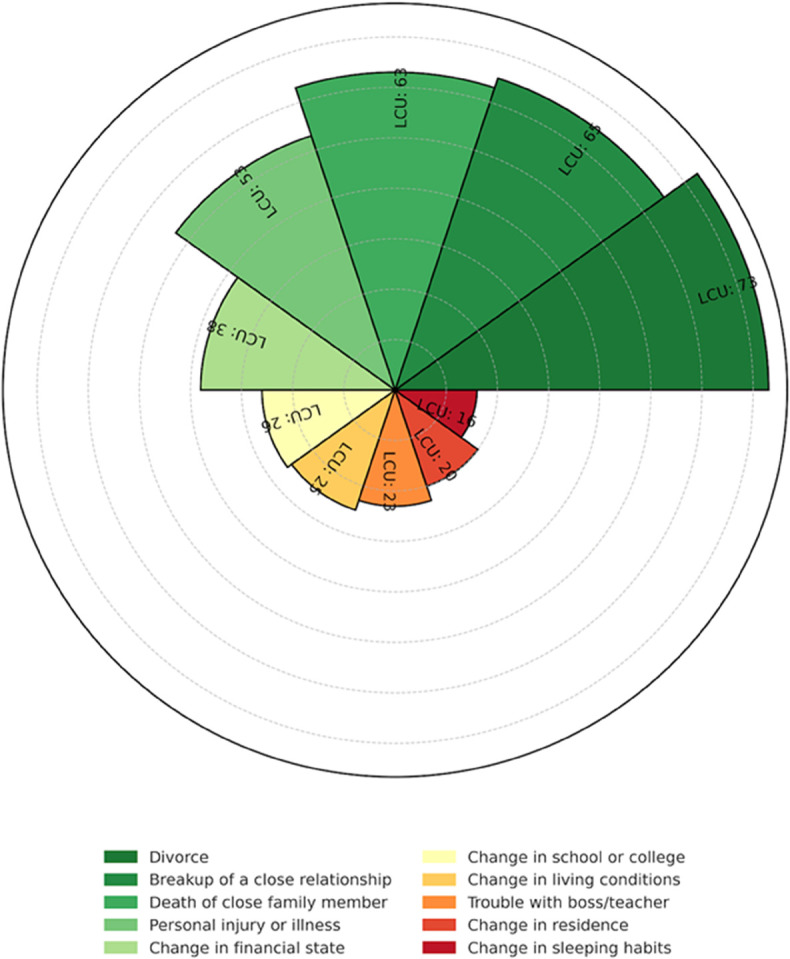 Figure 19
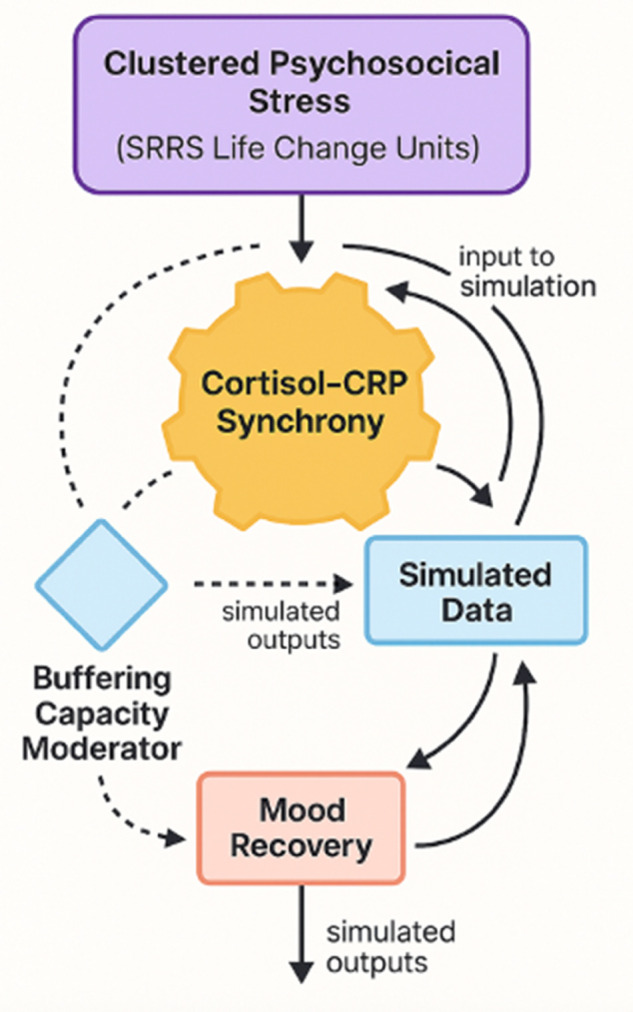 Figure 20
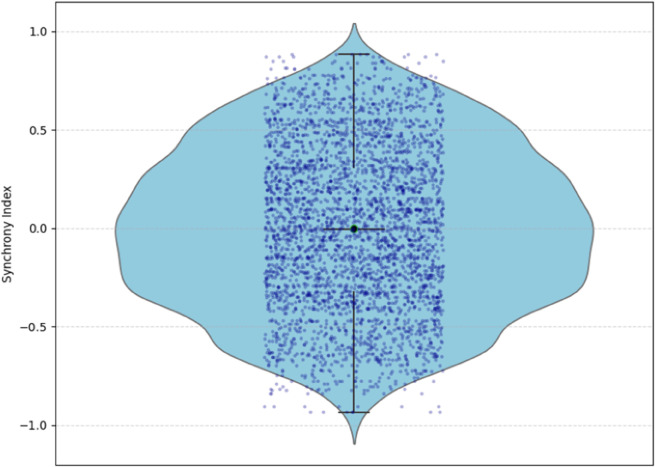 Figure 21
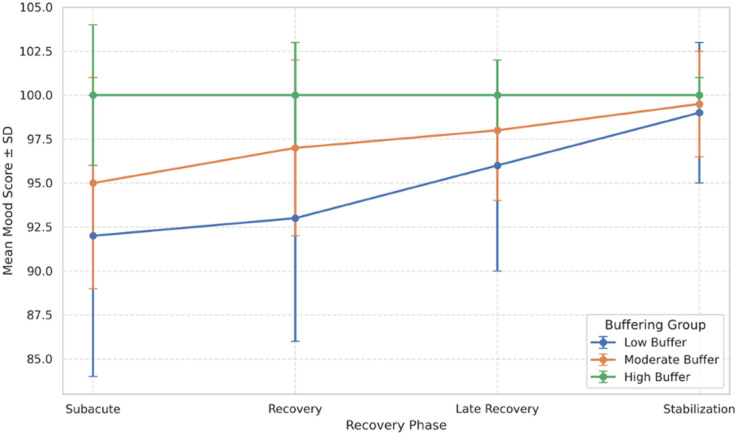 Figure 22
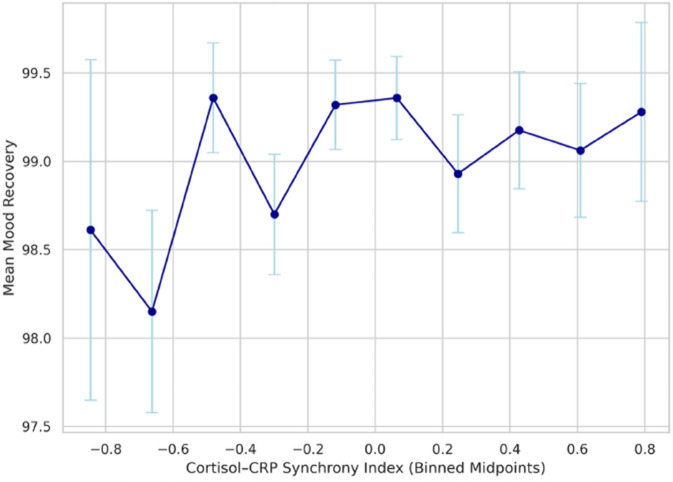 Figure 23
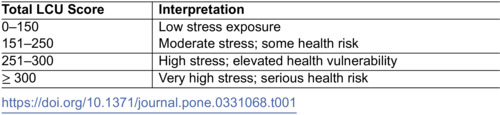 Figure 24
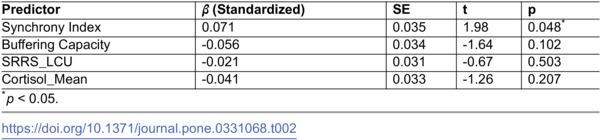 Figure 25
Peer Reviews
No public reviews on file for this paper yet. If you reviewed it on a platform where reviews are public (OpenReview, ICLR, NeurIPS, ICML), you can paste yours below so the community can read it here.
Videos
No videos yet. Explain this paper in a talk, walkthrough, or lecture? Add one.
Taxonomy
TopicsStress Responses and Cortisol · Mental Health Research Topics · Evolutionary Psychology and Human Behavior