Lessons learnt about implementing LEGO based therapy (Play Brick Therapy) based on fidelity data and experience from a large school-based randomised controlled trial
Katie Biggs, Gina Gomez de la Cuesta, Ellen Kingsley, Jean McPherson, Fergus Murray, Margaret Laurie, Matt Bursnall, Elizabeth Coates, Amy Barr, Christopher Hand, Yuliang Zhang, Yuliang Zhang, Yuliang Zhang

TL;DR
This paper analyzes how well LEGO-based therapy was implemented in schools for autistic children, finding high fidelity but room for improvement in training and social interaction focus.
Contribution
The study provides insights into implementation challenges and fidelity of LEGO-based therapy in a large school trial, highlighting areas for improvement in training and delivery.
Findings
LEGO® based therapy was delivered with high fidelity in most sessions according to facilitators and reviewers.
Facilitators often focused more on completing LEGO builds than on promoting social interaction between children.
Three hours of training may be insufficient for facilitators to effectively implement the program.
Abstract
LEGO® based therapy, a social skills program for autistic children and young people, involves collaborative LEGO® building with adult guidance. This paper examines how well the program was delivered in a recent school randomised controlled trial and explores areas for improvement in implementation. The main trial results are published elsewhere. The I-SOCIALISE trial investigated LEGO® based therapy for autistic children in schools. Researchers recruited 98 schools and randomly assigned them to deliver LEGO® based therapy or usual care. LEGO® based therapy sessions lasted one hour per week for 12 weeks with groups of 3 children. Schools received a 3-hour training session and a manual. Researchers measured fidelity to the LEGO® based therapy programme using self-reported checklists and video analysis. Research team insight and experience of the delivery of the training and intervention…
Genes, proteins, chemicals, diseases, species, mutations and cell lines named across the full text — each resolved to its canonical identifier and authoritative record.
Click any figure to enlarge with its caption.
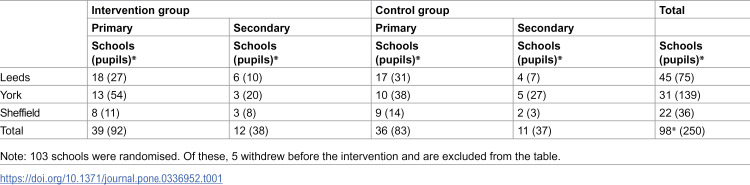 Figure 1
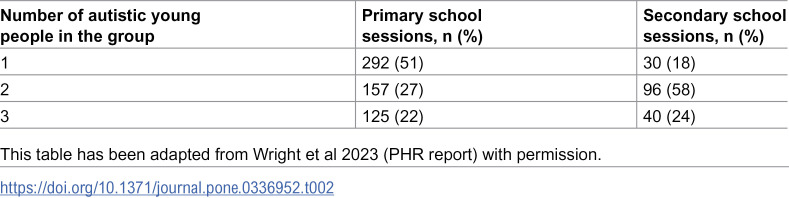 Figure 2
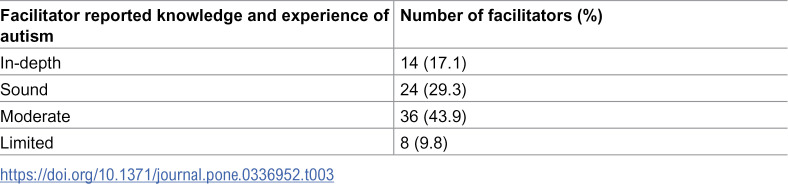 Figure 3
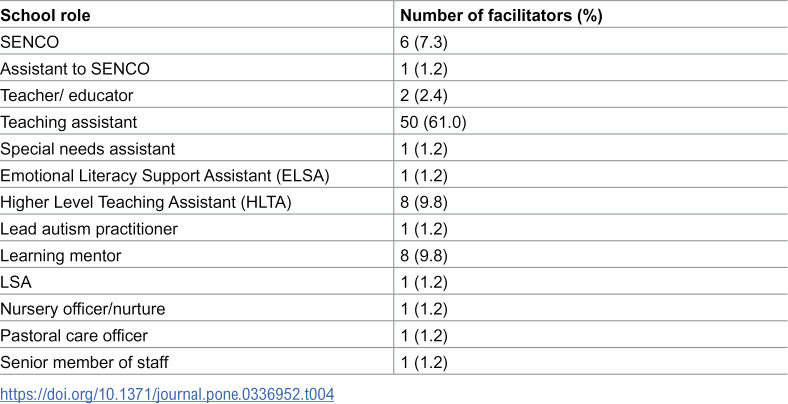 Figure 4
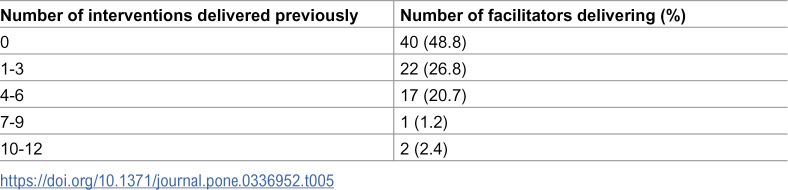 Figure 5
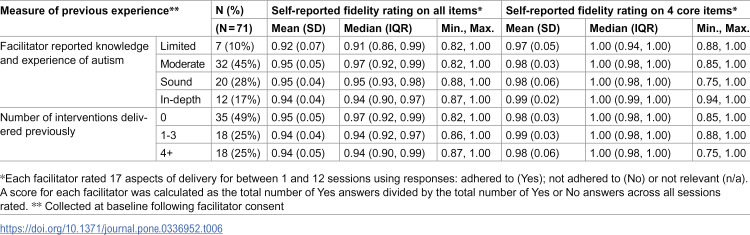 Figure 6
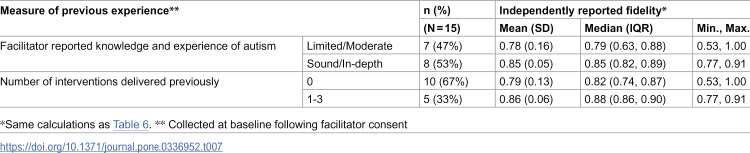 Figure 7
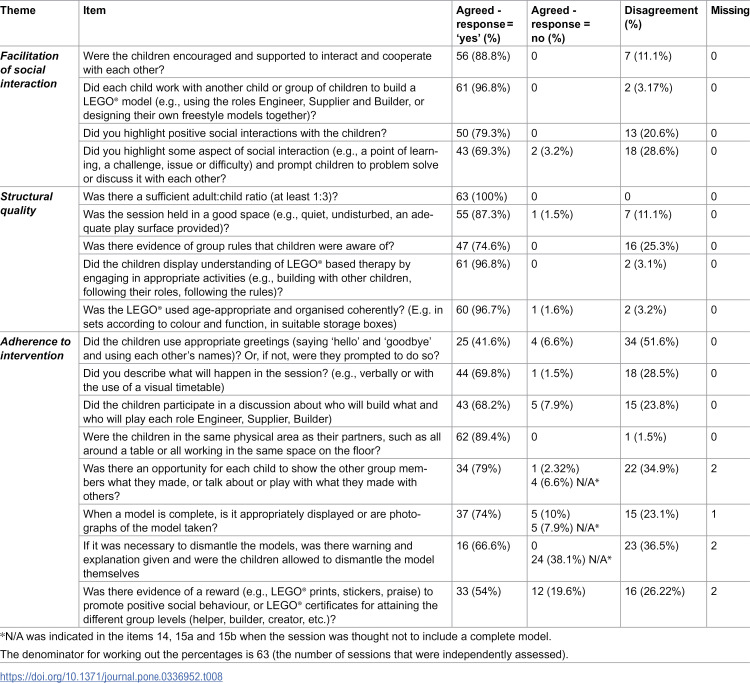 Figure 8
Peer Reviews
No public reviews on file for this paper yet. If you reviewed it on a platform where reviews are public (OpenReview, ICLR, NeurIPS, ICML), you can paste yours below so the community can read it here.
Videos
No videos yet. Explain this paper in a talk, walkthrough, or lecture? Add one.
Taxonomy
TopicsChild Therapy and Development · Autism Spectrum Disorder Research · Counseling, Therapy, and Family Dynamics