Māori and Pacific People’s perspectives on Group A Streptococcus vaccine development and delivery in Aotearoa, New Zealand
Anneka Anderson, Shivani Fox-Lewis, Cresta-Jane Afoa-Stone, Monleigh Muliaumasealii, Tanya Heremaia, Annie Borland, Stacy-Ria Te Kurapa King, Rachel Webb, Nicole J. Moreland, Julie Bennett, Katherine Demi Kokkinias, Julia Robinson

TL;DR
Māori and Pacific communities in New Zealand emphasize the need for culturally responsive approaches to developing and delivering a Group A Streptococcus vaccine to address health disparities.
Contribution
The study provides insights into Māori and Pacific perspectives on vaccine development and delivery, emphasizing cultural values and community-led approaches.
Findings
Participants highlighted the importance of cultural values like hauora and whanaungatanga in vaccine development and delivery.
Current healthcare systems were seen as inadequate for Māori and Pacific health needs, requiring realignment with diverse worldviews.
Culturally responsive and community-led approaches are essential for successful vaccination programs in Aotearoa New Zealand.
Abstract
Aotearoa New Zealand experiences a disproportionately high incidence of Group A Streptococcus (Strep A) disease, particularly acute rheumatic fever (ARF), with Pacific children 80 times and Indigenous Māori children 36 times more likely to develop ARF than children of other ethnicities. This qualitative study explored Māori and Pacific Peoples’ perspectives on Strep A vaccine development. Guided by Kaupapa Māori and Pacific-centred research approaches, semi-structured interviews were conducted with 29 participants, including 20 whānau (family) members and nine healthcare stakeholders. Interviews were recorded, transcribed verbatim, and analysed using a general inductive thematic approach. Three interconnected themes emerged: Perceptions of ARF, vaccine development, and vaccine delivery. These themes were grounded in cultural values such as hauora (wellbeing), whanaungatanga…
Genes, proteins, chemicals, diseases, species, mutations and cell lines named across the full text — each resolved to its canonical identifier and authoritative record.
Click any figure to enlarge with its caption.
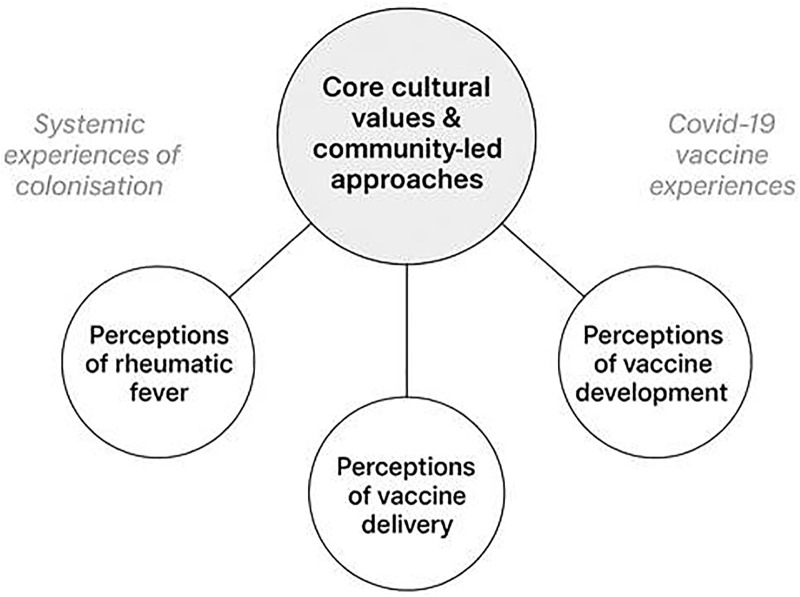 Figure 1
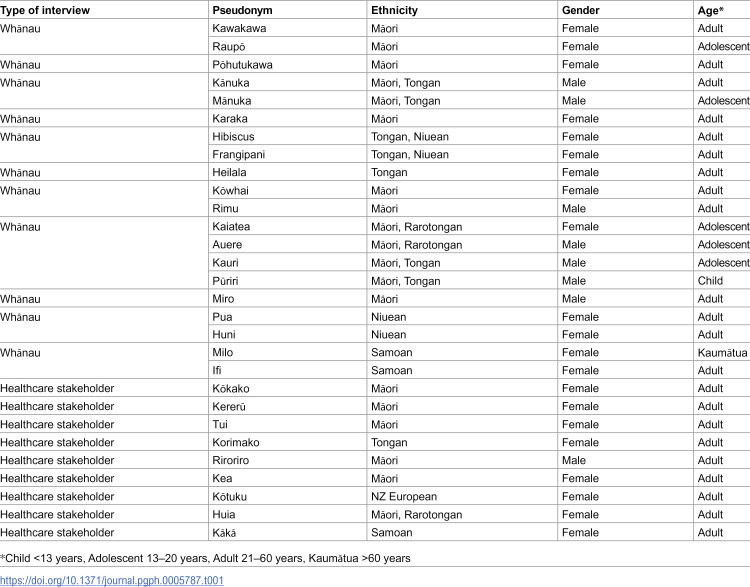 Figure 2
Peer Reviews
No public reviews on file for this paper yet. If you reviewed it on a platform where reviews are public (OpenReview, ICLR, NeurIPS, ICML), you can paste yours below so the community can read it here.
Videos
No videos yet. Explain this paper in a talk, walkthrough, or lecture? Add one.
Taxonomy
TopicsStreptococcal Infections and Treatments · Oral microbiology and periodontitis research · Neonatal and Maternal Infections