Exploring ideal scent detection dog characteristics for successful professional deployment as derived from face-to-face structured interviews with professional scent detection dog handlers
Pascalle E. M. Roulaux, Claudia M. Vinke, Ineke R. van Herwijnen, Saskia S. Arndt

TL;DR
This study identifies key traits for successful scent detection dogs by analyzing the preferences of professional handlers through structured interviews.
Contribution
The study introduces a data-driven approach to identifying ideal scent detection dog traits based on professional handlers' input.
Findings
Professional handlers are most reluctant to accept deviations in traits like neurotic, scent-oriented, and resilient.
There are significant differences in ideal traits between professional and civilian handlers.
Eight key traits were identified as critical for professional deployment of scent detection dogs.
Abstract
Scent detection dogs (SDDs) require certain behavioral characteristics for successful professional deployment. We aimed to provide insight into these characteristics by tapping into professional SDD handlers’ knowledge and experience. We conducted a first round of informal interviews with Dutch professional SDD handlers, which led to the derivation of a list of 24 characteristics. We subsequently used this list in structured interviews and had participants (N = 110) indicate how their ‘ideal SDD’ would score on a scale from 0 to 100 (ideal scores) and how reluctant they would be to see an actual dog deviate from their ideal image for each characteristic (allowed deviation scores). We compared the allowed deviation scores to the variation in the ideal scores. Additionally, we compared ideal dog characteristics for professional deployment versus recreational deployment by civilians to…
Genes, proteins, chemicals, diseases, species, mutations and cell lines named across the full text — each resolved to its canonical identifier and authoritative record.
Click any figure to enlarge with its caption.
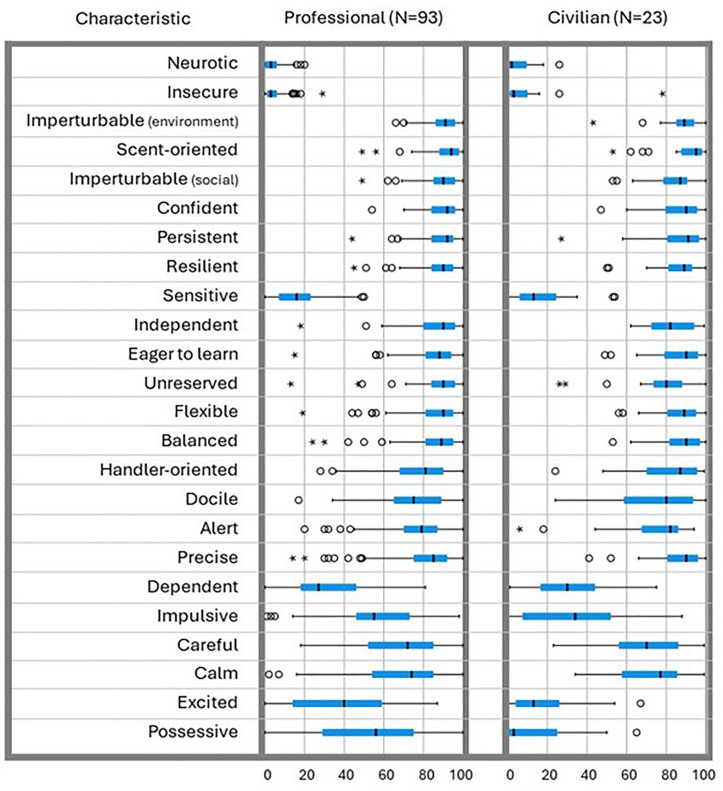 Figure 1
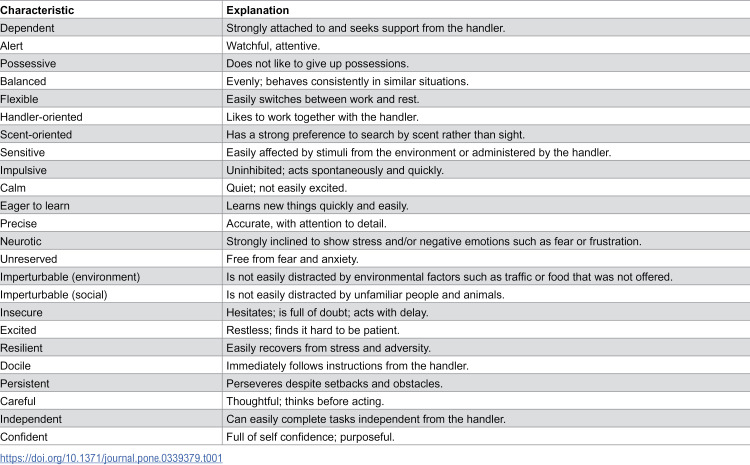 Figure 2
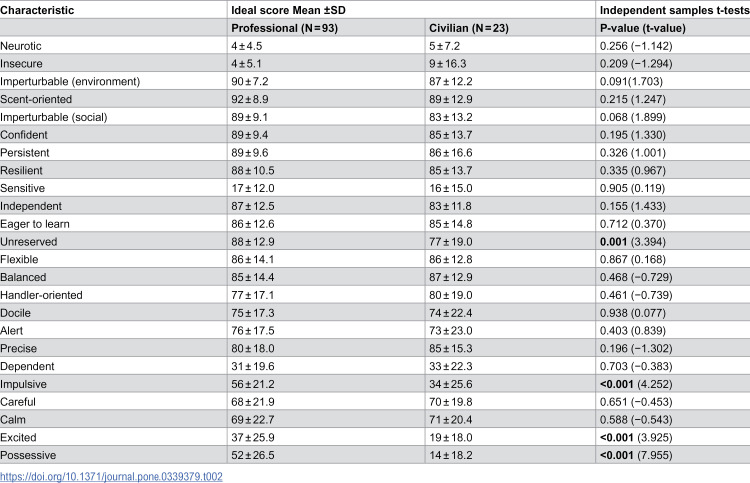 Figure 3
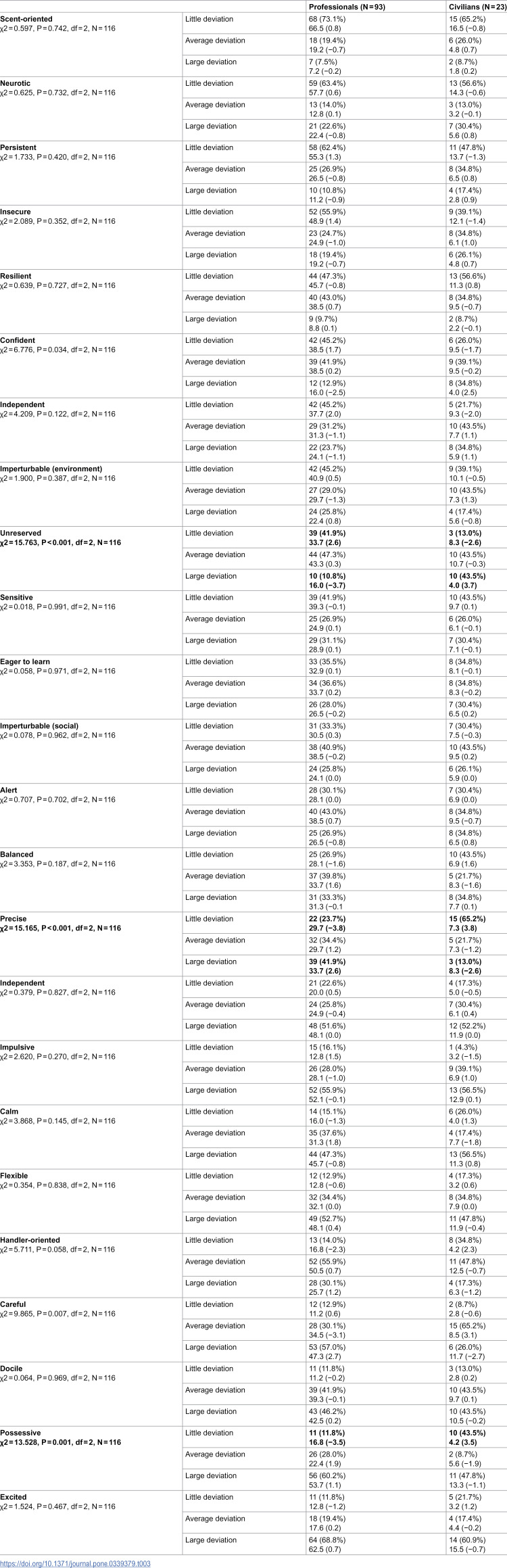 Figure 4
Peer Reviews
No public reviews on file for this paper yet. If you reviewed it on a platform where reviews are public (OpenReview, ICLR, NeurIPS, ICML), you can paste yours below so the community can read it here.
Videos
No videos yet. Explain this paper in a talk, walkthrough, or lecture? Add one.
Taxonomy
TopicsHuman-Animal Interaction Studies · Animal Behavior and Welfare Studies · Rabies epidemiology and control