Pathogenic Leptospira species identified in dogs and cats during neutering in Thailand
Metawee Thongdee, Somjit Chaiwattanarungruengpaisan, Weena Paungpin, Sivapong Sungpradit, Sineenard Jiemtaweeboon, Ekasit Tiyanun, Kanin Ruchisereekul, Sarin Suwanpakdee, Janjira Thaipadungpanit, Brianna Beechler, Brianna Beechler, Brianna Beechler

TL;DR
This study finds that nearly 10% of neutered dogs and cats in Thailand carry pathogenic Leptospira, highlighting a risk of human leptospirosis from companion animals.
Contribution
The first molecular detection of Leptospira yasudae in companion animals in Thailand is reported.
Findings
Nearly 10% of asymptomatic dogs and cats tested positive for pathogenic Leptospira.
L. yasudae was detected for the first time in animal urine samples in Thailand.
Three Leptospira species known to cause human disease were identified in clinically healthy pets.
Abstract
Pathogenic species of the genus Leptospira cause an underdiagnosed zoonosis in humans and animals called leptospirosis. Animal reservoirs often remain asymptomatic yet shed the active spirochete in urine, making the control of leptospirosis transmission to humans more challenging. Asymptomatic leptospirosis in human companions, such as dogs and cats, resulting in unrecognised infections, has been demonstrated in a few countries. Crucially, the current lack of molecular epidemiology data on Leptospira among companion animals in Thailand underscores the urgent need to investigate transmission dynamics for effective regional control. We investigated the prevalence of Leptospira infection in cats and dogs during neutering in seven provinces across Thailand. The urine samples were screened for Leptospira DNA by PCR targeting the rrs gene and further speciation using the Sanger Sequencing…
Genes, proteins, chemicals, diseases, species, mutations and cell lines named across the full text — each resolved to its canonical identifier and authoritative record.
Click any figure to enlarge with its caption.
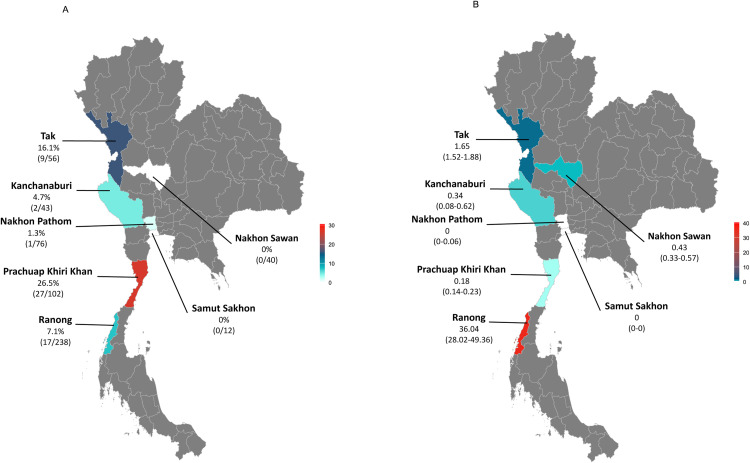 Figure 1
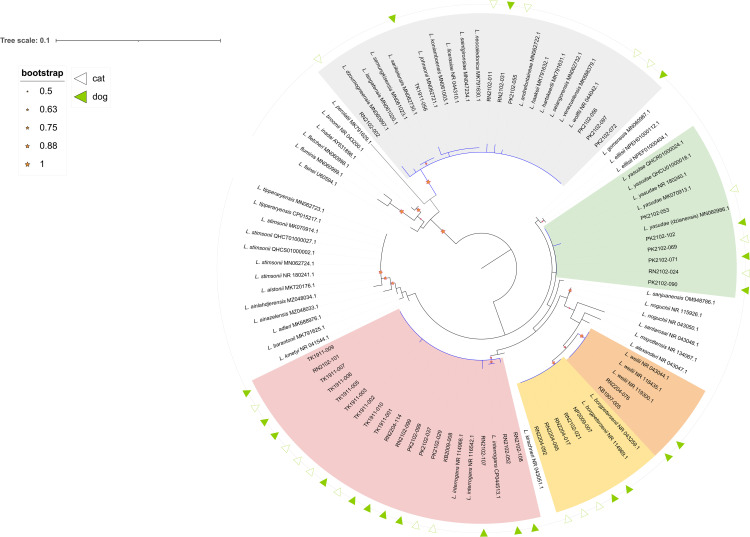 Figure 2
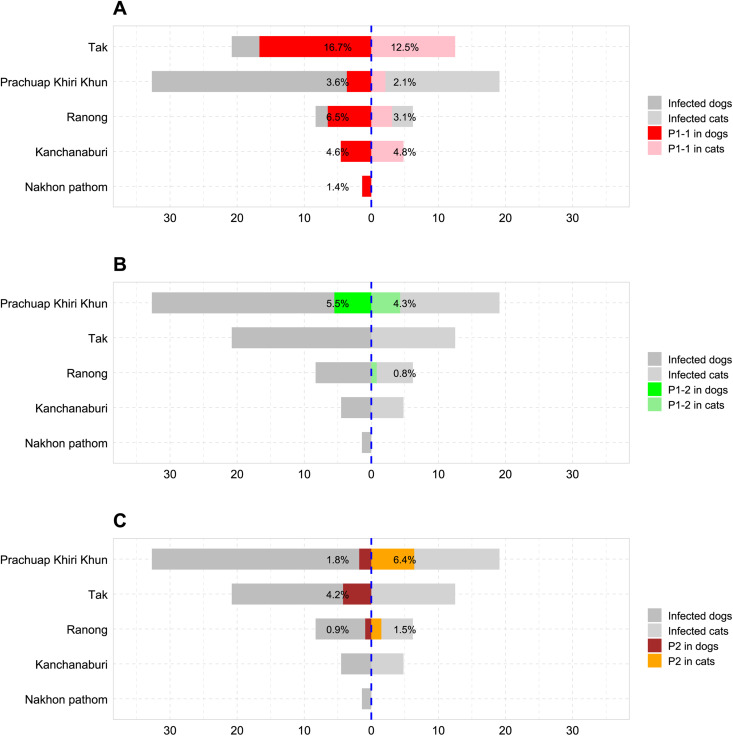 Figure 3
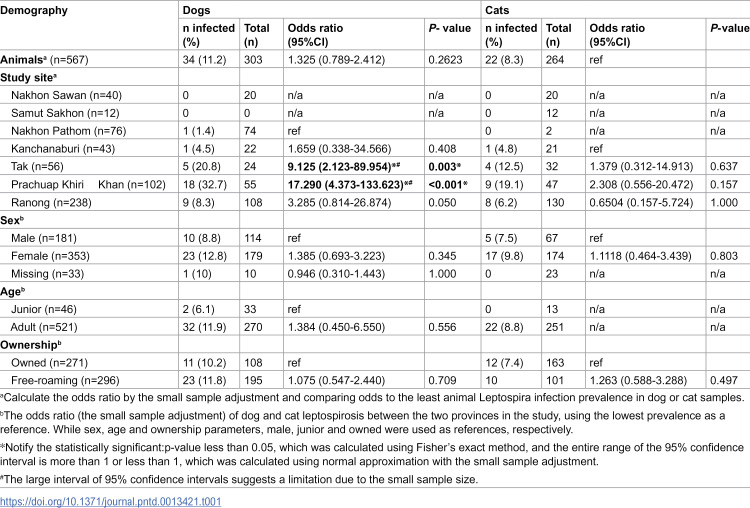 Figure 4
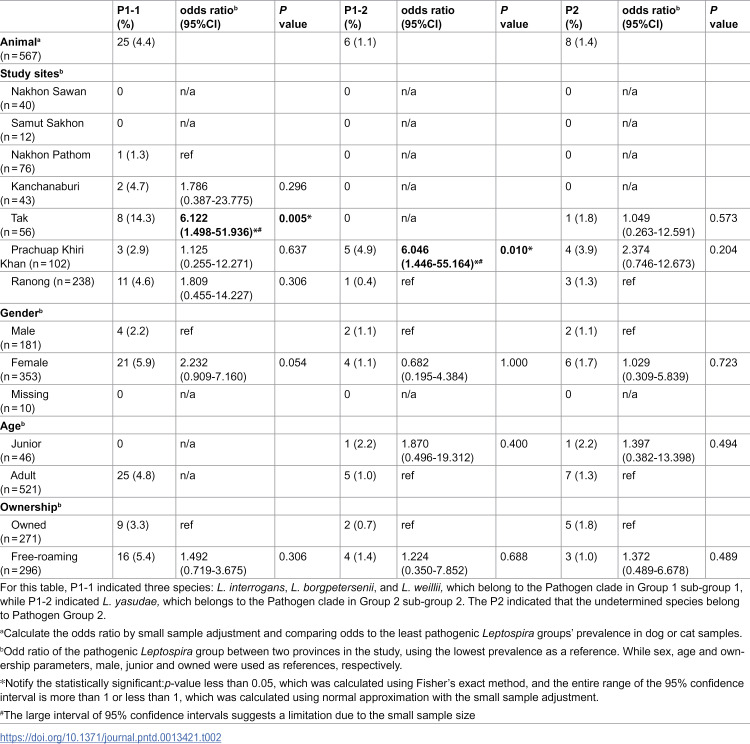 Figure 5
Peer Reviews
No public reviews on file for this paper yet. If you reviewed it on a platform where reviews are public (OpenReview, ICLR, NeurIPS, ICML), you can paste yours below so the community can read it here.
Videos
No videos yet. Explain this paper in a talk, walkthrough, or lecture? Add one.
Taxonomy
TopicsLeptospirosis research and findings · Parasitic Infections and Diagnostics · Zoonotic diseases and public health